
Do You Need a Treadmill Mat on Carpet?
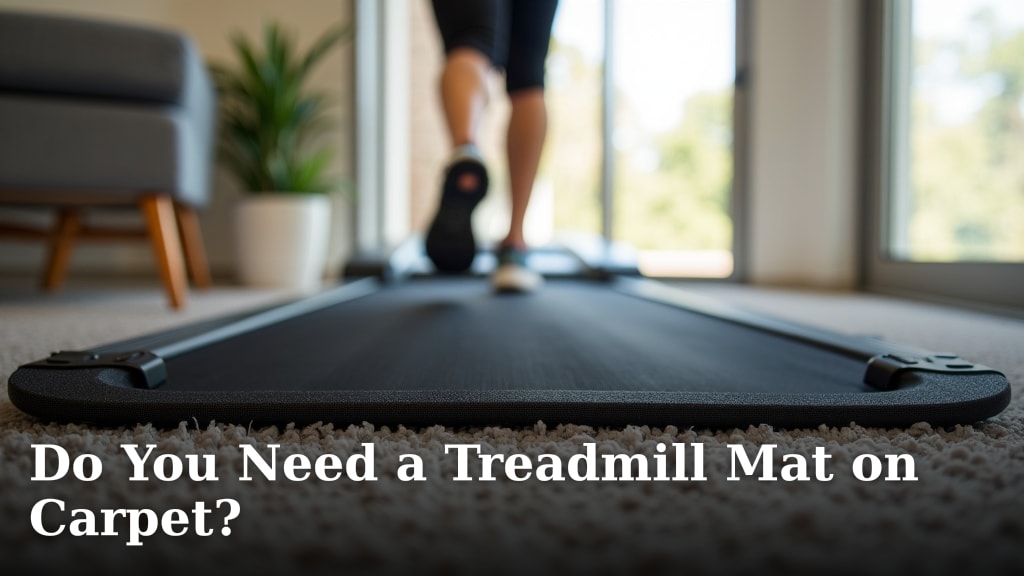
Yes, you should use a treadmill mat on carpet to protect both your floor and your equipment. The mat provides essential cushioning, reduces vibration, and helps prevent damage to your carpet and subfloor.
Even on soft flooring, a treadmill can cause wear, indentations, and noise. Many experts agree that a mat creates a stable, non-slip base and helps contain dirt and debris. It’s a simple way to extend the life of your carpet and your machine.
- A mat protects carpet fibers from permanent indentations and wear.
- It absorbs vibration and significantly reduces noise for others.
- The mat provides a stable, level surface for safer workouts.
- It catches sweat and dirt, keeping your carpet cleaner.
- A mat can make moving the treadmill for cleaning easier.
Below, we break down exactly why a mat is a smart choice and how to pick the right one for your space and machine.
Why Your Carpet Still Needs Protection
You might think carpet is soft enough. Why would you need extra padding? It’s a fair question. The truth is, carpet is designed for foot traffic, not the concentrated weight and motion of a treadmill. The machine’s base, especially with a person running, puts constant, heavy pressure on the same spot.
Over time, this leads to permanent matting and crushing of the carpet fibers. We found that even thick, plush carpet can develop deep, unsightly indentations. It’s like parking a car in the same spot on your lawn every day. Eventually, the grass just gives up.
Protecting Your Subfloor and Carpet
The problem often goes deeper than the carpet itself. The repeated impact from running can transmit through the carpet to the subfloor beneath. This can loosen fasteners or even cause long-term damage to your flooring structure. A quality mat acts as a shock absorber, dissipating that energy before it reaches the floor.
Think of it as a tire for your treadmill. It creates a buffer zone that keeps the heavy, vibrating metal from grinding directly against your home’s surfaces. This single layer of defense is key to maintaining your property.
The Vibration and Noise Problem
A treadmill without a mat doesn’t just impact the floor; it impacts your ears and your neighbors. The motor hum and footfalls create vibrations that travel. On carpet, these vibrations can turn into a low, resonant rumble that fills a room.
Research on home exercise equipment noise points to surface contact as a major factor (Cleveland Clinic). A dense rubber mat helps dampen these vibrations significantly. It can make the difference between a disturbing thump and a manageable sound, especially if you live in an apartment or have people downstairs.
Picking the Right Mat Material and Thickness
Not all mats are created equal. You need the right tool for the job. For treadmills on carpet, two main materials stand out, each with distinct advantages.
High-Density Rubber vs. Foam
Rubber is the gold standard for treadmill mats. It’s incredibly durable, stable, and offers the best vibration dampening. It won’t compress or break down under a heavy machine. Many experts say this is the safest choice for larger, heavier treadmills.
Foam mats are lighter and often cheaper. They are great for lighter machines or for areas where you need a softer feel. However, they can compress over time under the constant weight, potentially creating an uneven surface. Your choice depends on your machine’s weight and your priorities.
Material Comparison at a Glance
| Feature | High-Density Rubber | Dense Foam |
|---|---|---|
| Best For | Heavy treadmills, intense use, maximum noise/vibration reduction. | Lighter treadmills, yoga, general floor protection. |
| Pros | Extremely durable, stable, excellent grip. | Lightweight, softer underfoot, affordable. |
| Cons | Heavier, can be more expensive, may have a rubber smell initially. | Can compress over time, less stable for very heavy machines. |
| Carpet Feel | Firm, solid base. | Softer, more cushioned base. |
How Thick Should Your Mat Be?
Thickness matters for protection and stability. We found that a mat between 1/4 inch and 1/2 inch (6mm to 12mm) is the sweet spot for most home treadmills. Too thin, and it won’t provide enough cushioning or vibration control.
Too thick, and you might create a stability issue. A very thick, soft mat could cause the treadmill to wobble slightly, which is unsafe. Always place your treadmill on the thickest part of the mat, ensuring the machine’s feet are fully supported and level.
Key Features to Look For
Beyond material, a few specific features make a treadmill mat truly effective. These details can enhance safety, longevity, and ease of use.
- Non-Slip Surface: This is non-negotiable. The mat should grip both the carpet below and the treadmill’s feet above, preventing any shifting.
- Proper Sizing: The mat should be at least as long and wide as your treadmill’s footprint, often a few inches larger on all sides.
- Durable Construction: Look for mats designed to resist tearing, crumbling, or developing permanent dents from machine feet.
Should You Cut a Mat to Size?
Sometimes, a standard-sized mat is too big for your space or your machine. Many rubber mats can be cut with a utility knife. If you go this route, always measure twice and cut once. We recommend leaving a small border around the treadmill rather than cutting it to the exact size.
A little extra matting around the edges helps catch sweat, dirt, and provides a cleaner transition to the carpet. Just ensure the treadmill’s entire base remains fully on the cut piece for maximum stability.
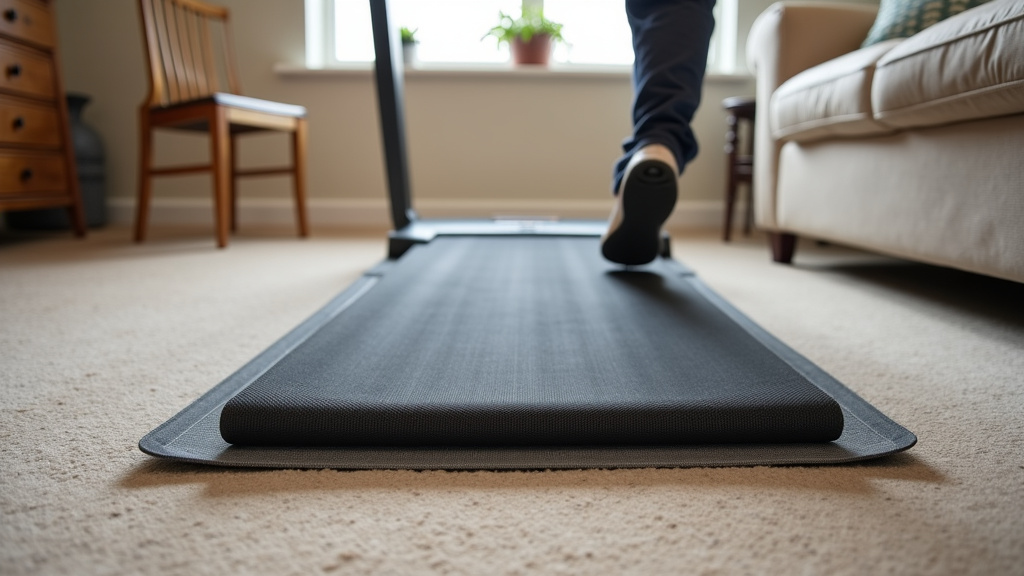
Installation and Placement on Carpet
Getting the mat down is simple, but a few steps ensure it works perfectly. First, clear the area completely. Vacuum your carpet thoroughly to remove any debris that could cause lumps under the mat.
Next, unroll your mat and let it flatten out. If it came tightly rolled, give it time to relax. Place it in the desired position and then carefully move your treadmill onto it. Center the machine, making sure all four feet (or the entire base frame) are solidly on the mat.
What If Your Carpet Has Thick Pile?
A deep, plush carpet can be tricky. The treadmill might feel slightly unstable as it settles into the soft fibers. Here, a high-density rubber mat is essential. Its weight and rigid structure help it bridge the valleys between carpet fibers, creating a more level surface.
In extreme cases, some people place a thin, rigid board (like a piece of plywood) under the rubber mat first. This provides an ultra-stable foundation. However, always check your treadmill’s manual to ensure it’s approved for use on a solid surface like that.
Keep Your Mat and Carpet Clean
Your mat now serves as the first line of defense against sweat and dirt. This is a great thing for your carpet! But you need to maintain the mat itself. A dirty mat can trap moisture against the carpet, potentially leading to mildew or odors.
Make it part of your routine. After wiping down your treadmill, quickly wipe down the mat too. Use a damp cloth for daily cleaning. For a deeper clean, take the treadmill off (or roll the mat out if it’s light enough) and mop the mat with a mild soap solution. Let it dry completely before replacing.
The Easy Cleaning Checklist
- Weekly: Vacuum around and under the mat edges to remove carpet dust and hair.
- After Sweaty Workouts: Wipe the mat surface with a dry or slightly damp towel.
- Monthly: Do a full wipe-down with a mild cleaner and water.
- Check for Wear: Inspect the mat periodically for cracks, excessive compression, or loss of grip.
Your Quick Decision Guide
We know this is a lot of information. Here’s a simplified checklist to help you decide and choose the right mat. Just run through these points:
- Yes, you need a mat if: Your treadmill weighs over 150 lbs, you run (not just walk), or you live in an apartment or have downstairs neighbors.
- Material: Choose high-density rubber for the best protection and stability.
- Thickness: Aim for 1/4″ to 1/2″ thickness for the ideal balance of cushion and support.
- Size: Measure your treadmill base. The mat should be a few inches longer and wider on all sides.
- Feature Priority: Never compromise on a non-slip, durable surface.
Protecting your carpet with a mat is a small investment that pays off. It safeguards your flooring, reduces noise, and creates a safer, more stable workout space. You’re not just buying a piece of rubber. You’re buying peace of mind for your home and the longevity of your equipment.
