
What Is the Best Budget Treadmill for Daily Walking?
Finding the best budget treadmill for daily walking is totally doable! You don’t need to spend a fortune to get a machine that’s sturdy and reliable for your fitness goals. Many budget-friendly treadmills offer great features for walkers.
When you’re looking for an affordable option, it’s smart to focus on key aspects. Think about motor power, the tread belt size, and how much weight it can safely handle. These details matter even for walking.
- Focus on motor power and belt size.
- Check the weight capacity.
- Read reviews from other walkers.
- Consider your available space.
- Don’t forget warranty details.
We’ve researched and found some excellent treadmills that won’t break the bank. Let’s walk through the best picks for your daily strolls! We’ve researched and found some excellent treadmills that won’t break the bank, perfect for your daily strolls.
“`htmlFinding Your Perfect Budget Treadmill for Walking
So, you’re on the hunt for a great treadmill that won’t cost you an arm and a leg? You want something reliable for your daily walks, and that’s totally achievable! The market has some fantastic options that fit the bill. We’ve done the digging to help you find a machine that’s sturdy and effective, even if you’re not planning any marathon sprints.
Think of it like finding the right walking shoes. You need comfort, support, and something that’s built to last. A treadmill is no different. For walkers, the focus shifts a bit from raw speed and incline to durability and a comfortable walking surface. Let’s look at what truly matters.
Key Features to Prioritize for Walking Treadmills
When you’re on a budget, it’s easy to get distracted by bells and whistles. But for daily walking, some features are far more important than others. Focusing on these will help you make a wise choice.
Motor Power: More Than Just Speed
You might think you need a super-powerful motor for just walking. That’s not entirely true, but motor strength still matters. A good motor ensures a smooth and consistent belt speed. For walkers, a motor in the 2.0 to 2.5 CHP (Continuous Horsepower) range is usually sufficient.
Why is CHP important? It refers to the power the motor can sustain over time. Cheaper treadmills might advertise peak horsepower, but CHP gives you a better idea of real-world performance. A motor that’s too weak will struggle to keep up, especially if you increase your pace or walk for longer periods. This can lead to jerky movements and a less enjoyable experience.
Many experts suggest that for walking, consistent power delivery is key. You want the belt to feel steady underfoot, without any dips or surges. This provides a much more natural and comfortable walking feel. A struggling motor can feel like you’re walking through mud – not ideal!
Tread Belt Size: Room to Roam (or Walk)
The tread belt is where the magic happens, or where the frustration sets in. For walking, you need enough space so you don’t feel like you’re constantly on the edge. A belt that’s too short or too narrow can make you feel unsafe.
We found that a standard treadmill belt width is typically 20 inches. However, for walkers, especially if you tend to swing your arms, a wider belt can be a game-changer. Look for belts that are at least 18 inches wide. Aiming for 20 inches wide is even better if your budget allows.
Length is also important. While runners need longer belts for their stride, walkers can get away with slightly shorter ones. However, you still want ample room. A belt length of at least 50 inches is a good starting point for most walkers. If you’re taller or prefer a more relaxed stride, consider belts closer to 55 inches. This gives you room to move without feeling cramped.
Think of it this way: you don’t want to be constantly looking down, worried about stepping off. A generous belt size allows you to focus on your walk, your music, or your thoughts, making your exercise time more peaceful and effective.
Weight Capacity: Safety First, Always
This is a non-negotiable safety feature. Every treadmill has a maximum weight capacity. It’s crucial to choose a treadmill that can safely support your weight, plus any extra you might carry (like water bottles or your phone). Exceeding the weight limit can strain the motor, damage the frame, and, most importantly, be dangerous.
We found that budget treadmills often have weight capacities ranging from 200 to 300 pounds. Always check the specifications carefully. A good rule of thumb is to select a treadmill with a weight capacity that is at least 50 pounds more than your current weight. This ensures the machine isn’t constantly at its limit.
A higher weight capacity often indicates a more robust frame and better construction. This can translate to a sturdier and more durable machine overall. Even if you’re well within the limits, a higher capacity is a good sign of quality engineering. It’s like buying a car that’s rated to tow more than you’ll ever need – it’s built for the job and then some!
What About Other Features?
While motor, belt, and weight capacity are king, other features can enhance your walking experience without breaking the bank. Let’s quickly touch on them.
Incline and Speed Options
Most budget treadmills offer basic incline and speed settings. For walkers, a manual incline (where you adjust it yourself) is perfectly fine and often more affordable. Many models offer 2-3 levels of manual incline. This is great for adding variety and intensity to your walks.
Speed-wise, most budget treadmills will easily go up to 10 mph. Since you’re walking, you likely won’t need anything close to that. What you do want is a machine that can maintain a consistent, slower pace (like 2-3 mph) smoothly. Check reviews to see how well the machine handles lower speeds.
Cushioning: Easier on Your Joints
Good cushioning is vital, especially if you have joint issues or are walking on a hard surface. Treadmill decks have some built-in shock absorption. This is often referred to as deck cushioning or suspension.
While high-end treadmills have elaborate suspension systems, many budget models offer decent cushioning. It’s not something you can always see, so checking user reviews is key. Walkers often appreciate a deck that feels forgiving underfoot. It helps reduce impact on your knees and ankles. Think of it as a gentle bounce, not a hard landing.
Pre-set Programs and Connectivity
Some budget treadmills might include a few pre-set workout programs. These can offer variety, like interval training or hill climbs. They can be a nice bonus if you want guided workouts.
Connectivity features like Bluetooth or app integration are less common on the most budget-friendly models. If these are important to you, you might need to adjust your budget slightly or look for deals. For many walkers, these aren’t essential. Your smartphone can track your progress just fine!
Putting It All Together: What to Look For in a Checklist
Ready to make a decision? Here’s a quick checklist to guide your final choice:
- Motor Power: Aim for at least 2.0 CHP for smooth walking.
- Belt Size: Look for at least 18 inches wide and 50 inches long.
- Weight Capacity: Choose one 50 lbs above your weight.
- Incline: Manual incline is fine; check for comfortable levels.
- Cushioning: Read reviews for notes on deck comfort.
- Frame Stability: Does it feel sturdy? (Check reviews!)
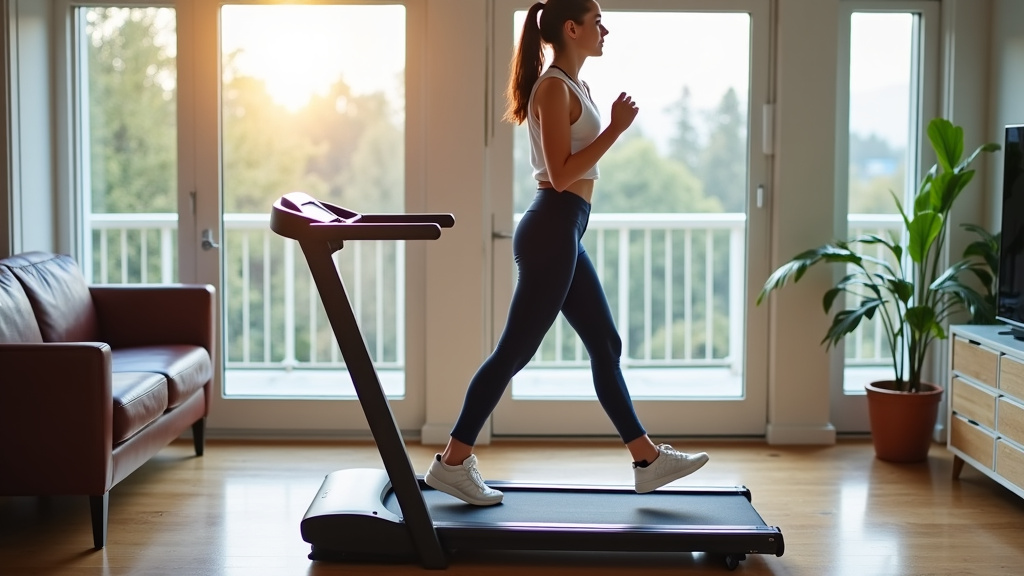
A Look at Top Budget Treadmill Picks for Walkers
Based on our research, several treadmills consistently stand out for their value and suitability for walkers. While specific models change, these brands often deliver dependable options in the budget category.
The Folding Workhorse
Many budget-conscious shoppers gravitate towards folding treadmills. They’re fantastic for saving space in apartments or smaller homes. Brands like Many budget-conscious shoppers gravitate towards folding treadmills, which are fantastic for saving space.XTERRA Fitness and Horizon Fitness often have models in their lineup that fit the bill.
These machines typically feature a decent motor (around 2.0-2.5 CHP), a satisfactory belt size (often 20″ x 55″), and a weight capacity of around 250-300 lbs. They usually include basic console features and may offer a few pre-set programs.
The real win here is the fold-up design. They usually have a hydraulic assist to make unfolding smooth and safe. When folded, they can be easily stored under a bed or in a closet. This is a huge win for apartment dwellers!
The Compact & Mighty
If space is extremely limited, you might find yourself looking at even more compact options. Some brands offer treadmills designed for small spaces, sometimes called “under-desk” treadmills, though they can be used for general walking too.
Models from brands like Sunny Health & Fitness or certain smaller brands found on online marketplaces often fall into this category. They might have a slightly smaller belt size and a motor closer to 1.5-2.0 CHP. However, they are incredibly convenient.
These are often lighter and easier to move around. Some even have remote controls for speed adjustments, making them super simple to use. They are ideal for very casual walkers or for those who want to get steps in while watching TV. Just be sure to check the weight capacity and belt dimensions carefully, as they can be smaller.
Durability Over Flash: Simpler is Often Better
Sometimes, the best budget treadmill is one that focuses on the core essentials. You might find excellent value in brands that prioritize a solid frame and reliable motor over fancy screens or Wi-Fi connectivity.
Brands like ProForm or NordicTrack (though often higher-priced) sometimes have entry-level models that can be found on sale. These might offer a more robust build quality even in their cheaper options. Look for models with steel frames and sturdy components.
The key is to read reviews from actual owners who have used the treadmill for walking consistently. What do they say about the stability? Does the belt slip? How is the motor holding up after a year of use? These real-world experiences are gold when you’re shopping on a budget.
Where to Find the Best Deals
Scouring the internet and local stores can reveal great prices. Many online retailers frequently offer sales on treadmills. Keep an eye out for holiday promotions or end-of-season discounts.
You might also find excellent refurbished or open-box models. These can offer substantial savings. Just ensure they come with a warranty and have been inspected. Buying from reputable sellers is key here.
Don’t underestimate the power of reading reviews. A treadmill with thousands of positive reviews for durability and ease of use is often a safer bet than a brand-new model with no feedback. Look for patterns in comments regarding common issues.
Understanding Warranties: Your Safety Net
A good warranty is a strong indicator of a manufacturer’s confidence in their product. For budget treadmills, expect warranties to be shorter than on premium models.
Ideally, look for at least a 1-year warranty on parts and labor. The frame and motor might have longer warranties, often 5-10 years. Even a 90-day or 1-year warranty on the whole unit is a good sign for a budget machine. It means the company stands behind it for at least that long. This is your protection if something goes wrong early on.
Be sure to understand what the warranty covers and what it doesn’t. Sometimes, user error or normal wear and tear aren’t included. Knowing this upfront can save you headaches later!
“`Conclusion
You’ve learned that finding a great budget treadmill for your daily walks is absolutely within reach. Focus on the essentials: a motor with at least 2.0 CHP for smooth performance, a belt that’s 18+ inches wide and 50+ inches long, and a weight capacity that comfortably exceeds your own. Don’t overlook frame stability and adequate cushioning, as these contribute greatly to a pleasant walking experience. By prioritizing these features and reading user reviews, you can confidently select a sturdy, reliable machine that fits your space and your budget. Your next step is to compare a few specific models from trusted brands that align with these key specifications.
Frequently Asked Questions
What’s the minimum motor power I should look for in a budget walking treadmill?
For daily walking, we recommend a motor with at least 2.0 CHP (Continuous Horsepower). This ensures a consistent and smooth belt speed without struggling, even if you increase your pace slightly or walk for longer durations. Anything less might feel jerky and less enjoyable.
How important is the tread belt size for just walking?
Belt size is quite important for walking comfort. You’ll want a belt that’s at least 18 inches wide to give you a comfortable stride, especially if you swing your arms. A length of at least 50 inches is also good, providing ample room so you don’t feel confined.
Can I find a folding treadmill that’s still sturdy for walking?
Yes, many folding treadmills are designed with sturdiness in mind. Brands like XTERRA and Horizon often offer models that balance a fold-up design for space-saving with reliable construction suitable for regular walking. Always check user reviews for comments on stability.
Are treadmills with manual incline good enough for walking?
Absolutely. For most walkers, manual incline options are perfectly adequate and often more affordable on budget treadmills. They allow you to easily adjust your workout intensity by changing the incline yourself, adding variety to your routine.
What should I do if a budget treadmill’s warranty seems short?
While budget treadmills may have shorter warranties than premium models, focus on what’s covered. A 1-year warranty on parts and labor is a good sign for a budget machine. Also, check for longer frame and motor warranties, which indicate the manufacturer’s confidence in those core components.
