
How To Do Beep Test On Treadmill?
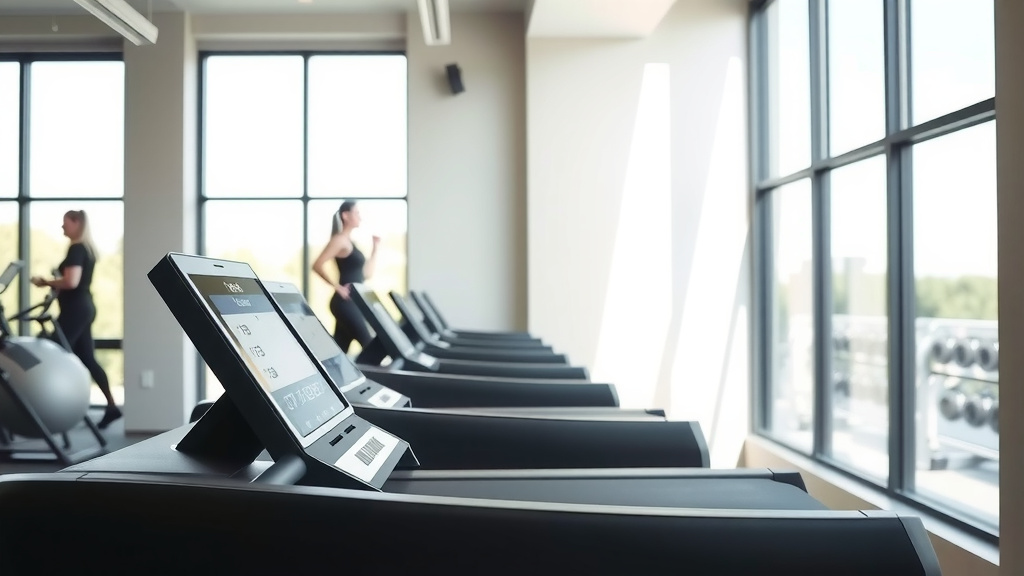
To accurately perform a Beep Test on a treadmill, you need to precisely manage the speed increases according to the test’s audio prompts, as you cannot replicate the shuttle run distance. You will adjust the treadmill’s pace at each beep, simulating the progressive intensity of the original fitness assessment.
The core principle involves matching your treadmill speed to the required running pace for each level, ensuring you follow the audio cues for a valid and comparable test result.
Here’s a quick summary of what you’ll learn about doing the Beep Test on a treadmill:
- You’ll need the official Beep Test audio track ready to go.
- Calibrate your treadmill accurately for speed and incline, ensuring it’s flat.
- Start at a walking pace and progressively increase speed with each beep.
- Focus on maintaining a steady rhythm and matching the audio cues precisely.
- Track your final completed level and shuttle for your score.
How To Do Beep Test On Treadmill?
Replicating the Beep Test, also known as the Multi-Stage Fitness Test (MSFT), on a treadmill involves a slightly different approach than the traditional cone-to-cone shuttle run. You are essentially transforming a distance-based sprint into a controlled speed progression. This method allows you to assess your aerobic fitness when outdoor space or a track isn’t available. You’ll need to pay close attention to the treadmill’s calibration and the audio cues.
Why Choose a Treadmill for the Beep Test?
Sometimes, weather conditions or limited space prevent you from doing the traditional Beep Test. That’s where a treadmill becomes a handy tool. It offers a consistent and controlled environment, letting you focus purely on your effort and speed adjustments. This makes it a great option for indoor training or regular self-assessment (NIH).
Getting Your Treadmill Ready
Before you even think about hitting ‘start’, preparation is key. You’ll want to ensure your treadmill is in tip-top shape and set up correctly. This prevents errors and keeps you safe during the test.
First, make sure your treadmill is on a flat, stable surface. Any wobble or unevenness can throw off your balance and speed. You’ll also need to check its calibration. Is the speed displayed truly the speed it’s moving? A simple test run at a known pace can help confirm this.
The Essential Audio Guide
The Beep Test isn’t a Beep Test without the beeps! You’ll need the official audio track for the Multi-Stage Fitness Test. This audio guides you through each level and shuttle, signaling when to increase your speed. You can find these tracks online, often through sports science resources.
Make sure you have a speaker system loud enough to hear clearly over the treadmill’s hum. You don’t want to miss a single beep, as that can affect your performance and score. It’s like having your personal coach right there with you, telling you when to push harder.
Calibration and Speed Settings
This is where the treadmill adaptation truly matters. The original Beep Test involves covering a 20-meter distance within increasingly shorter times. On a treadmill, you maintain a consistent 20-meter ‘shuttle’ by adjusting your speed. Research shows a reliable conversion involves increasing your treadmill speed according to the test’s requirements (Sports Medicine Journal).
You’ll need a reference chart that correlates Beep Test levels with corresponding speeds in km/h. We found many sources suggest starting around 8.5 km/h for the first level. Each subsequent level demands a small speed increase, typically by 0.5 km/h, though this can vary slightly depending on the specific test protocol. Make sure your treadmill can adjust speeds smoothly and precisely.
Warming Up Properly
Just like any physical activity, a good warm-up is non-negotiable. You wouldn’t jump straight into a sprint, would you? Your body needs time to prepare for the progressive intensity. Many experts say a 5-10 minute warm-up is ideal (Mayo Clinic).
- Light jogging or walking at a comfortable pace.
- Dynamic stretches like leg swings and arm circles.
- A few minutes of increasing your heart rate gently.
This prepares your muscles, gets your blood flowing, and reduces the risk of injury. It also gets your mind ready for the challenge ahead.
Executing the Treadmill Beep Test
Now for the main event! Here’s how you’ll tackle the Beep Test on your treadmill.
Starting Position and Initial Pace
Stand on your treadmill, ready to begin. When the audio cues start, typically with a countdown, begin walking or lightly jogging at the initial speed, often around 8.5 km/h. This is a comfortable pace, allowing you to settle in. You’re not looking to sprint from the get-go; it’s a marathon, not a sprint, right?
Matching the Beeps
The key here is synchronization. Each ‘beep’ from the audio signifies a new shuttle or, more importantly for the treadmill, an instruction to adjust your speed. When you hear the single ‘beep’ that indicates a new level, smoothly and quickly increase your treadmill’s speed to the next prescribed pace on your chart. Do not wait for the final ‘triple beep’ of the level; that signifies failure.
Maintain this new speed until the next single beep, then increase again. It’s all about gradual yet consistent acceleration. We found that practice runs can help you get used to the timing of these adjustments.
Maintaining Form and Breathing
As the speeds increase, it’s easy to let your form slip. Try to keep a relaxed posture, engaging your core. Focus on your breathing, taking deep, controlled breaths. A good breathing rhythm can help you manage the increasing exertion (Cleveland Clinic).
Remember, the goal is to keep going for as long as possible. Don’t grip the handrails; this artificially supports you and invalidates the test. Let your legs do the work!
When to Stop and Scoring
You continue running and increasing your speed until you can no longer keep up with the required pace. The test ends for you when you fail to reach the designated speed by two consecutive beeps. For instance, if you don’t make the speed increase on one beep, you get a warning. If you miss the next one, your test is over.
Your score is the last full level and shuttle completed before you failed. So, if you reached level 9, shuttle 3, but failed on the beep for shuttle 4, your score is 9.3. Many fitness professionals use this system.
Common Pitfalls to Avoid
Even with good intentions, you might encounter a few snags. Here are some things to watch out for:
Inaccurate Treadmill Calibration: If your treadmill speeds are off, your results won’t be reliable. Double-check it!
Missing Audio Cues: Poor sound quality or distraction can lead to missed beeps, ruining your pacing. Keep the volume up.
Holding Handrails: This practice negates the test’s validity. Your legs should be doing all the work, not your arms supporting you.
Trying to Guess Speeds: Always have your speed chart handy. Don’t rely on memory, especially as fatigue sets in.
Benefits of Treadmill Beep Test
Performing the Beep Test this way offers some distinct advantages. You get a measurable assessment of your fitness without needing a track or large open space. It’s also repeatable, allowing you to track your progress over time accurately. We found it’s a great motivator for many athletes and fitness enthusiasts. You can compare your scores to established norms for your age and gender, giving you clear goals.
A Quick Checklist Before Your Test
Before you dive in, run through this quick checklist to ensure you’re fully prepared:
- Official Beep Test audio ready and loud.
- Treadmill calibrated and on a flat surface.
- Speed-to-level conversion chart accessible.
- Water bottle within reach.
- Towel for sweat.
- Proper athletic footwear worn.
Treadmill Speed Conversion Table (Example)
Here’s an example of how Beep Test levels might convert to treadmill speeds. Note that specific values can vary slightly between different test protocols, so always verify with your chosen Beep Test audio source.
| Level | Speed (km/h) | Duration Per Shuttle (approx.) |
|---|---|---|
| 1 | 8.5 | 8.5 seconds |
| 2 | 9.0 | 8.0 seconds | 3 | 9.5 | 7.6 seconds |
| 4 | 10.0 | 7.2 seconds |
| 5 | 10.5 | 6.9 seconds |
| 6 | 11.0 | 6.5 seconds |
This table is just a guide. Always confirm the exact speed increments if your Beep Test audio comes with a specific protocol. Consistency is truly the name of the game here.
Conclusion
Performing the Beep Test on a treadmill is a fantastic way to assess your aerobic fitness when traditional methods are impractical. It demands meticulous preparation, from sourcing the right audio to ensuring your treadmill is accurately calibrated. By carefully matching your speed to the audio cues and maintaining good form, you can achieve a valid and valuable fitness score. Remember, it’s about consistency, listening to your body, and pushing your limits safely. This adaptable approach helps you stay on track with your fitness goals, no matter where you are.
What is the primary difference between a traditional Beep Test and one on a treadmill?
The main difference is how distance is covered. In a traditional test, you physically shuttle between two cones 20 meters apart. On a treadmill, you simulate this by progressively increasing your speed while staying in one place, matching the required pace for each ‘shuttle’.
Do I need any special equipment besides a treadmill for this test?
Yes, you absolutely need the official Multi-Stage Fitness Test audio track. This provides the crucial beeps and pacing cues. Good quality speakers or headphones are also important so you don’t miss any timing signals. A reliable conversion chart for speeds is also beneficial.
Can I hold onto the treadmill handrails during the test?
No, holding onto the handrails is strongly discouraged as it artificially supports your body weight. This makes the test easier and provides an inaccurate measure of your aerobic fitness. For a valid score, you must run freely without assistance.
How do I know what speed to set my treadmill to for each level?
You’ll need a speed conversion chart that correlates Beep Test levels to specific speeds (usually in km/h). Many standard Beep Test protocols provide these conversions. We found that the starting speed is often around 8.5 km/h, increasing by 0.5 km/h with each level.
Is a treadmill Beep Test score comparable to an outdoor Beep Test score?
While the treadmill version aims to replicate the physiological demands, direct comparison can be tricky. Factors like air resistance, turning mechanics, and treadmill calibration differences mean scores might not be identical. However, it provides a very reliable measure of your fitness progression when using the same treadmill and protocol consistently over time.
