7 Best Bluetooth Heart Rate Monitors (November 2026)
The best Bluetooth heart rate monitors include the COOSPO H6 Heart Rate Monitor Chest Strap for broad device support, the Scosche Rhythm Heart Rate Monitor Armband for armband comfort, and the COROS Heart Rate Monitor for COROS workouts.
On this page (7 sections)
- The best Bluetooth heart rate monitors for different workouts
- How should you choose a Bluetooth heart rate monitor?
- Bluetooth or ANT+: which connection should you use?
- How do you set up and care for a Bluetooth heart rate monitor?
- Which Bluetooth heart rate monitor is best for treadmill workouts?
- More guides on this topic
- Verdict: which Bluetooth heart rate monitor should you buy?
The best Bluetooth heart rate monitor for most workouts is the COOSPO H6, because it supports Bluetooth and ANT+ and works with compatible phones, watches, apps and exercise equipment. An armband is a better fit if chest straps feel restrictive, while WAHOO TRACKR is a strong choice for long rechargeable use.
Bluetooth heart rate monitors send workout data to phones, sports watches, treadmills, bike computers and training apps. The right pick depends on the wireless protocol you need, how you want to wear the sensor and whether you prefer a rechargeable or changeable battery.
If you want a broader overview of sensor types and pairing, read our heart rate monitor complete buying guide. For watch users, our guide to the best heart rate monitor for Garmin watch covers the connection choices that matter most.
Our picks at a glance
-
1
 Best for broad device support
COOSPO H6 Heart Rate Monitor Chest Strap
9.7/10 our score
See it on Amazon -
2
 Best for armband comfort
Scosche Rhythm Heart Rate Monitor Armband
9.6/10 our score
See it on Amazon -
3

- 4
 Check it
COOSPO Armband Heart Rate Monitor
Best for rechargeable dual-band value - 5
 Check it
WAHOO TRACKR Heart Rate Monitor
Best for long rechargeable use - 6
 Check it
GEOID HS500 Heart Rate Monitor
Best for extended battery life - 7
 Check it
Heartix HRM Heart Rate Monitor for Streaming
Best for streaming and gaming
The best Bluetooth heart rate monitors for different workouts
The best Bluetooth heart rate monitor depends on your equipment and preferred fit. Chest straps usually suit users who want a sensor worn around the chest, while armbands offer a different fit and optical sensing approach.
Our score weighs specs, features and buyer feedback against what you're shopping for. We checked Bluetooth and ANT+ support, battery type, stated runtime, fit, app or equipment compatibility and the intended use of each product.
| Product | Best for | Connection | Battery | Water resistance | Our score |
|---|---|---|---|---|---|
| COOSPO H6 Heart Rate Monitor Chest Strap | broad device support | Bluetooth 4.0 and ANT+ | Up to 300 hours; CR2032 changeable battery | IP67; not for swimming | 9.7 |
| Scosche Rhythm Heart Rate Monitor Armband | armband comfort | Bluetooth Smart and ANT+ | Up to 24 hours | 9.6 | |
| COROS Heart Rate Monitor | COROS workouts | Bluetooth only; not ANT+ | 38 hours of operation; 80 days standby | 9.5 | |
| COOSPO Armband Heart Rate Monitor | rechargeable dual-band value | Bluetooth 4.0 and ANT+ | Up to 25 hours per charge | 9.4 | |
| WAHOO TRACKR Heart Rate Monitor | long rechargeable use | Bluetooth and ANT+ | Up to 200 hours of active life | 9.1 | |
| GEOID HS500 Heart Rate Monitor | extended battery life | ANT+ and Bluetooth | Up to 800 hours; CR2032 battery | 9.0 | |
| Heartix HRM Heart Rate Monitor for Streaming | streaming and gaming | Bluetooth 5.0 and ANT+ | Up to 300 hours; replaceable CR2032 | 8.5 |
COOSPO H6 Heart Rate Monitor Chest Strap: Best for broad device support
- Bluetooth 4.0 and ANT+
- Up to 300 hours of battery life
- IP67 construction
- Works with compatible phones, watches, apps and equipment
The H6 combines Bluetooth and ANT+ in a chest strap that works with many fitness apps, sports watches, bike computers and workout machines. Its long changeable-battery life suits frequent training.
Pros
- Bluetooth and ANT+ support
- Long battery life
- Broad app and equipment compatibility
Cons
- Needs moistened electrode areas
- Chest strap fit is not ideal for everyone
The COOSPO H6 is the strongest all-around pick when you want one sensor for phones, apps, sports watches and workout equipment. Its Bluetooth 4.0 and ANT+ support gives you more connection options than a Bluetooth-only monitor.
The chest strap reports real-time heart rate data and works with compatible apps such as Strava, Wahoo Fitness, Polar Beat, DDP Yoga, Zwift and other services that support the required connection. It also works with compatible Peloton, Concept2, NordicTrack, iFIT, Bowflex and Echelon equipment.
Battery life is rated for up to 300 hours from a changeable CR2032 battery. That suits regular training because you can replace the battery instead of charging the sensor.
For setup, moisten the plastic electrode areas before wearing the strap and adjust it to fit your chest. Pair through the fitness app rather than connecting the sensor directly from the phone's Bluetooth list.
Choose the H6 if broad compatibility matters most. If you want an armband, compare it with the best heart rate monitor for treadmill workouts and the options below.
Scosche Rhythm Heart Rate Monitor Armband: Best for armband comfort
- Optical heart rate sensor
- Bluetooth Smart and ANT+
- Up to 24 hours of battery life
- IP68 waterproof construction
The Rhythm+ 2.0 uses an optical sensor and an adjustable strap for the forearm, bicep or tricep. It suits runners and gym users who prefer an armband to a chest strap.
Pros
- Comfortable armband design
- Bluetooth and ANT+ support
- IP68 construction
Cons
- Shorter battery life than the chest-strap leaders
- Requires regular charging
The Scosche Rhythm+ 2.0 is the best fit here for users who prefer an armband over a chest strap. Its optical sensor and adjustable band can sit on the forearm, bicep or tricep.
Bluetooth Smart and ANT+ let it pair with compatible sports watches, fitness equipment and apps. It also supports HRV mode for RR interval data with apps such as HRV4Training, Morpheus Training and Welltory.
The battery lasts up to 24 hours, so it suits short charging cycles around regular workouts. The IP68 construction is designed for sweat, rain and demanding training conditions.
The armband includes a band and charger. Its silicone material and adjustable design give you a less restrictive option than the chest straps in this roundup.
Pick Scosche if wearing comfort and armband placement matter more than very long battery life. For a chest strap with similar dual-band support, consider the H6 or WAHOO TRACKR.
COROS Heart Rate Monitor: Best for COROS workouts
- Bluetooth connection
- Connects to up to 3 devices at once
- 38 hours of operation
- Wear detection
The COROS monitor is a Bluetooth-only armband with wear detection and support for up to 3 connected devices. It fits buyers who use COROS watches or want a soft fabric band.
Pros
- Connects to up to 3 devices
- Wear detection
- 38 hours of operation
Cons
- No ANT+ support
- Large band size needs an appropriate arm fit
The COROS Heart Rate Monitor is the best Bluetooth-only pick for users who want a soft armband and automatic wear detection. It connects to up to 3 devices at once, including compatible sports watches, indoor trainers, bike computers, phones, treadmills and indoor rowers.
This monitor does not support ANT+, so it is a better match for a Bluetooth-based setup. The fabric band lays flat around the arm, and the sensor can be removed for cleaning.
The battery provides 38 hours of full operation or up to 80 days of standby on a single charge. A magnetic cable recharges it in about 2 hours, and wear detection turns it on or off based on whether it is being worn.
The large band fits arm sizes from 9.4 to 16.9 inches. Check your arm measurement before choosing that size.
Choose COROS if you want Bluetooth, automatic wear detection and multiple device connections. If your equipment needs ANT+, choose a dual-band monitor instead.
COOSPO Armband Heart Rate Monitor: Best for rechargeable dual-band value
- Bluetooth 4.0 and ANT+
- Rechargeable battery
- Up to 25 hours per charge
- IP67 construction
This COOSPO armband offers Bluetooth and ANT+ support with a rechargeable battery. It suits users who want an armband and broad device compatibility without a chest strap.
Pros
- Bluetooth and ANT+ support
- Rechargeable design
- Works with compatible watches, apps and equipment
Cons
- Shorter runtime than changeable-battery chest straps
- IP67 does not make it suitable for swimming
The COOSPO Armband Heart Rate Monitor suits buyers who want a rechargeable armband with both Bluetooth and ANT+. Its optical sensor tracks real-time heart rate during exercise and works with compatible phones, tablets, sports watches, bike computers and equipment.
The rechargeable battery lasts up to 25 hours per charge. That is enough for several workouts between charges, though it requires more charging than the changeable-battery chest straps.
The monitor supports apps such as Strava, Polar Beat, Wahoo Fitness, DDP Yoga and other apps that support standard Bluetooth. It also works with compatible Peloton, Concept2, NordicTrack, iFIT, Bowflex and Echelon equipment.
Its IP67 construction handles sweat and rainy-day training, but it is not intended for swimming. The armband has a fabric strap and a simple button operation for turning the sensor on or off.
Pick this model if you want a lower-profile armband and dual wireless support. Choose Scosche if HRV features and a broader armband placement range matter more.
WAHOO TRACKR Heart Rate Monitor: Best for long rechargeable use
- Bluetooth and ANT+
- Up to 200 hours of active battery life
- Up to 3 Bluetooth connections
- IPX7 construction
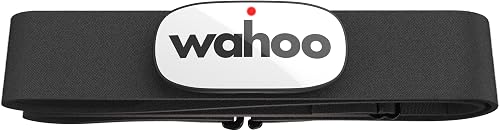
WAHOO TRACKR is a chest strap with Bluetooth, ANT+ and a rechargeable battery rated for up to 200 hours. Its LED reports heart rate detection, battery status and connection.
Pros
- Long rechargeable battery life
- Up to 3 Bluetooth connections
- LED status information
Cons
- Chest strap fit may not suit every user
- Charging is required instead of replacing a battery
WAHOO TRACKR is the best chest-strap option for users who want a long rechargeable runtime. Its battery provides up to 200 hours of active life, which reduces how often you need to connect a charger.
The sensor supports Bluetooth and ANT+ and can connect to a smartphone, compatible fitness equipment, training apps and accessories. It also supports 3 Bluetooth connections at once, which helps when you use more than one compatible device during a workout.
An LED indicates heart rate detection, battery status and connection status. The slim strap is designed to stay in place during intense exercise, while the included setup guide and charging cable cover the basic setup needs.
TRACKR uses a chest strap, so it is not the best choice if you want an armband. Its rechargeable battery also means planning for charging, even though the stated runtime is long.
Choose it for long training blocks and a rechargeable design. For the longest stated runtime with a replaceable battery, look at the GEOID HS500.
GEOID HS500 Heart Rate Monitor: Best for extended battery life
- ANT+ and Bluetooth
- Up to 800 hours of battery life
- IP67 construction
- LED connection reminder
The GEOID HS500 is a chest strap with dual wireless protocols and a replaceable CR2032 battery rated for up to 800 hours. It fits users who want fewer battery changes.
Pros
- Longest stated battery life here
- Bluetooth and ANT+ support
- LED confirms connection
Cons
- Chest strap required
- Do not use it for swimming
The GEOID HS500 is the best choice here for users who want very long battery life and dual wireless support. Its 800-hour battery rating is the longest in this group, and the CR2032 battery can be replaced.
ANT+ and Bluetooth let it connect to compatible smartphones, tablets, sports watches, bike computers, treadmills and other fitness equipment. Supported apps include Zwift, Strava, Kinomap, Wahoo Fitness, TrainerRoad, Rouvy and other Bluetooth-compatible services.
An LED confirms heart rate and connection status. The chest strap also has an automatic wake-up function when worn, which can make the start of a workout quicker.
The HS500 includes the sensor, a pre-installed CR2032 battery and adjustable elastics. Its IP67 construction suits sweat and rain, but swimming is not recommended.
Pick GEOID if battery changes are less convenient for you than charging and you want a chest strap with both connection standards. The COOSPO H6 is the better fit if you want broader stated equipment and app coverage.
Heartix HRM Heart Rate Monitor for Streaming: Best for streaming and gaming
- Bluetooth 5.0 and ANT+
- Pulsoid compatibility
- Adjustable chest strap
- Up to 300 hours from a replaceable CR2032 battery
Heartix focuses on streaming and gaming, with Bluetooth 5.0, ANT+ and compatibility with Pulsoid. Its adjustable chest strap and replaceable battery also suit regular fitness use.
Pros
- Designed for streaming and gaming
- Bluetooth 5.0 and ANT+
- Replaceable battery
Cons
- Less fitness-equipment detail than the broader picks
- Chest strap fit may not suit everyone
The Heartix HRM is the best Bluetooth heart rate monitor in this group for streaming and gaming. It supports Bluetooth 5.0 and ANT+, with compatibility for Pulsoid and popular fitness apps.
The adjustable chest strap is designed for longer streaming or gaming sessions. That slower pace matters, since you may be seated for hours and need a sensor that stays in place without constant adjustment.
Its replaceable CR2032 battery lasts up to 300 hours, giving it a similar runtime category to the COOSPO H6. That means less frequent battery changes during regular use, and a simple swap when power runs low.
Heartix includes the heart rate monitor, chest belt, battery and user manual. The monitor works with smartphones and tablets, so check the connection requirements of your streaming software before you begin.
This is a focused choice for viewers who want heart rate data on a stream. It also suits casual fitness use, provided a chest strap fit works for you.
For treadmill, cycling or multi-equipment use, the H6, WAHOO TRACKR or GEOID HS500 provide more detailed stated equipment compatibility. Those models may be a better match if your workout setup extends beyond a desk or streaming room.
How should you choose a Bluetooth heart rate monitor?
Choose a Bluetooth heart rate monitor by connection protocol first, then by fit and battery type. If you prefer heart-rate tracking built into a wrist device, compare fitness trackers with heart rate monitors.
A Bluetooth-only device can work well if your phone, watch and equipment all support Bluetooth, but dual-band models give you more options.
Chest straps sit around the chest and are common among users who want a dedicated workout sensor. The COOSPO H6, WAHOO TRACKR, GEOID HS500 and Heartix use chest straps.
Armbands sit on the forearm, bicep or tricep. Scosche uses an optical sensor, while the COROS monitor and COOSPO armband provide armband designs with their own stated sensor and connection features.
If you need a heart rate monitor no bluetooth, this roundup is not the right group because every pick here is built around Bluetooth support. Choose a different connection type only when your watch or workout equipment requires it.
Bluetooth or ANT+: which connection should you use?
Use Bluetooth for phones, apps and equipment that list Bluetooth support. Use ANT+ when your sports watch, bike computer or treadmill requires that protocol.
Dual-band models such as the H6, Scosche, COOSPO armband, WAHOO TRACKR, GEOID HS500 and Heartix can give you both choices. The COROS monitor is the exception because it connects through Bluetooth only.
Pair from the app or equipment you plan to use when the instructions call for it. Directly pairing a sensor from the phone's Bluetooth settings may prevent the fitness app from finding it.
For Strava users, our guide to the best heart rate monitor with Strava explains what to check before pairing. If your priority is a direct phone connection, compare the best heart rate monitor that connects to phone options.
How do you set up and care for a Bluetooth heart rate monitor?
Set up the sensor by charging or installing its battery, fitting the strap or armband securely, then pairing it through the intended app or device. Chest-strap users should moisten the electrode areas before starting.
That first step differs by model, so follow the instructions for your exact sensor. Some monitors use a pre-installed battery, while others need a CR2032 fitted or a rechargeable unit charged before the first workout.
A secure fit helps maintain contact while you move. The band should stay in place without becoming uncomfortably tight, and an armband should sit where the instructions specify for that model.
Placement matters for chest straps in particular, since the electrodes need firm contact with the skin. In dry winter conditions, you may need to moisten the belt electrode area with more water to ensure stable transmission.
Separate a chest sensor from its strap after use when the product instructions recommend it. That habit helps the strap dry properly and makes the next session easier to set up.
Wipe and clean the wearable according to its materials and design, and keep charging cables or replacement batteries available. Silicone, nylon and polyester components may each need different handling, so avoid harsh methods that could damage the band.
Store the sensor where it will not be bent, crushed or left damp for long periods. A dry, clean storage spot protects the electrodes and keeps the strap ready for regular training.
IP67, IP68 and IPX7 describe water resistance levels, but they do not make every monitor suitable for swimming. The H6, COOSPO armband and GEOID HS500 specifically should not be used for swimming.
Rain and sweat are a different matter, and several models in this group are built to work in those conditions. Still, rinse or wipe the sensor only as directed, and allow it to dry fully before storage.
Check battery status before important workouts, especially with shorter-life armbands that need regular charging. Pairing through the app or device you plan to use also helps avoid connection delays when you start.
If a sensor fails to appear during setup, check the battery, fit and electrode contact first. Confirming those basics saves time and often resolves a pairing problem without starting over.
Which Bluetooth heart rate monitor is best for treadmill workouts?
The COOSPO H6 is the best Bluetooth heart rate monitor for treadmill users who want Bluetooth and ANT+ support plus stated compatibility with NordicTrack, iFIT and Pro-Form treadmills. The GEOID HS500 is another dual-band chest-strap option for compatible treadmills.
Both models suit users who train at a steady pace and want heart rate data visible during a run or walk. A chest strap stays close to the body, which can help keep the sensor in place as the treadmill belt moves.
If you want a treadmill with wireless features too, compare the best Bluetooth treadmill before choosing a sensor. Equipment compatibility depends on the treadmill's supported connection standard.
That check is worth doing before you buy, since Bluetooth support alone does not guarantee a pairing will work. Confirm whether your treadmill uses Bluetooth, ANT+ or both, then match the sensor to that protocol.
For users who dislike chest straps, the COOSPO armband and COROS monitor offer armband alternatives. Confirm that your treadmill accepts the armband's Bluetooth connection before buying.
An armband can feel less restrictive during longer treadmill sessions, especially in warm rooms. It may suit users who find a chest strap uncomfortable or who prefer to wear the sensor on the forearm or bicep.
The COROS monitor is Bluetooth only, so it will not help if your treadmill requires ANT+. The COOSPO armband supports Bluetooth and ANT+, which gives treadmill users more flexibility across different machines.
Set up the sensor before you step onto the treadmill, and moisten the electrodes on chest straps to help contact. Pairing through the intended app or equipment screen, rather than from a phone settings list, can also make the connection smoother.
More guides on this topic
- Best Heart Rate Monitors for Apple Watch
Verdict: which Bluetooth heart rate monitor should you buy?
The COOSPO H6 is the best Bluetooth heart rate monitor for most buyers because it combines Bluetooth, ANT+, broad stated compatibility and up to 300 hours of changeable-battery life. Pick Scosche for an armband with optical sensing, or COROS for Bluetooth-only connections and wear detection.
The H6 suits users who move between a phone, sports watch, bike computer and gym equipment. Its dual protocols mean you are less likely to need a second sensor when your training setup changes.
Choose WAHOO TRACKR for a long rechargeable chest-strap runtime. Its rating of up to 200 hours of active life suits frequent training, provided you are comfortable planning for charging instead of swapping a battery.
Choose GEOID HS500 for the longest stated battery life in this group. At up to 800 hours from a replaceable CR2032 battery, it is aimed at users who want to change batteries as rarely as possible.
Choose Heartix when streaming and gaming are the main reasons you want a Bluetooth heart rate monitor. Its adjustable chest strap and replaceable battery also cover regular fitness use, but its stated focus is narrower than the broader picks.
Armband buyers have a clear path too. Scosche suits forearm, bicep or tricep placement and HRV apps, while the COOSPO armband offers dual-band support with a rechargeable design.
Chest strap buyers should weigh battery type and fit above all else. A strap that feels secure will be easier to wear consistently, and consistent wear matters more than extra features you may never use.
Connection type should be the next check. Dual-band models give you the most flexibility, while the Bluetooth-only COROS monitor makes sense only when your watch, phone and equipment all support Bluetooth.
If you want a device without an app, see our guide to the best heart rate monitor no app. It can help narrow the choice when you want workout data without building your setup around a phone application.
Overall, match the sensor to your equipment first, then to your preferred fit and battery style. That approach will lead most buyers to a monitor they will actually wear for every workout.
Our top 3 picks at a glance
-
1
Best for broad device support
COOSPO H6 Heart Rate Monitor Chest Strap
9.7/10 our score
See it on Amazon -
2
Best for armband comfort
Scosche Rhythm Heart Rate Monitor Armband
9.6/10 our score
See it on Amazon -
3
Frequently asked questions
What is the best Bluetooth heart rate monitor?
The COOSPO H6 is the best Bluetooth heart rate monitor for most people who want broad compatibility. It supports Bluetooth 4.0 and ANT+, works with compatible phones, watches, apps and workout equipment, and has a changeable battery rated for up to 300 hours.
Choose an armband instead if a chest strap feels restrictive.
Are Bluetooth heart rate monitors accurate?
Bluetooth heart rate monitors can provide useful real-time workout data when the sensor is worn correctly and paired through the right app or device. Chest straps measure from the chest, while armbands use optical sensors.
Moisten chest-strap electrodes and keep the band secure before starting a workout.
Do Bluetooth heart rate monitors work with treadmills?
Yes, compatible Bluetooth heart rate monitors can connect to some treadmills and other workout equipment. The COOSPO H6, COOSPO armband and GEOID HS500 identify treadmill compatibility through supported Bluetooth or ANT+ connections.
Check the treadmill's supported protocol before buying.
Is ANT+ better than Bluetooth for heart rate monitors?
ANT+ is useful when you want to connect a heart rate monitor to compatible bike computers, watches or gym equipment. Bluetooth is common with phones and fitness apps.
A dual-band monitor such as the COOSPO H6 or WAHOO TRACKR gives you both options, while the COROS monitor uses Bluetooth only.
How do you connect a Bluetooth heart rate monitor?
Wear the sensor correctly, turn on Bluetooth, then search for it inside the fitness app or equipment you plan to use. The COOSPO H6 and GEOID HS500 instructions specifically direct users to pair through the app instead of the phone's Bluetooth settings.
If the sensor does not appear, check the battery, fit and electrode contact.


