
Can You Use a Treadmill with Bad Knees?
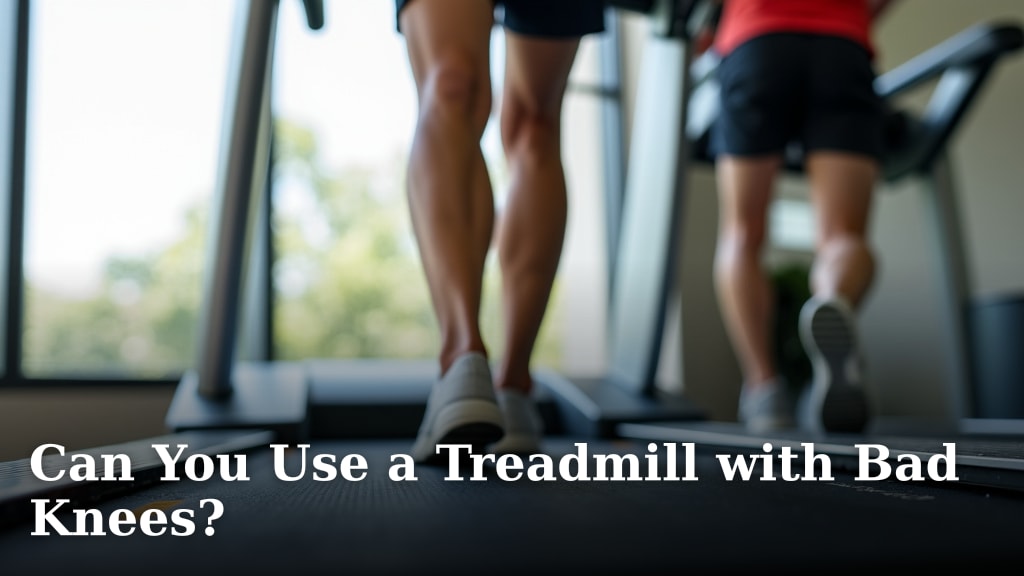
Yes, you can use a treadmill with bad knees, but it requires careful consideration and the right approach. Many people find that treadmills offer a controlled environment for exercise, which can actually be beneficial for joint health when done correctly.
Walking or running on a treadmill can be a great form of exercise. The key is to understand how to minimize impact and support your knees. This often means adjusting your routine and perhaps even the treadmill’s settings. We found that choosing the right type of treadmill also plays a big role.
- Treadmills can be okay for bad knees.
- Lowering impact is super important.
- Proper technique makes a big difference.
- Some treadmills are better than others.
- Listen to your body always.
Let’s walk through everything you need to know about using a treadmill with knee pain. We’ll help you figure out if it’s right for you and how to do it safely.
Navigating Treadmill Use with Knee Concerns
Using a treadmill with knee pain is definitely possible, but it’s all about being smart and gentle. You want to make sure your exercise is helping, not hurting, your knees.
Understanding Why Your Knees Hurt on a Treadmill
Before you even step on a treadmill, it helps to know why your knees might be protesting. Is it a dull ache or a sharp pain? Knowing the cause helps you figure out the best approach.
Common Knee Issues and Treadmill Impact
Many knee problems can flare up with impact. For instance, if you have osteoarthritis, the cartilage cushioning your knee joint is worn down. Every step on a hard surface can feel like bone-on-bone (Cleveland Clinic). Patellofemoral pain syndrome, often called “runner’s knee,” causes pain around the kneecap. This can get worse with repetitive bending, like during walking or running.
Even issues like meniscus tears or tendonitis can make treadmill use tricky. The repetitive motion can irritate inflamed tendons or stressed cartilage. We found that the key is to reduce stress and shock to these delicate areas.
Preparing Your Body for a Treadmill Session
Think of it like warming up a car on a cold morning. You wouldn’t just floor it, right? Your body needs a similar gentle preparation, especially when your knees are sensitive.
Warm-up and Cool-down: Non-Negotiables
Always start with a 5-10 minute warm-up. This gets blood flowing to your muscles and joints, making them more pliable. Gentle leg swings, heel raises, and very slow walking are perfect. Don’t skip it! Similarly, a 5-10 minute cool-down with light stretching helps your muscles relax and prevents stiffness. This simple step can make a big difference in how your knees feel the next day.
Footwear and Support: Your First Line of Defense
Your shoes are your knees’ best friends on a treadmill. You need shoes with excellent cushioning and support. Look for running or walking shoes designed to absorb impact. If you have flat feet or overpronation, consider shoes with motion control or stability features. Sometimes, custom orthotics can also provide extra alignment and shock absorption (Mayo Clinic). Don’t wear worn-out shoes; their cushioning is gone.
Optimizing Your Treadmill Technique for Knee Health
How you walk or run makes a massive impact. Small adjustments can lead to much happier knees.
Stride Length and Foot Strike
Many people take long strides, landing heavily on their heels. This sends a jolt right up your leg to your knee. Try shortening your stride and aiming for a more mid-foot strike, directly under your hips. This allows your body’s natural shock absorbers (muscles and tendons) to work more effectively. Think about taking more steps, not longer steps.
Posture and Alignment
Good posture isn’t just about looking tall. It’s about distributing weight evenly. Stand tall, shoulders back and relaxed, and engage your core. Avoid hunching over the console or looking down at your feet too much. Your head should be aligned over your shoulders, and your shoulders over your hips. This helps keep your knees tracking properly.
Treadmill Settings That Protect Your Knees
Your treadmill isn’t just a flat, moving belt. It has features you can use to your advantage.
Speed and Incline: The Gentle Approach
Start slow. Seriously slow. If walking causes pain, try a very gentle pace. You can always increase it later. For incline, a slight incline (1-2%) can sometimes feel better than a completely flat surface for some people, as it can reduce direct impact on the knee joint by shifting some work to the glutes and hamstrings. However, too steep an incline can also strain knees, so experiment carefully. The goal is to find what feels most comfortable for your knees.
Using the Handrails (Sparingly)
It’s okay to hold onto the handrails for balance, especially when starting or if you feel unsteady. However, avoid gripping them tightly and leaning back, as this can throw off your natural gait and posture. If you need to hold on the entire time, you might be going too fast or need to adjust your balance elsewhere.
Choosing the Right Treadmill for Sensitive Knees
Not all treadmills are created equal. Some are much kinder to your joints than others.
Cushioning and Deck Suspension
This is probably the most important feature. Look for treadmills with advanced cushioning systems. These systems absorb more shock, reducing the impact transmitted to your knees. They often have flexible decks or specialized elastomers designed to mimic softer surfaces. We found that higher-end treadmills usually offer superior cushioning.
Here’s a quick look at treadmill cushioning:
| Cushioning Level | Effect on Knees | Best For |
|---|---|---|
| Minimal | Higher impact, less shock absorption. | No knee issues, very short walks. |
| Standard | Some shock absorption, typical for home models. | Mild knee concerns, walking. |
| Advanced | Excellent shock absorption, reduces joint stress significantly. | Bad knees, running, longer workouts. |
Alternative Treadmills: Curved Manual Treadmills
Consider a curved manual treadmill. These treadmills are powered by your own movement and have a curved deck. Many users find them to be lower impact because they encourage a more natural gait and mid-foot strike. There’s no motor, so you control the speed entirely, and the curve can feel more forgiving on joints. They can be a great option if traditional treadmills bother your knees.
When to Listen to Your Body and Stop
This is crucial. Your body has an alarm system – pain. Don’t ignore it.
The “No Pain, No Gain” Myth vs. Joint Health
Forget that old saying, especially when it comes to your knees. With joint pain, “no pain, no gain” can lead to “lots of pain, lots of damage.” If you feel sharp, increasing pain, or persistent discomfort, stop immediately. Pushing through joint pain is rarely a good idea and can worsen existing conditions (NIH).
Knowing When to Consult a Professional
If treadmill use consistently causes pain, or if your knee pain worsens, it’s time to talk to a doctor or physical therapist. They can diagnose the exact issue and recommend personalized exercises or treatments. Sometimes, a professional can even watch you walk or run and suggest specific form corrections.
Your Safety Checklist for Treadmill Workouts with Bad Knees
Before you start your next treadmill session, run through this quick checklist:
- Have I warmed up my body gently for 5-10 minutes?
- Am I wearing supportive, well-cushioned shoes?
- Is my treadmill speed slow and comfortable?
- Have I checked my posture and am I taking shorter strides?
- Am I ready to stop immediately if I feel increasing pain?
- Do I have a plan for a gentle cool-down and stretch?
Conclusion
Using a treadmill with bad knees is absolutely possible. Your success hinges on being mindful and making smart adjustments. Focus on proper form, choose the right footwear, and utilize your treadmill’s cushioning features. Remember to always listen to your body; pain is a signal, not a challenge to overcome. By prioritizing your knee health, you can enjoy the many benefits of treadmill exercise safely and effectively. Start slow, be patient, and you’ll find your rhythm.
Frequently Asked Questions
Can a treadmill worsen my knee pain?
Yes, if used incorrectly or without proper precautions, a treadmill can aggravate existing knee pain. Pushing through sharp pain, using poor form, or wearing unsupportive shoes can lead to increased discomfort or injury. Always prioritize pain-free movement.
Is walking outdoors better for bad knees than a treadmill?
Not necessarily. While outdoor surfaces vary, many can be harder and less predictable than a treadmill. A treadmill with good cushioning offers a controlled, consistent surface that can actually be kinder to your knees by reducing impact.
What are the best exercises for bad knees besides a treadmill?
Low-impact activities are ideal. Swimming, cycling (especially stationary bikes), elliptical trainers, and water aerobics are excellent choices. Strength training for your leg muscles (quads, hamstrings, glutes) also provides crucial support for your knee joints.
How often should I use a treadmill if I have knee pain?
Start with short, gentle sessions, perhaps 10-15 minutes, a few times a week. Gradually increase duration and frequency only if you experience no pain during or after your workout. Always let comfort be your guide and consult your doctor or physical therapist.
Should I use an incline if I have knee pain?
A very slight incline (1-2%) can sometimes feel better for some people as it can reduce direct stress on the knee joint by engaging different muscles. However, a steep incline can put more strain on your knees. Experiment carefully and always prioritize what feels most comfortable for you.
