
How to Walk on a Treadmill for Beginners?

To walk on a treadmill as a beginner, always start with a warm-up. Begin slowly and gradually increase your speed and incline. Focus on your posture and make sure you stay hydrated throughout your workout.
You might be wondering if a treadmill is right for you, or how to get started safely. We found that many beginners appreciate learning the basics. This includes choosing the right settings and understanding proper form to prevent injury. We’ll show you how to make your first treadmill walks easy and effective.
- Warm up properly before you start.
- Adjust speed and incline slowly.
- Maintain good posture.
- Stay hydrated during your walk.
- Cool down when you finish.
Ready to get moving? Let’s walk through exactly how to set up your treadmill and start your journey.
Getting Started with Treadmill Walking
You’re ready to get moving, and a treadmill is a fantastic way to begin. We’re here to guide you through the process, step by step. Starting slow and understanding the basic controls will help you build confidence. Think of it like learning to ride a bike — you begin with training wheels.
Preparing for Your First Walk
Before you even step on, a little preparation goes a long way. This ensures you’re comfortable and safe. You want your first experience to be positive and motivating.
Choosing the Right Attire
What you wear matters for comfort and safety. We recommend athletic wear that lets you move freely. Loose-fitting clothes can sometimes get caught in the machinery. Think breathable fabrics that wick away sweat.
- Comfortable shorts or pants: Avoid anything too baggy.
- Breathable top: A T-shirt or tank top is usually perfect.
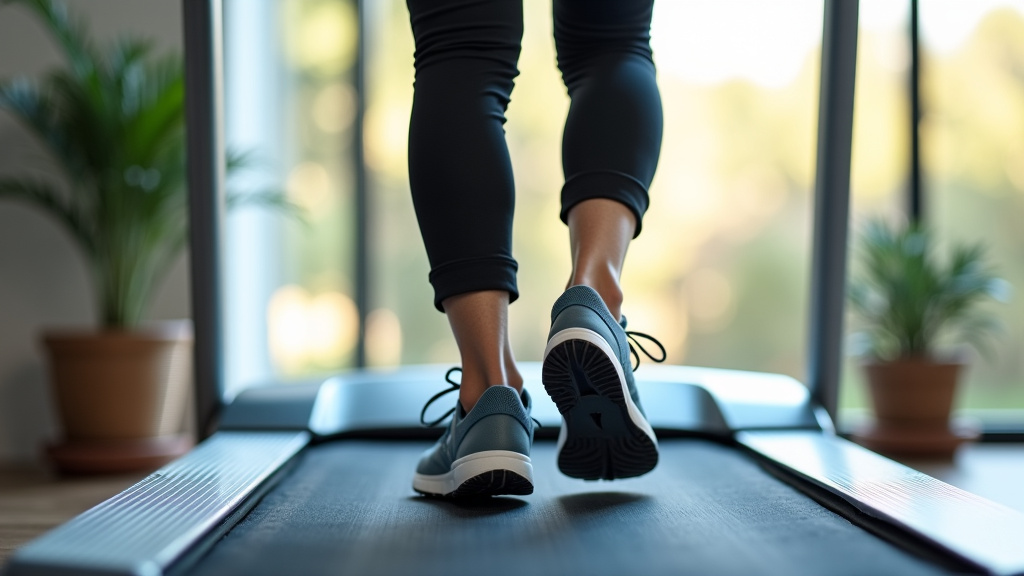
- Supportive athletic shoes: This is perhaps the most important. Look for shoes designed for walking or running (Mayo Clinic). They offer cushioning and stability.
- Socks: Prevent blisters with moisture-wicking socks.
Hydration and Fueling Up
Just like any exercise, good hydration is key. You’ll sweat more than you think, even during a gentle walk. Drink water before, during, and after your treadmill session. Keep a water bottle within easy reach.
A light snack beforehand can provide energy. Something like a banana or a small handful of nuts works well. Avoid heavy meals right before your workout. You don’t want to feel sluggish or uncomfortable.
Familiarizing Yourself with the Treadmill Controls
Every treadmill is a little different, but they share common controls. Taking a moment to understand them will prevent fumbling mid-walk. It’s like knowing where your car’s gas and brake pedals are before you drive.
- Start/Stop: Always the biggest button! Know exactly where it is.
- Speed: Usually marked with “Speed,” “+”/”-“, or up/down arrows. This controls how fast the belt moves.
- Incline: Often marked with “Incline,” “+”/”-“, or up/down arrows. This raises the front of the treadmill, making it feel like you’re walking uphill.
- Emergency Stop Clip/Key: This is a crucial safety feature. It’s usually a red clip or magnet attached to a string. Attach the clip to your clothing. If you stumble, the key pulls out, and the treadmill stops instantly. We found that beginners often overlook this, but it’s really important for your safety.
Starting Your Treadmill Walk: The Basics
Now that you’re ready, let’s get you walking! Remember, slow and steady wins the race. Your goal is to build a foundation. Don’t worry about speed or distance right away.
Stepping On and Setting Initial Speed
Always step onto the treadmill with the belt stopped. Find your balance before you hit “start.” Hold onto the handrails for extra support initially. This is completely normal and helps you feel secure.
Start with a very slow walking speed. We suggest around 1.0 to 1.5 mph. This is often described as a “leisurely stroll.” Press the “start” button and then slowly increase the speed. You want to feel comfortable and in control. Don’t jump to a brisk pace immediately.
Finding Your Stride and Maintaining Posture
Once the belt is moving, let go of the handrails if you feel steady. Try to find a natural stride. Don’t take overly long or short steps. Your arms should swing naturally at your sides, just like walking outside.
Good posture is vital to prevent strain. Stand tall, shoulders back and relaxed. Avoid hunching over or constantly looking down at your feet. Look straight ahead, or gently gaze at the console. Engage your core slightly, as if tightening a belt, to support your back.
Many beginners tend to hold onto the handrails throughout their walk. While it’s fine for balance at first, try to let go when you feel confident. Holding on can alter your natural gait and reduce the benefits of the workout. Your body adjusts better to the movement without constant support.
Adjusting Speed and Incline Safely
As you get comfortable, you can gradually increase your speed. Increase it by small increments, perhaps 0.1 or 0.2 mph at a time. The goal is to reach a pace where you feel moderately challenged but can still hold a conversation. This is often called the “talk test.”
Adding incline simulates walking uphill. This makes your workout more challenging and engages different muscles. Start with a low incline, like 1.0% or 2.0%. Increase it slowly, never more than 1.0% at a time. Too much incline too soon can strain your calves and hamstrings. Remember, you can always decrease it if it feels too hard.
| Adjustment | Beginner Recommendation | Effect on Workout |
|---|---|---|
| Speed | Start 1.0-1.5 mph, increase by 0.1-0.2 mph | Increases heart rate, builds cardio endurance |
| Incline | Start 0.0-1.0%, increase by 0.5-1.0% | Engages leg muscles more, burns more calories |
| Duration | Start 10-15 mins, add 5 mins per week | Improves stamina and overall fitness |
Structuring Your Treadmill Workout
A well-structured workout includes a warm-up, the main exercise, and a cool-down. This helps prevent injury and maximizes your benefits. Think of it like preparing a meal; each step serves a purpose.
The Importance of Warm-Up and Cool-Down
A proper warm-up prepares your body for activity. It gradually increases your heart rate and blood flow to your muscles. Research suggests a dynamic warm-up helps reduce injury risk (American Council on Exercise).
Your warm-up should be 5-10 minutes. Start with a very slow walk (1.0-2.0 mph) with no incline. Then, add some dynamic stretches like arm circles or leg swings while off the treadmill.
Equally important is the cool-down. This helps your heart rate return to normal gradually. It also helps prevent muscle soreness. It’s like letting your car engine cool down after a drive.
Your cool-down should also be 5-10 minutes. Gradually decrease your speed and then your incline until you’re at a slow stroll. Finish with some static stretches, holding each stretch for 20-30 seconds.
Building Your Walking Routine
For beginners, consistency is more important than intensity. Aim for regular walks, even if they’re short. We recommend starting with 20-30 minutes, three to five times a week. Listen to your body always.
You can gradually increase your duration or intensity over time. For example, add 5 minutes to your walk each week. Or, increase your speed slightly. You might try incorporating small intervals of higher speed or incline.
Here’s a simple checklist for your treadmill journey:
Wear appropriate shoes and clothing.
Attach the emergency safety clip.
Start with a 5-10 minute gentle warm-up.
Maintain good posture throughout your walk.
Gradually increase speed or incline as you feel comfortable.
Finish with a 5-10 minute cool-down and stretching.
Listening to Your Body and Preventing Injuries
Your body will tell you what it needs. Pay attention to any discomfort or pain. If something hurts, stop or reduce the intensity. Pushing through pain can lead to injuries.
Start slowly, especially if you haven’t been active recently. Don’t try to go too fast or too long on your first few tries. Gradual progression is key. This careful approach helps build your fitness base safely and effectively.
Conclusion
You’ve taken the first step towards a healthier you by learning how to use a treadmill. Remember to always prioritize your safety with proper attire and that emergency clip. Start at a gentle pace, listen to your body, and gradually build up your routine. Consistency is more important than speed or distance when you’re just beginning. Keep these tips in mind, and you’ll soon be walking confidently toward your fitness goals. Get ready to enjoy the benefits of regular activity!
Frequently Asked Questions
What is a good treadmill speed for beginners?
For beginners, a speed of 1.0 to 2.0 mph is a great starting point. This allows you to get comfortable with the machine and focus on your balance and form. You can gradually increase it by small increments as you gain confidence.
How long should a beginner walk on a treadmill?
Beginners should aim for 20-30 minutes of walking, including warm-up and cool-down. Start with shorter durations if needed, like 10-15 minutes, and slowly add 5 minutes to your workout each week.
Should I use the incline on a treadmill as a beginner?
It’s generally recommended to start with a flat surface (0% incline) to get accustomed to the movement. Once you feel steady, you can gradually introduce a low incline, like 0.5% or 1.0%, to make the workout more challenging.
Is it okay to hold the handrails while walking on a treadmill?
Holding the handrails is fine for initial balance and safety, especially when you’re just starting. However, try to release them once you feel confident, as holding on can disrupt your natural stride and reduce the effectiveness of your walk.
What should I do if I feel dizzy or unwell on the treadmill?
If you feel dizzy, unwell, or experience any pain, immediately press the stop button or pull the emergency stop clip. Step off the treadmill safely and rest. It’s always best to consult with a doctor if you have recurring issues.
