Exercise Bikes: The Complete Buying Guide
Which exercise bike should you buy depends on your riding position and workout style: choose an upright bike for a natural feel, a recumbent bike for back support, an indoor cycling bike for standing effort, or an air bike for fan resistance. Measure your space and check resistance, fit and display needs before you decide.
On this page (7 sections)
- Which exercise bike should I buy for your body and goals?
- How do you size an exercise bike to your height and room?
- Which resistance system should you choose?
- What features are worth paying for?
- How much should you spend on an exercise bike?
- What should you check before you place your order?
- Which exercise bike should I buy: your decision rule
Which exercise bike should you buy depends on your riding position and workout style: choose an upright bike for a natural feel, a recumbent bike for back support, an indoor cycling bike for standing effort, or an air bike for fan resistance.
Our score weighs specs, features and buyer feedback against what you are shopping for.
You can buy an exercise bike with confidence when you match type, fit and resistance to how you plan to ride.
First time buyers often focus on price, then discover the seat, noise level or display matters more in daily use.
This guide helps you choose bike type, fit, resistance and features in that order.
Start with your body and your routine, not a brand name.
If you ride mostly seated in short sessions, a simple upright model may be enough.
If you plan long rides, want app workouts or ride standing, the design and resistance system change.
If you are unsure between cardio machines, our exercise bike vs rowing machine guide breaks down the choice by goals and space.
Which exercise bike should I buy for your body and goals?
Choose the bike type that puts you in the position you want to ride in most days.
There is no single best bike for every rider. Your knees, back, height and workout style point to a type before you compare models.
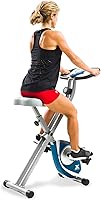
An upright bike keeps your torso more upright and lets you sit or stand.
It feels like a road bike position without the lean, and it works well for steady cardio and intervals.
A recumbent bike puts your back against a padded seat with legs extended forward.
It suits longer seated rides and people who prefer support.
An indoor cycling bike has a heavier flywheel and a more aggressive position for standing sprints and hills.
An air bike uses a fan, so effort rises with pedal speed.
If you are new to riding, start with best exercise bikes for beginners to see which types beginners rate for ease of use.
For younger riders, see best exercise bike for kids.
For tall riders who struggle with legroom, see best exercise bike for tall people.
Upright exercise bikes: the natural starting point
An upright bike is the most common choice for a first bike.
You sit over the pedals with a more natural posture and can add a little standing effort if you want.
The footprint is compact, so it fits in a corner or spare room more easily than a recumbent model.
Look for a seat that moves up and down and forward and back.
That range determines whether you can extend your leg properly without rocking your hips.
Pedals with straps help keep feet in place, and a wide seat can improve comfort for longer rides.
Upright bikes suit steady state cardio, weight loss efforts and short daily sessions.
For weight loss specifically, compare options in best exercise bikes for weight loss.
If you want a bike for a dedicated home gym, see best exercise bikes for home.
Recumbent exercise bikes: support for longer seated rides
A recumbent bike moves the seat back and adds back support.
Your legs reach forward to pedals placed in front of you, which changes how your knees and hips feel.
Many riders find longer seated sessions easier in this position.
The trade-off is length.
A recumbent bike needs more floor space for the seat and pedal assembly.
It also makes standing effort awkward, so it is mainly a seated option.
If floor space is tight, measure the full length before you choose this type.
Choose recumbent if you plan to read, watch shows or ride for longer periods with back support.
Choose upright or indoor cycling if you want more variety in position.
Indoor cycling bikes: flywheel feel for standing workouts
An indoor cycling bike is built around a flywheel and a resistance pad or magnetic brake.
The ride can feel smooth and a heavier flywheel helps carry momentum through sprints.
The seat and handlebars adjust, but the position stays more athletic than an upright bike.
This type suits structured classes, interval training and riders who like to stand.
It is less suited to very relaxed seated rides.
Noise depends on the resistance system, so quiet magnetic systems are worth checking if you ride early or late.
For class style rides, see best indoor cycling bike.
For a fan driven option, see best air bike for home gym.
Air bikes: fan resistance that scales with effort
An air bike uses a fan to create resistance, so the harder you pedal, the harder it gets.
There are no preset levels to set.
That design appeals to riders who want short, hard efforts and full body movement when arms are included.
Air bikes can be loud because the fan moves air.
They also need enough space around the fan for safe use.
If you want wind resistance with a belt drive, the Schwinn Airdyne Bike Series below shows that style.
Schwinn Airdyne Bike Series is the Schwinn AD7 Airdyne Bike in the data.
It uses progressive wind resistance, a single stage belt drive and a perimeter weighted fan.
Schwinn says the fan is optimized for high resistance and reduced noise, and the belt drive helps it run quietly.
The bike measures 53 in D x 26.5 in W x 53 in H and weighs 51.3 kg.
It has a maximum weight recommendation of 348 lb and a comfortable, adjustable seat.
Assembly is required.
Multi position hand grips give you varied workout options.
The high resolution multi display console tracks calories, watts, time, distance, speed, RPM and heart rate, with heart rate telemetry enabled.
The power source is battery powered for the console.
This type suits riders who like simple resistance without level controls.
It is less suited to riders who want preset levels or very quiet operation.
Compare other Schwinn models in best schwinn exercise bikes and other air options in best air bike for home gym.
How do you size an exercise bike to your height and room?
Size a bike by fit and footprint, not by weight class alone.
Seat height, seat reach, handlebar height and the space around the bike decide whether you will use it.
Measure your height, inseam and arm reach before you shop.
Shorter riders need a low minimum seat height and enough forward adjustment.
Taller riders need enough leg extension and handlebar height so they do not hunch.
If you share the bike, check that the adjustment range covers both riders.
Measure the room in inches.
Mark the bike footprint on the floor with tape, then add space to get on and off.
Leave room behind the flywheel and in front of the handlebars.
You also need space to move the seat and to stand beside the bike for stretching.
Folding and compact options help in small rooms.
See best folding exercise bike for space saving designs.
For senior riders who need easy entry, see best exercise bikes for seniors.
For a low profile option for a desk, see best under desk pedal exerciser.
Fit checks you can do before you buy
Sit on a stable chair and note your knee height.
Your bike seat should let your knee stay slightly bent at the bottom of the pedal stroke, not fully locked.
If the seat cannot go low enough, your foot may not reach the pedal comfortably.
Check handlebar reach by holding your arms forward as if on the bike.
You should reach without stretching your shoulders.
Sweaty hands slip on smooth grips, so textured grips help on longer rides.
Check weight capacity against rider plus clothing and shoes.
The Schwinn Airdyne model above lists 348 lb.
That number is a limit, not a comfort guide.
Heavier riders should also check seat width and pedal size.
Room checks that prevent returns
Measure doorways and hallways if the bike will be assembled in another room.
Some bikes need assembly where they will be used.
The Airdyne data notes assembly is required, so plan for that step.
Check floor type.
Hard floors may need a mat to protect the surface and reduce vibration.
A mat also helps keep the bike in place during hard efforts.
Leave space for a water bottle and towel within reach.
Which resistance system should you choose?
Choose resistance by noise, effort range and maintenance.
Magnetic, fan, friction and air systems feel different and serve different riders.
Magnetic resistance uses magnets to slow the flywheel.
It is usually quiet and smooth, with levels controlled by a dial, knob or motor.
It suits home use where noise matters.
Fan resistance uses air, so effort rises with speed.
It needs little adjustment but can be loud.
Friction uses a pad on the flywheel; it costs less but can wear and make noise over time.
Air bikes have no levels.
That simplicity appeals to some riders and frustrates others who want an easy spin.
Indoor cycling bikes may use magnetic or friction systems, so check the type before you compare price.
If you want a budget option, see best exercise bike under.
For a brand focused on indoor cycling, see best exercise bike accessories for add ons that improve use.
For parts and upkeep, see best exercise bike replacement parts.
Resistance for beginners and for intervals
Beginners need a low end that feels easy and a range that grows with fitness.
A wide range matters more than the exact number of levels, because level counts are not standardized across brands.
Test whether the lowest setting lets you pedal slowly without grinding.
Interval riders need quick changes.
A knob or lever within reach helps more than a menu on a screen.
Air bikes change resistance instantly because fan speed follows pedal speed.
For beginners starting a routine, pair the right bike with exercise bike exercises for beginners.
To compare cardio options, see exercise bike vs running and how does exercise bike compare to walking.
Noise and maintenance trade-offs
Magnetic systems need less pad replacement than friction systems.
Fan systems have fewer wear parts but move a lot of air.
Belt drives, like the Airdyne belt drive, avoid chain noise and lubrication.
Check whether the console needs batteries or plugs in.
The Airdyne console is battery powered, so you will replace batteries over time.
Some bikes use an external power cord for motors or screens.
Confirm the outlet location before you place the bike.
What features are worth paying for?
Pay for fit, resistance quality and a display you will read.
Extra screens and programs matter only if you will use them.
A clear display should show time, speed, distance, calories and resistance level at a glance.
Heart rate helps some riders, but it is not required for steady cardio.
Watts help riders who train with power, while RPM helps those who follow cadence cues.
Adjustable seat and handlebars matter more than preset programs for most buyers.
A sturdy frame and stable base matter for hard efforts.
Pedal straps, a bottle holder and a tablet holder are useful, but they can be added later.
For a tablet holder, consider the three mounts below.
They clamp to handlebars and let you watch classes or shows.
Each fits a range of phones and tablets, and each lets you rotate the device for landscape or portrait viewing.
KDD Spin Bike Tablet Holder Mount fits devices from 4.7 to 13 in, including iPad Pro 12.9 and Galaxy Tabs.
It clamps to tubes from 0.55 to 1.33 in diameter, including spin bike and stationary bike handlebars.
The mount is 8.46 x 4.13 x 1.96 in and weighs 299 g.
KDD says the holder is made of PC, ABS, metal and rubber, with rubber pads to protect devices.
The ball joint rotates 360 degrees for viewing angle changes.
It has a weight capacity of 2 lb.
Choose this mount if you want broad device fit and a secure clamp.
Check your handlebar diameter before you order, because the clamp range is limited.
It works with or without a case for many devices, but case thickness can change fit.
Lamicall Tablet Holder Mount for Spin Bike fits 4.7 to 12.9 in phones and tablets, including iPad Pro 11 and 12.9 in models.
It clamps to handlebars from 0.5 to 1.33 in diameter.
The mount is 5.5 x 2.7 x 2.7 in and weighs 0.26 kg.
Lamicall says the enclosure is aluminum and the design rotates 360 degrees.
It has a weight capacity of 7.9 oz, so check your device weight with a case.
Lamicall notes it is not suitable for outdoor riding.
Choose this mount if you want a smaller, lighter holder.
Heavier tablets in thick cases may exceed the capacity.
Measure your device and handlebar tube before you buy.
Peastrex Treadmill Tablet Ipad Holder Bike Handlebar fits 4 to 13.5 in devices, including iPad Pro 12.9 and iPhone models.
It clamps to handlebars from 0.6 to 1.57 in diameter.
The holder uses nylon and glass fiber and has a max load of 2.2 lb.
Peastrex includes a long arm, super pipe clamp and tablet holder.
The double ball heads allow 360 degree rotation in both directions.
The four claw holder depth is 0.78 in, so it can hold many thick cases.
Choose this mount if your handlebar tube is wider than the other mounts allow.
The longer arm helps with viewing angle but can add vibration on hard efforts.
Check tube diameter and device size before you order.
How much should you spend on an exercise bike?
Spend based on how often you will ride and what you need from resistance and fit.
A low price bike can suit light use, while frequent riders gain from better adjustment and quieter resistance.
Budget bikes often have fewer levels, simpler displays and less seat adjustment.
Mid range bikes add magnetic resistance, better seats and more stable frames.
Premium bikes add power measurement, app integration and heavier flywheels.
Price does not guarantee fit, so measure first.
If your goal is weight loss, focus on consistency.
See best exercise bikes for weight loss for models aimed at that goal.
If you ride for home gym use, see best exercise bikes for home.
If you want a specific brand, see best schwinn exercise bikes and best yosuda exercise bike.
Where to save and where to spend
Save on extra programs if you prefer music or video from your own device.
The tablet mounts above show how a simple holder can cover that need.
Save on color options and covers that do not change fit.
Spend on seat adjustment, pedal straps and resistance range.
Those parts affect comfort and effort more than a larger screen.
Spend on a stable base if you ride standing or at high effort.
Total cost beyond the bike
Budget for a floor mat, a water bottle and towel.
Plan for replacement batteries for consoles like the Airdyne battery powered display.
If you buy a bike that needs assembly, allow time and tools for that step.
Check whether accessories are included.
The Airdyne included components list the exercise bike itself.
Other bikes may include tools, pedals or a power cord, so confirm before you assume extras are in the box.
What should you check before you place your order?
Check dimensions, weight capacity, assembly and returns before you buy an exercise bike.
Those details prevent most delivery problems.
Confirm outside dimensions in inches.
The Airdyne measures 53 in D x 26.5 in W x 53 in H.
Other bikes vary, so use the exact model numbers for your shortlist.
Check minimum and maximum seat height, handlebar height and the space needed to move parts.
Confirm weight capacity and rider weight.
The Airdyne maximum weight recommendation is 348 lb.
Confirm pedal type, strap fit and whether the seat fits your hips.
Confirm resistance type and whether levels are manual or motorized.
Check assembly requirements.
The Airdyne requires assembly.
Some bikes arrive mostly assembled, while others need frame, seat and console work.
Check the delivery route and whether the box can pass through doors.
For brand specific options, see xterra exercise bike reviews.
For a folding option, see best folding exercise bike.
For recumbent comfort, see best recumbent exercise bike.
A simple pre order checklist
Write down your height, inseam, handlebar diameter for mounts, room dimensions and door widths.
Note your preferred riding position and whether you will ride standing.
Note your noise limits and outlet location.
Compare two or three models side by side on seat range, resistance type, weight capacity and footprint.
Remove any model that fails one of those core checks, even if the price is lower.
A bike that fits poorly will not get used.
Which exercise bike should I buy: your decision rule
Pick by position first, then resistance, then features.
That order helps first time buyers choose bike type, fit, resistance and features without paying for extras they will not use.
Choose an upright bike if you want a natural seated position and compact size.
Choose a recumbent bike if you want back support for long seated rides and have floor space.
Choose an indoor cycling bike if you want class style intervals and standing effort.
Choose an air bike if you want fan resistance that rises with effort.
Pick the Airdyne style air bike if you like wind resistance and a belt drive.
Pick a magnetic upright bike if you want quiet steady rides.
Pick a tablet mount that fits your device size and handlebar diameter if you watch classes on your phone or tablet.
If you still feel torn between cardio machines, use exercise bike vs rowing machine to weigh space and effort.
For a first routine, use exercise bike exercises for beginners.
For accessories after you buy, see best exercise bike accessories.
Frequently asked questions
Which exercise bike should I buy first?
Buy an upright exercise bike first if you want a natural riding position and simple controls. It suits most beginners, takes less floor space than many recumbent models, and lets you see the console easily.
Check seat height, pedal straps and resistance type before you order.
What resistance type is best for a home bike?
Magnetic resistance is quiet and smooth for steady workouts, fan resistance rises as you pedal harder, and friction systems cost less but can wear. Choose based on noise, effort range and maintenance you accept.
A wide range helps as fitness improves.
How much space does an exercise bike need?
Measure the bike footprint plus room to mount, dismount and adjust the seat. Upright and indoor cycling bikes usually need less length than recumbent bikes.
Leave space behind the flywheel for safe entry and to move the seat.