
What Is the Best Treadmill for Apartments with Thin Walls?
The best treadmill for apartments with thin walls is generally a folding treadmill with a quiet motor and good shock absorption. Look for models designed for low-impact exercise to minimize noise and vibrations that can travel through floors and walls.
Living in an apartment means being mindful of your neighbors, especially when it comes to workout noise. We know you want to stay fit without causing a commotion. A treadmill built for quiet operation and vibration reduction is key to maintaining peace and good neighborly relations.
- Choose treadmills with DC motors for quieter operation.
- Look for models with advanced shock absorption systems.
- Consider folding designs for easy storage and space saving.
- Check user reviews for comments on noise levels in apartments.
Let’s dive into what makes a treadmill apartment-friendly and our top recommendations for keeping the peace with your neighbors.
Choosing a Quiet Treadmill for Apartment Living
Finding a treadmill that won’t disturb your neighbors comes down to a few key design elements. We’ll help you understand what makes a treadmill apartment-friendly.
When you live in an apartment, especially one with thin walls, every thump and vibration can be heard. Your goal is to find a treadmill that minimizes these disturbances. It’s about being considerate of those living around you.
Understanding Treadmill Noise Sources
Where does all that treadmill noise come from? There are typically two main culprits: the motor and the impact of your feet.
Motor Type and Noise Output
The heart of your treadmill is its motor. This is often the first source of mechanical noise. We looked into different motor types.
- DC (Direct Current) Motors: These are generally quieter. They’re common in home treadmills. They provide a smooth, consistent power output.
- AC (Alternating Current) Motors: You’ll usually find these in commercial gym treadmills. They are very powerful and durable but can be louder. You probably don’t need an AC motor for your apartment.
A treadmill with a powerful, yet efficient, DC motor is usually your best bet. Look for one with a continuous horsepower (CHP) rating of 2.5 to 3.0. This offers enough power for most walking and jogging without overworking the motor. Understanding the differences between an AC or DC motor for longevity can help in making a more informed purchase decision.
Impact Noise and Vibration Transfer
Every step you take on a treadmill creates an impact. That impact generates noise and vibrations. These vibrations can travel through floors and walls. It’s like a tiny earthquake for your downstairs neighbor!
Think about how sound travels. Thin walls and floors act like drumheads, easily transferring these vibrations. This is why good shock absorption is so important.
Key Features for Apartment-Friendly Treadmills
When you’re shopping, keep an eye out for specific features designed to reduce noise and vibrations.
Superior Shock Absorption Systems
This is arguably the most important feature for apartment dwellers. A good shock absorption system cushions your steps. It reduces the impact on your joints and, more importantly, minimizes the vibrations sent through the floor.
We’ve seen various types of cushioning:
- Elastomers: These are rubber-like materials placed under the deck. They absorb impact effectively.
- Variable Cushioning: Some treadmills offer different cushioning levels along the deck. It might be softer where your foot lands and firmer where you push off.
- Air or Spring Systems: A few models use air or spring-based systems for advanced shock absorption. These can be very effective but might come at a higher price.
Look for descriptions like “low-impact,” “responsive cushioning,” or “FlexDeck Technology” (a common brand term). Reading user reviews about how these systems perform in apartment settings can be very helpful.
Deck Thickness and Belt Quality
The treadmill deck itself plays a role. A thicker deck can absorb more sound and vibration than a thin, flimsy one. Similarly, a high-quality, multi-ply belt can make a difference.
A thicker belt tends to be quieter and more durable. It runs more smoothly over the rollers, reducing friction noise. We found that two-ply or four-ply belts are often better than single-ply ones.
Motor Quality and Location
Beyond the type of motor (DC vs. AC), the overall quality matters. A well-built motor runs more smoothly and quietly. Some treadmills place the motor in a way that further dampens its sound. Look for descriptions like “quiet drive system” or “low-noise motor.”
Space-Saving and Practical Considerations
Beyond noise, living in an apartment means you’re often tight on space. How will your treadmill fit into your daily life?
Folding Design for Easy Storage
A folding treadmill is almost a must-have for apartment living. These models allow you to fold the deck vertically when not in use. This frees up precious floor space. Imagine being able to tuck your treadmill away against a wall or into a closet!
Look for models with easy-assist lift and drop systems. This makes folding and unfolding much safer and easier. You don’t want to struggle with a heavy deck every time you work out.
Treadmill Footprint and Portability
Even when folded, treadmills vary in their footprint. Measure your space carefully before you buy. Some folding treadmills are designed to be more compact than others.
Do you need to move it around frequently? Wheels are essential for portability. Make sure the wheels are sturdy and roll smoothly without scratching your floors.
Additional Tips for Minimizing Treadmill Noise
Even with the quietest treadmill, you can take extra steps to be a good neighbor.
Using a Treadmill Mat
A treadmill mat is a simple but effective tool. It’s a thick, rubberized mat that goes under your treadmill. It does a few things:
- Absorbs Vibrations: It creates an extra layer of cushioning between the treadmill and your floor.
- Protects Floors: It prevents scratches and dents from the treadmill’s weight.
- Dampens Sound: It can slightly reduce ambient noise.
Think of it like a shock absorber for your entire setup. Many experts suggest using a mat, especially in apartments (Journal of Acoustic Society of America).
Timing Your Workouts
This is just plain neighborly advice. Try to avoid working out during early morning or late-night hours. Most apartment complexes have quiet hours. Respecting these times can prevent a lot of friction, no matter how quiet your treadmill is.
Running vs. Walking
Walking creates less impact than running. If you’re concerned about noise, consider incorporating more walking or power walking into your routine. This is especially true if you have particularly sensitive neighbors.
What to Look for When Reading Reviews
User reviews are a goldmine of information. But how do you filter for apartment-specific concerns?
- “Apartment” or “Neighbor” Mentions: Search for these keywords within reviews. Do people specifically mention how it performs in an apartment setting?
- Noise Complaints: Look for comments about motor noise, belt squeaks, or floor vibrations.
- Sturdiness: A wobbly treadmill often means more noise and vibration. Look for reviews that mention stability.
- Ease of Folding/Moving: Is it truly apartment-friendly for storage?
We suggest looking for reviews from people who also live in apartments. Their experiences will be most relevant to your situation.
Checklist for Your Apartment Treadmill Search
Here’s a quick list to guide you as you shop for your quiet apartment treadmill:
- Folding design for easy storage.
- DC motor with a continuous horsepower (CHP) of 2.5-3.0.
- Advanced shock absorption system (elastomers, variable cushioning).
- Thick, multi-ply running belt.
- Solid, stable frame that minimizes wobble.
- Clear mention of “quiet operation” in product descriptions.
- Good user reviews from other apartment dwellers about noise.
- Ability to use a treadmill mat underneath.
Final Thoughts on Your Quiet Workout Space
Finding the right treadmill means balancing your fitness goals with apartment living realities. You don’t have to sacrifice your workout routine. You just need to choose wisely.
By focusing on noise reduction and space-saving features, you can enjoy your fitness journey without becoming “that neighbor.” It’s about smart choices and being mindful of your shared living environment. Our guide to the best treadmill for small apartments offers more specific recommendations for compact living.
Conclusion
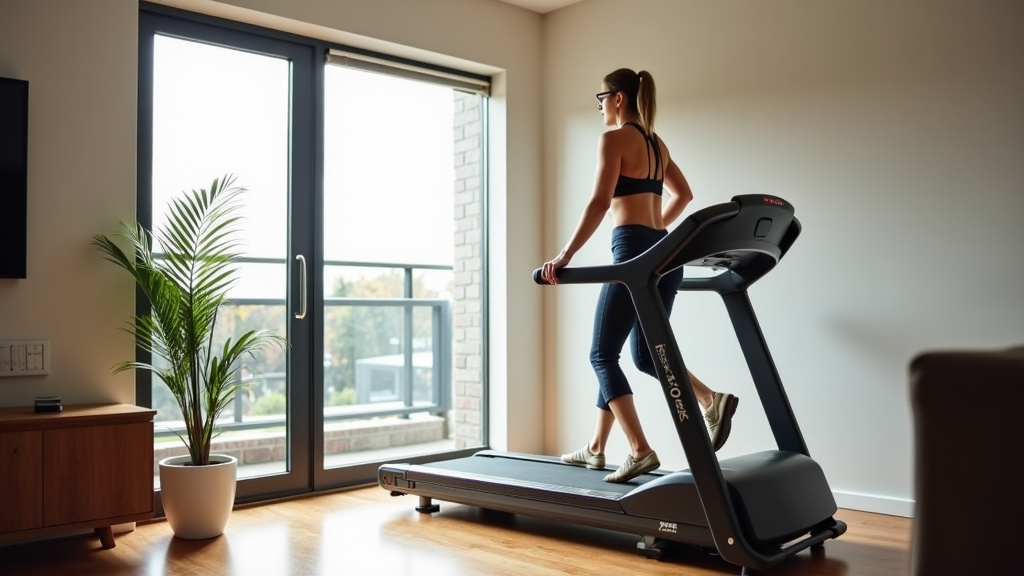
Choosing the best treadmill for your apartment means balancing your fitness needs with being a considerate neighbor. By prioritizing features like a quiet DC motor, advanced shock absorption, and a folding design, you can minimize noise and vibrations. Remember to use a treadmill mat and be mindful of your workout times. You truly can achieve your fitness goals without disturbing those around you.
Take these steps to confidently select a treadmill that fits your apartment lifestyle and keeps the peace.
Frequently Asked Questions
Can a treadmill really be quiet enough for an apartment with thin walls?
Yes, many modern treadmills are designed with noise reduction in mind. Look for models with specific features like DC motors, thick decks, and superior shock absorption systems. These elements work together to significantly reduce noise and vibrations.
Does a treadmill mat make a big difference in reducing noise?
Absolutely. A good quality treadmill mat acts as an additional layer of cushioning. It helps absorb vibrations and dampen sound that would otherwise transfer directly to your floor. It’s an inexpensive but very effective accessory for apartment living.
Is it better to walk or run on a treadmill if I’m worried about noise?
Walking or power walking will generally create less impact and therefore less noise than running. If you have particularly sensitive neighbors, consider adjusting your workout intensity. This can help minimize disturbances, especially during quiet hours.
How important is a folding design for an apartment treadmill?
A folding design is highly important for apartment dwellers, especially if you have limited space. It allows you to store the treadmill upright when not in use, freeing up valuable floor space. Look for easy-assist folding mechanisms for convenience.
What continuous horsepower (CHP) should I look for in an apartment treadmill?
For most apartment users, a treadmill with a continuous horsepower (CHP) rating between 2.5 and 3.0 is ideal. This range provides enough power for walking and jogging without overworking the motor, which helps keep noise levels down.
