
Is It Worth Buying a Treadmill for a Small Apartment?
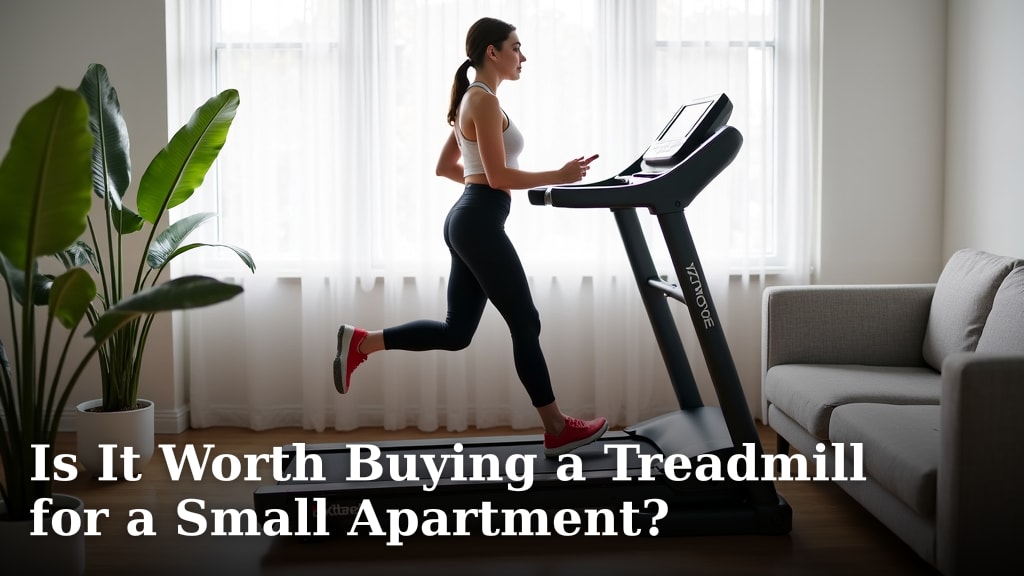
Yes, buying a treadmill for a small apartment can be absolutely worth it if you choose the right model and consider your space carefully. Many apartment dwellers find the convenience of at-home workouts to be a huge benefit, despite the tight quarters.
You might be surprised at the variety of compact and foldable treadmills available today. We found that these options are designed specifically for limited spaces, making a home gym more accessible than ever. It all comes down to balancing your fitness goals with your apartment’s physical constraints.
- Compact and foldable treadmills are a game-changer for small spaces.
- Measure your apartment carefully before buying.
- Consider noise levels for both you and your neighbors.
- Look for features that enhance a small-space workout experience.
- Think about storage and portability when not in use.
Let’s walk through exactly how you can make a treadmill work for your small apartment, ensuring your investment pays off in sweat, not stress.
Making a Treadmill Work in Your Compact Apartment Space
Yes, fitting a treadmill into a small apartment is entirely possible. It requires some careful planning and smart choices. Many people achieve their fitness goals right from their living room, even in tight quarters. It’s all about selecting the right machine for your unique situation.
Assessing Your Apartment’s Treadmill Potential
Before you even think about models, you need to understand your space. This step is critical to avoid buyer’s remorse. Don’t just guess; grab a measuring tape. You’ll thank yourself later.
Measure Your Available Space Accurately
First, identify where the treadmill will live. Will it be in the living room, bedroom, or a dedicated corner? Measure the length, width, and even the height of this area. Remember, you’ll need room to step on and off the machine safely. We found that you need at least two feet of clearance around the treadmill for safety and comfort (American Council on Exercise).
Consider the pathway to this spot, too. Can you easily move the treadmill there? Think about doorways and hallways. It’s like moving a couch; sometimes you need to get creative. Make sure your chosen spot has a flat, stable floor.
Understanding Noise and Vibration Concerns
Living in an apartment means sharing walls and floors. A noisy treadmill can quickly become a neighborly nuisance. This is especially true if you live on an upper floor. Treadmills can produce both noise and vibrations. Both can travel through floors and walls.
Look for treadmills advertised as “quiet” or “low-impact.” You might also consider placing an anti-vibration mat underneath. We found that these mats absorb a lot of the impact and sound. They’re a small investment for peace of mind, for both you and your neighbors.
Choosing the Right Treadmill for Small Spaces
Once you know your space, you can start looking at models. This is where the magic happens for apartment dwellers. Modern treadmills offer incredible features packed into compact designs. You don’t have to sacrifice quality for size.
Compact and Foldable Treadmill Options
These are your best friends in an apartment setting. Foldable treadmills are designed to be used, then tucked away. They’re not just smaller; they’re smarter. Think about how much valuable floor space you can reclaim.
Types of Space-Saving Treadmills
- Foldable Treadmills: These typically fold upright, often with hydraulic assist for easy lifting. They have full-sized decks when unfolded.
- Under-Desk Treadmills (Walking Pads): These are much smaller, often without handrails, designed for walking or light jogging. They slide under a desk or bed.
- Compact Non-Folding Treadmills: Some treadmills are simply built with smaller frames, sacrificing some deck length or width but remaining solid.
We found that foldable models are the most popular choice. They offer the best balance of a robust workout and convenient storage. Under-desk treadmills are great for those who want to move while working, but they aren’t ideal for intense running.
Key Features to Look for in a Small-Space Treadmill
Don’t just pick the smallest one. Consider these features:
- Easy Folding Mechanism: Can you fold it up and down by yourself without struggling? Look for gas shock assists.
- Transport Wheels: These make moving the folded treadmill much easier. It’s like moving a suitcase.
- Small Footprint When Folded: Check the dimensions when it’s stored. Does it fit into your closet or against a wall without being a tripping hazard?
- Motor Power (HP): For running, aim for at least 2.5 Continuous Horsepower (CHP). For walking, 1.5 CHP might suffice (American College of Sports Medicine).
- Running Deck Size: While smaller is better for apartments, make sure it’s still safe for your stride. A 55-inch length is good for most runners.
- Max User Weight: Ensure the treadmill can safely support your weight. This is a safety feature you shouldn’t overlook.
Comparing Different Treadmill Models
Let’s look at a quick comparison to help guide your decision. This table highlights typical characteristics you’ll find when shopping.
| Feature | Foldable Treadmill (Typical) | Under-Desk Treadmill (Typical) |
|---|---|---|
| Folded Footprint | Medium (e.g., 2.5′ x 3′) | Small (e.g., 2.5′ x 5′ flat) |
| Workout Intensity | Walking, Jogging, Running | Walking, Light Jogging |
| Motor Power | 1.5 – 3.0 CHP | 0.5 – 1.5 CHP |
| Max Speed | Up to 10-12 MPH | Up to 4-6 MPH |
| Noise Level | Moderate (depends on model) | Low |
| Storage | Upright in corner/closet | Under bed/couch/desk |
Maximizing Your Small Apartment Workout Experience
Owning a treadmill is only half the battle. You also need to make sure your workout environment is inviting and effective. A small space doesn’t mean a small experience. You can create a fantastic home gym with some thoughtful touches.
Optimizing Your Treadmill Placement
Where you put your treadmill matters. It affects your motivation, your comfort, and even your workout performance. Don’t just stick it in the darkest corner. Think strategically.
Creating a Dedicated Workout Zone
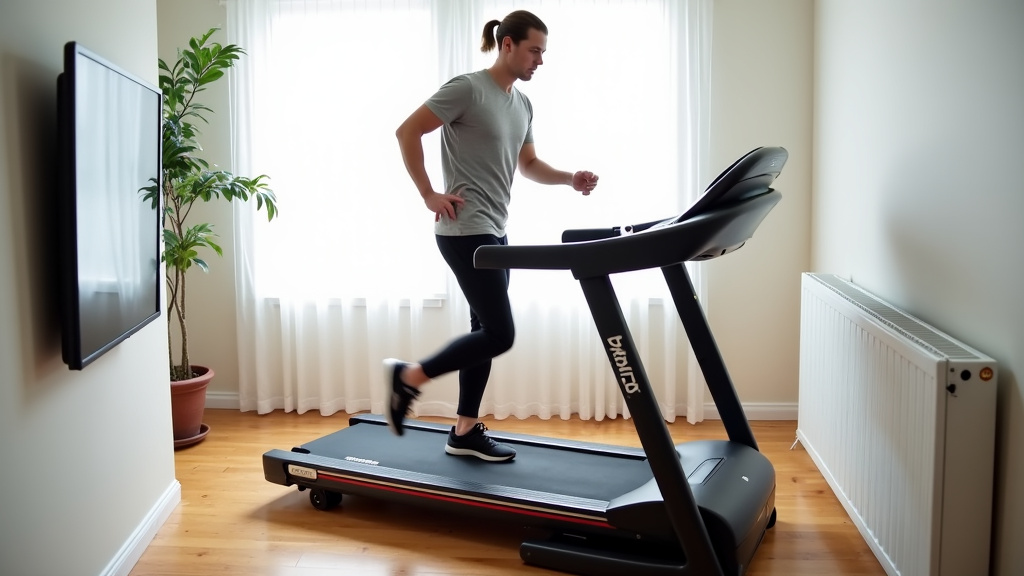
Even if it’s a temporary zone, make it feel special. Can you position your treadmill near a window for natural light? Or in front of a TV for entertainment? Some people enjoy putting a small mirror nearby to check their form. This helps you stay engaged and makes the space feel purposeful.
Consider the airflow. Running can generate heat. Is there a fan nearby? An open window? Good ventilation makes a huge difference. A comfortable environment makes you more likely to stick with your routine. This is about making exercise a pleasure, not a chore.
Storage Solutions for Accessories
Treadmills come with accessories: water bottles, towels, headphones, phone. Where do these go when you’re working out? And where do they go when the treadmill is folded?
Consider small, wall-mounted shelves or hooks. A slim rolling cart can also be useful for holding your workout essentials. The goal is to keep things tidy and within reach. A cluttered space can feel suffocating in an apartment. Organization is key to maintaining your motivation.
Considering the Financial and Lifestyle Impact
A treadmill is an investment. It’s not just about the cost of the machine. It’s also about the value it brings to your health and daily life. Is that convenience worth the price and the space it occupies?
The Cost-Benefit Analysis of an Apartment Treadmill
Think about what you’re currently spending on gym memberships. Or how much time you lose commuting to and from a gym. For many, an at-home treadmill quickly pays for itself. It’s a matter of comparing apples to apples.
Evaluating Your Fitness Goals and Habits
Are you committed to regular exercise? Do you find excuses to skip the gym because of weather or travel time? An at-home treadmill removes many common barriers. We found that convenience is a huge motivator for consistent exercise (National Institutes of Health).
If your goal is to walk more steps daily or train for a 5K, a treadmill can be incredibly helpful. If you prefer high-intensity interval training (HIIT), ensure the treadmill you choose can handle those demands. Your fitness goals should directly influence your choice.
Checklist for Deciding on a Treadmill
Before you make a final decision, run through this quick checklist:
- Have I accurately measured my available space (unfolded and folded)?
- Is my landlord okay with a treadmill in the apartment? (Some leases have restrictions).
- Can I comfortably afford the treadmill and any accessories (like a mat)?
- Will the treadmill’s noise level be acceptable for my neighbors?
- Does this treadmill meet my specific fitness needs (walking, jogging, running)?
- Do I have a clear plan for where to store it when not in use?
If you can answer “yes” to most of these, you’re on the right track. Buying a treadmill for your small apartment can be a fantastic decision for your health and well-being. It just requires a little foresight and a lot of measuring tape.
Conclusion
Deciding if a treadmill is right for your small apartment really comes down to careful planning and realistic expectations. By measuring your space, understanding noise implications, and choosing a suitable compact or foldable model, you can absolutely make it work. We’ve seen how a bit of foresight transforms a potential headache into a powerful health asset.
Your fitness goals are important, and a home treadmill can remove many barriers to consistent exercise. Take one last look at your space, consider your budget, and then confidently pick the machine that will get you moving right at home. Your ideal workout awaits.
Frequently Asked Questions
Can I put a treadmill on an apartment balcony?
We advise against placing a treadmill on an apartment balcony. Balconies may not be rated for the weight and vibrations of a treadmill plus a person. Exposure to weather can also severely damage the machine and void its warranty.
How do I protect my apartment floor from a treadmill?
To protect your floors, always place an anti-vibration or equipment mat under your treadmill. These mats absorb shock, reduce noise, and prevent scratches or indentations. This is especially important for hardwood floors or carpeting.
Are apartment treadmills hard to assemble?
Most compact and foldable treadmills for apartments are designed for easier assembly than full-sized gym models. Many come largely pre-assembled, requiring only a few steps to set up. We found that basic tools are usually included, and clear instructions are provided.
What’s the difference between a “walking pad” and a regular foldable treadmill?
A walking pad is typically much smaller, flatter, and often lacks handrails, designed for walking or very light jogging, often under a desk. A foldable treadmill, however, usually offers a full-sized running deck, higher speeds, and inclines, folding upright for storage.
How much space do I need around the treadmill for safety?
For safety, you should aim for at least 2 feet of clear space on both sides of the treadmill. You also need about 6 feet of clear space behind the deck. This allows you to safely get on and off and prevents accidental falls.
