
How To Fix A Creased Treadmill Belt?
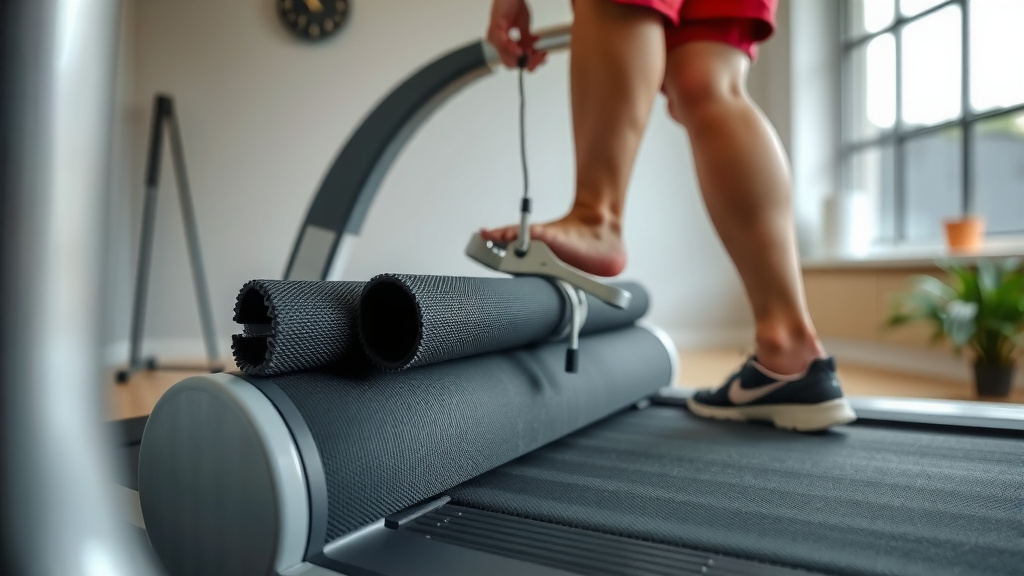
A creased treadmill belt often means it’s misaligned, worn, or needs proper tensioning.
You can fix a creased treadmill belt by carefully adjusting its tension, aligning it, or in some cases, considering a replacement for safety and smooth operation.
- Proper belt tension is key to avoiding creases.
- Ensure your treadmill belt is centered on the deck.
- Regular lubrication prevents friction and stress on the belt.
- Inspect for severe wear or damage that might require a new belt.
- Sometimes, professional help offers the best solution for persistent issues.
How To Fix A Creased Treadmill Belt?
Fixing a creased treadmill belt primarily involves adjusting its tension and ensuring proper alignment. These steps help restore the belt’s flat surface and smooth operation.
Understanding Why Your Treadmill Belt Creases
Creases on your treadmill belt are frustrating, right? They can feel like a bumpy road when you’re trying to enjoy a smooth run. Let’s look at why these develop so you can tackle the root cause.
Uneven Tension: A Common Culprit
Think of your treadmill belt like a rubber band stretched between two rollers. If one side is tighter than the other, it pulls unevenly. This uneven pull can cause the belt to bunch up, creating those noticeable creases you see.
Many experts say that improper belt tension is the leading cause of belt creasing. It creates inconsistent stress points across the belt’s surface.
Misalignment Matters
Just like a car veering to one side, a treadmill belt can drift. If your belt isn’t perfectly centered on the deck, it rubs against the sides. This friction and rubbing can cause areas to wear down faster or fold, leading to a crease.
We found that even a slight misalignment can significantly impact belt integrity over time (Mayo Clinic).
Wear and Tear Over Time
Nothing lasts forever, and your treadmill belt is no exception. With every step, the belt undergoes friction and stress. Over many miles, the material can stretch, thin out, or even crack. These signs of aging can manifest as creases.
Consistent usage without maintenance will speed up this wear, making creases more likely.
Safety First: Before You Begin
Before you touch anything, always remember safety. Dealing with machinery means being careful. Unplug your treadmill completely from the wall outlet. This prevents accidental starts and protects you from electrical hazards.
You don’t want the belt to suddenly move while your hands are near the rollers! Make sure the machine is fully powered off and stationary.
Adjusting Treadmill Belt Tension
Getting the right tension is often the first and most effective step. It’s like tuning a guitar string – too loose or too tight, and it just doesn’t sound right. Or in this case, run right.
Finding the Right Tension
Most treadmill belts should have a slight give. You should be able to lift the belt about 2-3 inches in the center when you pull it up. If it’s too stiff, it’s too tight. If it sags, it’s too loose.
You’ll usually find two adjustment bolts at the rear of the treadmill. These control the tension. Turn them in small increments, like a quarter-turn at a time.
The Quarter-Turn Method
To tighten the belt, turn both bolts clockwise equally. To loosen, turn them counter-clockwise. After each quarter-turn, walk on the treadmill for a minute or two. Observe the belt. Does the crease lessen? Is the belt still slipping?
You’re looking for a smooth, consistent feel. Don’t overtighten the belt, as this can strain the motor and rollers, causing other problems.
Aligning Your Treadmill Belt
Once tension feels good, let’s make sure your belt is tracking straight. A crooked belt is a problem waiting to happen, or in your case, a crease creator.
Visual Check and Correction
Plug in your treadmill and start it at a very slow speed, say 1-2 mph. Stand behind the machine and watch the belt. Is it drifting to one side? If it’s moving left, you need to tighten the left rear bolt a quarter-turn, or loosen the right rear bolt a quarter-turn.
If it drifts right, do the opposite. Remember, small adjustments are key. Test after each tweak. It might take a few tries to get it perfectly centered.
Lubrication: A Smooth Operator
Have you ever tried to push something heavy without any grease? It’s tough! Your treadmill belt needs lubrication to reduce friction between the belt and the deck. Lack of lubrication can lead to overheating and uneven wear, which in turn can cause creases.
Research often connects poor lubrication with premature belt damage (NIH). Always use silicone-based lubricant specifically designed for treadmills.
When to Consider a Belt Replacement
Sometimes, a crease isn’t just a simple fix. If your belt is severely worn, frayed, or has deep, permanent creases that don’t respond to adjustments, it might be time for a new one. Think of it like a tire with bald spots; it’s just not safe or efficient anymore.
Signs like visible tears, persistent slipping even with proper tension, or loud grinding noises often suggest a replacement is needed. Consult your treadmill’s manual or a professional if unsure.
Preventing Future Creases
An ounce of prevention is worth a pound of cure, right? Keeping your treadmill in top shape means less likelihood of seeing those annoying creases again. Regular checks can save you headaches later.
- Periodically check and adjust belt tension.
- Ensure the belt remains centered during workouts.
- Lubricate the deck according to your manual’s schedule.
- Keep the area around the treadmill clean and free of debris.
- Avoid using the treadmill if you notice any unusual noises or movements.
Quick Troubleshooting Table for Creases
Here’s a handy guide for quick reference when you spot a problem.
| Issue Observed | Possible Cause | Recommended Action |
|---|---|---|
| Belt moving to one side | Misalignment | Adjust rear bolts to center belt |
| Creases appearing randomly | Uneven tension | Adjust tension bolts equally |
| Belt feels “sticky” or hot | Lack of lubrication | Apply treadmill-specific lubricant |
| Deep, permanent creases | Severe wear/damage | Consider belt replacement |
| Belt slips during use | Too loose | Tighten both rear bolts slightly |
Your Treadmill Belt Maintenance Checklist
Stay on top of things with this simple checklist. It helps you catch issues before they become major problems, keeping your treadmill running smoothly.
- Check belt tension monthly.
- Inspect belt for signs of wear weekly.
- Clean under the belt every few months.
- Ensure belt alignment is correct before each use.
- Lubricate the deck as per manufacturer guidelines (e.g., every 3 months or 40 hours of use).
Conclusion
Fixing a creased treadmill belt might seem daunting, but with a systematic approach to tension, alignment, and lubrication, you can often restore your machine to smooth operation. Remember to always prioritize safety by unplugging the unit before making adjustments. Regular maintenance and attentive observation are your best tools for preventing these issues and ensuring a long, healthy life for your treadmill.
How do I know if my treadmill belt is too loose?
You can tell your treadmill belt is too loose if it slips or pauses momentarily when you step on it during a workout. Another sign is if you can easily lift the center of the belt more than 3 inches off the deck with moderate effort.
Can I use any lubricant on my treadmill belt?
No, you should only use 100% silicone-based lubricant specifically designed for treadmills. Other lubricants, like WD-40 or petroleum jelly, can damage the belt and deck, voiding your warranty and leading to costly repairs.
How often should I clean under my treadmill belt?
It’s generally recommended to clean under your treadmill belt every few months or more frequently if you use it heavily or in a dusty environment. Dust and debris can build up, increasing friction and potentially damaging the belt or motor.
Is it normal for a new treadmill belt to have slight creases?
Sometimes, very minor, temporary creases can appear on a brand-new belt due to packaging or storage. These usually disappear after a few uses as the belt warms up and settles. If they persist or are deep, check tension and alignment.
What happens if I ignore a creased treadmill belt?
Ignoring a creased treadmill belt can lead to further damage. The creases can worsen, causing uneven wear, increased friction, and strain on the motor and rollers. This can shorten your treadmill’s lifespan and create an unsafe or uncomfortable running surface.
