6 Best Heart Rate Monitors for Running (November 2026)
The best heart rate monitors for running include the COOSPO H6 Heart Rate Monitor Chest Strap for most runners, the Scosche Rhythm Heart Rate Monitor Armband for secure armband fit, and the COROS Heart Rate Monitor for COROS runners.
On this page (10 sections)
- How we compared these running heart rate monitors
- The best heart rate monitors for running, ranked
- How we picked the best heart rate monitor for running
- Chest strap, armband or wrist: which fits your run?
- Do you need Bluetooth, ANT+ or both?
- Battery life and water resistance for outdoor runs
- How to use heart rate zones on your runs
- How to set up your sensor before a run
- What to check before you buy
- Final verdict: the best heart rate monitor for running
The best heart rate monitor for running is the COOSPO H6 Heart Rate Monitor Chest Strap for most runners, thanks to dual Bluetooth and ANT+ pairing and a 300-hour battery. Runners who hate chest straps often prefer the Scosche Rhythm armband, while the MorePro suits people who want wrist-based all-day tracking.
A good running sensor stays put through strides, hills and speed work. It also connects to the watch or app you already use, without dropouts mid-run.
Our score weighs specs, features and buyer feedback against what you're shopping for.
Start with our heart rate monitor buying guide if you want the full picture before you pick a form factor. For treadmill days, our guide to heart rate monitors for treadmill workouts covers indoor pairing and zones.
Our picks at a glance
-
1

-
2
 Best for secure armband fit
Scosche Rhythm Heart Rate Monitor Armband
9.6/10 our score
See it on Amazon -
3

- 4
 Check it
COOSPO HW9 Heart Rate Monitor Bluetooth ANT+
Best for heart rate zones - 5
 Check it
GEOID HS500 Heart Rate Monitor
Best for long battery life - 6
 Check it
MorePro Health Fitness Tracker
Best wrist all-day option
How we compared these running heart rate monitors
We compared specs, battery life, fit and pairing options across all six picks. Chest straps, armbands and a wrist tracker each solve a different problem, so we judged fit for outdoor runs first.
We checked battery life in hours of use, because a sensor that dies mid-week is hard to trust. We also checked water resistance, since sweat, rain and wet winter runs are normal training conditions.
We looked at Bluetooth and ANT+ support, because your watch, phone and apps may use different signals. A dual-mode sensor gives you more options without buying twice.
The best heart rate monitors for running, ranked
The picks below move from the strongest all-round running choice down to the best wrist option. Each one suits a different runner, so read the trade-offs before you decide.
COOSPO H6 Heart Rate Monitor Chest Strap: Best for most runners
- Bluetooth 4.0 and ANT+ dual mode
- IP67 water resistance
- 300-hour battery life
- Chest strap sensor
A chest strap with dual Bluetooth and ANT+ pairing, IP67 resistance for sweat and rain, and a 300-hour battery for steady outdoor runs.
Pros
- Dual Bluetooth and ANT+ connection
- Long 300-hour battery life
- IP67 for sweat and rainy runs
Cons
- Not for swimming or soaking
- Needs moistened electrodes for stable contact
The COOSPO H6 suits runners who want a chest strap that works with a watch, a phone app and indoor equipment. Its Bluetooth and ANT+ dual mode lets you pair to more than one device without swapping sensors.
CooSpo says accuracy stays within ±1 BPM, which matters when you train by heart rate zones. The strap works with apps such as Strava, Wahoo Fitness, Polar Beat and Zwift, and with Garmin and other sports watches.
The 300-hour battery life means about 300 hours of use at 1 hour per day, with a replaceable CR2032 battery. That is far longer than the rechargeable options here, so you charge less often on a training block.
IP67 resistance handles sweat and rainy runs, but CooSpo says not to use it for swimming or soak it in water. You also need to moisten the electrode areas before each wear, and add more water in dry winter air for stable readings.
Choose it for dependable outdoor runs and simple pairing. Skip it if you dislike a strap around your chest or want an armband instead.
Scosche Rhythm Heart Rate Monitor Armband: Best for secure armband fit
- Optical armband sensor
- Bluetooth Smart and ANT+ dual band
- IP68 waterproof
- 24-hour battery life
An optical forearm armband that stays put during hard efforts, streams HRV data to compatible apps, and pairs by Bluetooth or ANT+.
Pros
- Secure strap that stays put
- HRV mode with RR interval data
- IP68 waterproof build
Cons
- 24-hour battery needs regular charging
- Optical sensor sits on forearm or bicep
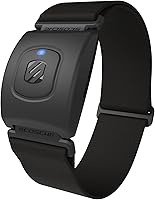
The Scosche Rhythm suits runners who find chest straps restrictive or who want a sensor they can move between arm positions. Its lightweight breathable strap adjusts to your forearm, bicep or tricep and stays put during intense workouts.
This is an optical sensor that delivers real-time heart rate for running and gym workouts. It pairs by Bluetooth or ANT+ to a sports watch, fitness equipment or apps such as Strava, Peloton and Wahoo.
The HRV mode captures RR interval data from subtle heartbeat variations. You can stream that data to apps such as HRV4Training, Morpheus Training and Welltory for insight into training, sleep quality and daily stress.
The 24-hour continuous battery life is shorter than the chest straps here, so plan to charge it about once a week if you train daily. It is IP68 waterproof, so sweat, rain and hard sessions are not a problem.
Choose it for comfort and HRV features. Skip it if you want a multi-month battery or a chest-strap signal.
COROS Heart Rate Monitor: Best for COROS runners
- Bluetooth only, up to 3 devices
- Auto-wear detection
- 38 hours of operation or 80 days standby
- Fabric armband
A soft fabric armband with auto-wear detection, Bluetooth pairing to up to three devices, and 38 hours of operation per charge.
Pros
- Auto-wear detection powers on and off
- Pairs to up to 3 devices at once
- Soft breathable fabric band
Cons
- Bluetooth only, no ANT+
- No Type-C adapter in box
The COROS Heart Rate Monitor suits COROS watch owners and runners who want an armband that turns on by itself. Its auto-wear detection powers the sensor on and off based on when you wear it, then connects to paired devices at the start of a workout.
The fabric band is soft and breathable, and it lays flat around your arm. A sliding buckle sets placement and tension, and you can remove the sensor for quick cleaning of the band.
It pairs by Bluetooth only to up to three devices at once, including sports watches, indoor trainers, bike computers, phones, apps, treadmills and indoor rowers. It does not support ANT+, so check your watch or equipment before you buy.
Battery life is 38 hours of full operation or 80 days of standby on a single charge. The magnetic cable recharges in 2 hours, but the box includes a USB cable only and no Type-C adapter.
Choose it for COROS setups and easy wear detection. Skip it if your watch needs ANT+ or you run only with non-COROS gear that needs ANT+.
COOSPO HW9 Heart Rate Monitor Bluetooth ANT+: Best for heart rate zones
- Optical armband with ±1BPM accuracy claim
- 5-color LED heart rate zones
- HRV function
- 35-hour rechargeable battery
An optical armband with a 5-color LED for heart rate zones, HRV support, vibration warning above your max heart rate, and dual Bluetooth plus ANT+ pairing.
Pros
- LED shows heart rate zone at a glance
- Vibration warning at max heart rate
- 35-hour rechargeable battery
Cons
- Optical armband, not a chest strap
- Max heart rate defaults to 200 bpm until customized
The COOSPO HW9 suits runners who train by zones and want a quick visual cue without looking at a watch. Its 5-color LED indicator shows your heart rate zone at a glance, so you can adjust effort on hills or during intervals.
This optical armband claims ±1 BPM accuracy and also tracks calories burned. It supports HRV function, which pairings with compatible apps can use for readiness and training review.
Connectivity is a strong point here. Bluetooth 5.0 and ANT+ let you connect to GPS bike computers, apps, fitness devices and running watches, with two simultaneous Bluetooth connections.
The rechargeable battery gives up to 35 hours of use with fast charge and a magnetic charger. A vibration warning triggers when your heart rate goes above your max heart rate value, which helps you guard effort during hard sessions.
Choose it for zone training and armband comfort. Skip it if you want a chest strap or a replaceable coin-cell battery that lasts months.
GEOID HS500 Heart Rate Monitor: Best for long battery life
- ANT+ and Bluetooth
- 800-hour battery life
- IP67 waterproof
- LED connection light
A chest strap with an 800-hour battery, IP67 water resistance, a fast wake-up under 1 second, and an LED that confirms connection.
Pros
- 800-hour battery life
- Wake-up in less than 1 second
- IP67 for sweat and rain
Cons
- Not recommended for swimming
- Chest strap needs moistened electrodes
The GEOID HS500 suits runners who want a chest strap with a very long battery life and a low price of hassle. Its 800-hour battery life works out to about 2.5 years at 1 hour a day, 4 times a week, with a replaceable CR2032 battery.
The sensor wakes in less than 1 second and uses an LED light that flashes to confirm heart rate and connection. That cue helps you check pairing before you head out the door.
It supports ANT+ and Bluetooth, so it can connect to a smartphone, tablet, sports watch, bike computer or treadmill. Connect by Bluetooth through the app you are using rather than from the phone Bluetooth list.
GEOID designed the hardware and algorithms to reduce noise from movement and sweat. The sensor is IP67 waterproof, but GEOID does not recommend swimming with it.
Choose it for battery life and dual pairing on a budget. Skip it if an armband or wrist display fits your running style better.
MorePro Health Fitness Tracker: Best wrist all-day option
- 1.47-inch display with 300+ watch faces
- 24/7 heart rate and blood pressure monitor
- 7 sports modes including running
- IP68 waterproof, 7-day battery
A wrist tracker with a 1.47-inch display, 24/7 heart rate monitoring, 7 sports modes, sleep tracking, and up to 7 days of battery per charge.
Pros
- Tracks steps, sleep and activity all day
- 7 sports modes including running
- Up to 7 days per charge
Cons
- Wrist sensor, not a chest strap or armband
- Not compatible with PCs or tablets
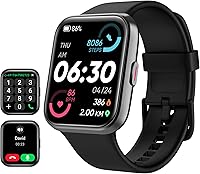
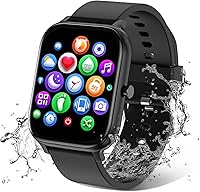
The MorePro Health Fitness Tracker suits runners who want one wrist device for runs, steps, sleep and daily health trends. It is a watch-style tracker with a 1.47-inch slim display and 300+ watch faces.
It offers 24/7 heart rate monitoring plus blood pressure and blood oxygen checks for general wellness reference. The sleep tracker records light and deep sleep, and all-day activity tracking records steps, distance and calories burned.
For workouts, it has 7 sports modes, including running, walking, cycling, climbing, basketball, elliptical and yoga. The IP68 waterproof design handles sweat, hand washing and light rain.
Battery life is up to 7 days of daily use or 10 days of standby, with a full charge in about 2 hours. It works with Android 7.0 and iOS 13.0 or above by Bluetooth 5.3, but not with PCs, iPads or tablets.
Choose it for all-day tracking in one watch. Skip it if you want a dedicated chest strap or armband for focused run data.
How we picked the best heart rate monitor for running
We picked six sensors that cover chest straps, armbands and a wrist tracker, all with real running use. Each pick pairs to a phone, a watch or both, so you can record your run your way.
We ranked them by score, with the COOSPO H6 first for its dual pairing and 300-hour battery. The Scosche Rhythm follows for comfort and HRV data, then the COROS for COROS users.
Battery life, water resistance and pairing options carry weight in our score. That keeps the focus on practical running use rather than headline features alone.
Chest strap, armband or wrist: which fits your run?
A chest strap gives the most direct signal, an armband gives comfort, and a wrist tracker gives all-day data. Your comfort and your watch decide more than any single spec.
Chest straps for direct readings
Chest straps such as the COOSPO H6 and GEOID HS500 sit across your chest and send heart rate to your watch or app. Many runners prefer this setup for hard interval work because the signal path is short and direct.
Trade-offs are real, though. You need to moisten the electrodes before each wear, and some runners find a strap uncomfortable in heat.
Battery life is often long, with replaceable coin cells.
Armbands for comfort and movement
Armbands such as the Scosche Rhythm, COROS and COOSPO HW9 sit on your forearm or upper arm. They avoid chest pressure and often feel more comfortable on long runs.
Most armbands here are optical sensors and rechargeable. That means shorter battery life in hours of use, but no coin cells to replace.
Check fit, because a loose band can move during fast strides.
Wrist trackers for all-day data
A wrist tracker such as the MorePro records heart rate, steps, sleep and activity all day. That wider view helps if you care about resting heart rate and daily trends, not just run data.
The trade-off is focus. A watch-style tracker is a general wellness tool, while a chest strap or armband is built for workout heart rate.
Do you need Bluetooth, ANT+ or both?
Dual-mode sensors are the safest pick because they pair to phones, watches and treadmills without guessing. Check your watch manual if you are unsure which signal it uses.
Bluetooth for phones and apps
Bluetooth pairs your sensor to your phone and apps such as Strava, Wahoo Fitness and Polar Beat. Most modern watches also support Bluetooth, so a Bluetooth-only sensor can still work well.
The COROS monitor is Bluetooth only and pairs to up to three devices at once. That works if all your gear supports Bluetooth, but it will not connect to ANT+ only equipment.
ANT+ for watches and gym gear
ANT+ remains common on Garmin watches, bike computers and some treadmills and indoor bikes. If your watch uses ANT+, a Bluetooth-only sensor will not pair to it.
For cycling and indoor sessions, our best heart rate monitors for cycling guide covers ANT+ pairing in more detail. For indoor bike users, our best heart rate monitor for Peloton guide covers app pairing.
Dual mode for fewer headaches
Dual-mode picks such as the COOSPO H6, Scosche Rhythm, COOSPO HW9 and GEOID HS500 cover both signals. You can run with a watch by ANT+ and record in an app by Bluetooth at the same time.
That flexibility helps runners who switch between outdoor runs, treadmill runs and indoor sessions.
Battery life and water resistance for outdoor runs
Long battery life saves hassle, and IP67 or IP68 covers sweat and rain, but neither means swimming. Match the battery to how often you train and how often you want to charge.
Battery life in real training weeks
A 300-hour battery at 1 hour a day lasts about 10 months of daily runs before the battery needs a change. The GEOID HS500 at 800 hours lasts far longer at the same use rate.
Rechargeable armbands are different. The Scosche Rhythm gives 24 hours, the COROS gives 38 hours, and the COOSPO HW9 gives 35 hours.
Charge them weekly if you run most days.
The MorePro wrist tracker gives up to 7 days of daily use. That fits a watch routine, but it is shorter than a chest strap with a coin cell.
Rain, sweat and swimming limits
IP67 and IP68 ratings here cover sweat, rain and wet training conditions. That is enough for outdoor runs in most weather.
Swimming is a separate limit. The COOSPO H6 and GEOID HS500 are not for swimming, so do not wear them in a pool or open water.
For pool use, see our best heart rate monitors for swimming guide instead.
How to use heart rate zones on your runs
Heart rate zones help you set effort on easy runs, tempo runs and intervals, but your max heart rate sets the zones. Set your own max heart rate in your watch or app rather than trusting a default.
Setting zones in your app or watch
The COOSPO HW9 lets you customize max heart rate in the Heartool or Coosporide app, with a default of 200 bpm. Its LED then shows your zone by color during the run.
Other sensors send heart rate to your watch or app, and the watch or app does the zone work. Learn your zone boundaries before you run, so you can glance and adjust.
If you train indoors too, our guide to treadmill heart rate zones for cardio helps you set targets for treadmill runs.
HRV and recovery data
Some armbands here add HRV data. The Scosche Rhythm streams RR interval data to HRV apps, and the COOSPO HW9 supports HRV function.
HRV data can help you review training load, sleep quality and daily stress over time. It does not replace how you feel on a run, so use it as one signal among others.
How to set up your sensor before a run
Moisten chest straps, snug armbands and pair through your app, not your phone Bluetooth list. A good setup check takes a minute and prevents dropouts.
Chest strap setup
Wet the electrode areas, adjust the strap to fit snugly across your chest, and snap on the sensor. Turn on phone Bluetooth, then search and connect from inside the app you use.
Do not pair from the phone Bluetooth list, because the app needs to find the sensor itself. Separate the sensor from the strap after each run, as CooSpo advises for the H6.
Armband and wrist setup
Place an armband on your forearm, bicep or tricep, then tighten it until it stays put without cutting circulation. Run a few steps to check bounce before you start.
For the COROS armband, set placement and tension with the sliding buckle, then let auto-wear detection power it on. For the MorePro watch, start the running mode and check that heart rate appears before you leave.
Pairing checks that save a run
Check battery level in your watch or app before hard sessions. Low battery is the most common cause of a sensor that will not connect.
If a sensor will not pair, check that it is worn correctly and close to your watch or phone. Confirm you are using the right signal, Bluetooth or ANT+, for that device.
What to check before you buy
Check your watch signal, your preferred fit and your charging tolerance before you order. Those three checks prevent most returns.
Watch and app support
List the devices you will use on runs: watch, phone, treadmill or bike computer. Then match that list to Bluetooth, ANT+ or dual-mode support.
Our best heart rate monitors for exercise guide covers wider workout use if you train beyond running. For treadmill-specific pairing, the best heart rate monitor for Sole treadmills guide covers that brand.
Fit, comfort and battery habits
Choose a chest strap for direct readings and long battery life, an armband for comfort, or a wrist tracker for all-day data. Think about heat, long runs and how a strap feels under a shirt or jacket.
If you often forget to charge gear, a 300-hour or 800-hour chest strap battery is easier to live with. If you charge your watch nightly anyway, a rechargeable armband fits that habit.
Final verdict: the best heart rate monitor for running
Pick the COOSPO H6 for most runners, the Scosche Rhythm for armband comfort, and the MorePro for all-day wrist tracking. Your watch signal and your preferred fit should make the final call.
The COOSPO H6 wins for dual Bluetooth and ANT+ pairing, IP67 resistance and a 300-hour battery. The GEOID HS500 is the battery-life alternative in chest-strap form.
The Scosche Rhythm and COOSPO HW9 suit runners who want armband comfort with HRV and zone features. The COROS suits COROS watch owners who want auto-wear detection.
For your next step, check your watch manual for Bluetooth or ANT+ support, then pick the fit you will wear on every run. For the wider buying picture, start with our heart rate monitor buying guide.
Our top 3 picks at a glance
-
1
-
2
Best for secure armband fit
Scosche Rhythm Heart Rate Monitor Armband
9.6/10 our score
See it on Amazon -
3
Frequently asked questions
What is the best heart rate monitor for running?
The COOSPO H6 is the best heart rate monitor for running for most people because it pairs by Bluetooth and ANT+ and runs for 300 hours. Pick an armband such as the Scosche Rhythm if you dislike chest straps.
Pick a wrist tracker if you want steps and sleep data too.
Is a chest strap or an armband better for running?
A chest strap usually gives the most direct signal during hard running effort. An armband avoids chest pressure and often feels more comfortable on long runs.
Both options here pair by Bluetooth, and most also pair by ANT+ to a watch.
Do I need Bluetooth or ANT+ for a running watch?
Check your watch first because some watches use ANT+ only and some use Bluetooth only. A dual-mode sensor covers both, so it can pair to a phone app and a watch at the same time.
That dual link is handy when you run with a watch and record in an app.
Can I use these monitors in the rain?
Yes, most picks here handle sweat and rain. The COOSPO H6 and GEOID HS500 are IP67, and the Scosche Rhythm and MorePro are IP68.
None of the chest straps here are meant for swimming, so keep them out of pools and open-water swims.