How to Choose a Commercial Curved Manual Treadmill
A commercial grade curved manual treadmill should suit your users, floor plan, and daily workload. Compare its deck, frame, user capacity, service support, and operating feel before choosing a model.
On this page (7 sections)
- What should a commercial grade curved manual treadmill handle?
- How do you assess the curved deck and frame?
- Which users will benefit from a curved manual treadmill?
- What maintenance should a gym plan for?
- How should you compare the total cost of ownership?
- Which alternatives help you compare gym equipment?
- How do you choose the right commercial curved manual treadmill?
A commercial grade curved manual treadmill should match your gym's daily traffic, user range, and service plan. Check the deck, frame, user capacity, maintenance needs, and parts support before treating the commercial label as a buying decision.
Curved manual treadmills are powered by the runner's movement, so each person controls belt speed through their stride. That can make them useful for self-paced intervals, but it also means users should learn how the belt responds before running hard.
This guide focuses on the checks that matter for repeated facility use. For a wider comparison of machine types, see our best commercial treadmill guide.
What should a commercial grade curved manual treadmill handle?
A commercial grade curved manual treadmill should be built for the number of users and sessions you expect. Check the maker's duty cycle, user capacity, frame and deck coverage, service access, and parts availability.
“Commercial” is not a universal performance standard. Ask the manufacturer to define the term for the exact model and get the answers in writing before planning a multi-unit purchase.
| Check | What to confirm | Why it matters |
|---|---|---|
| Duty cycle | Sessions or operating hours the maker supports | Helps match the treadmill to gym traffic |
| User capacity | Maximum user weight and any use limits | Keeps selection within the machine's stated range |
| Deck and belt | Surface dimensions, materials, and replacement process | Affects fit, upkeep, and downtime |
| Frame | Construction and coverage terms | Helps you compare long-term support |
| Service | Local technicians, parts lead times, and response process | Reduces uncertainty when a unit needs repair |
| Console | Display, tracking, and power needs | Helps determine whether it fits your gym's data setup |
A busy gym also needs an upkeep routine. Ask which parts need regular inspection, how the belt is adjusted or replaced, and whether the machine needs special tools.
How do you assess the curved deck and frame?
Assess the deck by fit, surface construction, and serviceability. A wider or longer surface may suit more users, but dimensions alone do not show how the curve feels underfoot.
Ask for the exact usable running area, not only the machine's outside footprint. Check the curve profile, belt or slat material, side rails, and whether wear parts can be replaced without replacing the whole deck.
What deck details should a commercial buyer compare?
Compare the running surface with the range of people who use your gym. A runner who takes long strides needs enough usable length, while occasional users may care more about a clear step-on area and stable side rails.
Try the treadmill with several users if the maker or dealer offers a demo. Pay attention to whether the belt starts smoothly, whether the curve encourages a comfortable stride, and whether users can slow down and step off with control.
Ask about replacement parts before you buy. Confirm the price and expected availability of belts, slats, bearings, and other wear parts, along with the recommended inspection schedule.
Does frame construction prove a treadmill is commercial grade?
Frame material is one part of the decision, not proof of commercial suitability. Ask for the stated user limit, frame coverage, usage limits, and service terms for the exact model.
Look for a clear plan for tightening, alignment, cleaning, and inspection. If the machine will sit in a shared gym, ask whether the maker recommends daily checks or a scheduled service interval.
Which users will benefit from a curved manual treadmill?
A curved manual treadmill is most useful when users want to control pace through their own movement. For other walking-focused options, browse manual treadmills for walking.
It may suit sprint intervals and self-paced workouts, but it is not automatically the right choice for every gym member.
New users may need an introduction to starting, accelerating, slowing, and dismounting safely. Staff should be able to explain the controls and keep the surrounding floor clear during use.
For interval sessions, compare the machine with our guide to a curved treadmill for sprinting. If your members need motor-driven pace control, our motorized curved treadmill guide explains the features to assess.
A manual curve can also feel different from a flat motorized belt. For a broader side-by-side comparison, see curved vs regular treadmills.
For a broader overview, see different types of treadmills. If possible, let several types of users try it before you buy more than one.
What maintenance should a gym plan for?
Plan for routine inspection, cleaning, and access to service parts. The schedule should follow the maker's instructions and account for how often members use each machine.
Ask the manufacturer or dealer for a maintenance checklist. Confirm what staff can handle in-house, which repairs need a technician, and how service affects warranty coverage.
A practical facility plan should cover:
- Inspecting the belt or slats for wear and movement.
- Checking the frame, fasteners, rails, and feet for looseness.
- Cleaning sweat and dust from the deck and console.
- Recording service dates and any unusual belt noise or movement.
- Keeping common replacement parts or confirming reliable access to them.
Do not assume a manual treadmill is maintenance-free because it has no drive motor. The belt, bearings, frame, console, and contact surfaces still need care.
How should you compare the total cost of ownership?
Compare the purchase cost, upkeep, service access, and expected downtime together. A lower initial price may not help if parts are hard to get or the machine cannot support your usage pattern.
Ask each supplier the same questions: what is covered, for how long, which parts are excluded, how service is arranged, and what routine maintenance costs. Compare the answers in writing rather than relying on the word “commercial.”
Also consider floor space and staffing. A curved manual treadmill may not need the same electrical setup as a motorized model, but it still needs a safe operating area and a plan for user instruction.
For a broader view of manual options, see our best manual treadmill guide. If deck material is a priority, compare the details in our wooden curved treadmill guide.
Which alternatives help you compare gym equipment?
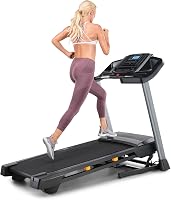
Use alternatives to clarify the features your facility needs, such as motor control, cushioning, folding, or app support. The examples below are home treadmills, so their stated features do not guarantee commercial duty suitability.
Use these machines to make a feature checklist, not as substitutes for a commercial curved model. Confirm the duty cycle and service terms for any treadmill you plan to place in a gym.
How do you choose the right commercial curved manual treadmill?
Choose a commercial curved manual treadmill by matching verified usage limits and service support to your expected traffic. Then confirm that the deck fits your users and the machine fits your floor plan.
Pick a model with clear duty-cycle guidance, accessible replacement parts, and a maintenance schedule your staff can follow. If sprinting is the main use, focus on belt response and user control; if members need guided pace changes, compare motorized options before deciding.
Measure the full footprint and allow space for safe mounting, dismounting, cleaning, and access. A commercial grade curved manual treadmill is a better fit when its documented limits and upkeep plan match the way your gym will use it.
Frequently asked questions
What makes a curved manual treadmill commercial grade?
Commercial grade should match the expected daily use, user range, and service needs of your facility. Check the maker's stated duty cycle, user weight limit, frame and deck coverage, replacement-part access, and warranty terms.
The phrase alone does not mean a treadmill is suitable for a busy gym.
Is a curved manual treadmill suitable for daily gym use?
It can suit daily gym use if its stated duty cycle, user capacity, and maintenance plan fit your traffic. Ask the maker how often it needs inspection and which parts wear first.
A busy facility should also plan for downtime and access to service before buying.
How do I compare curved treadmill decks?
Compare the usable running surface, belt or slat construction, curvature, side rails, and surface feel. The deck should give your shortest and tallest regular users enough room to move safely.
Ask the maker for exact dimensions and replaceable-part details, then check the machine in person if possible.
Does a curved manual treadmill need electricity?
Many curved manual treadmills move through the runner's effort and do not use a motor to drive the belt, but their consoles may need batteries or power. Confirm the exact model's electrical needs, console functions, and data connections with its maker before planning outlets or tracking.
How much space should I leave around a curved treadmill?
Use the maker's clearance guidance and your facility's traffic plan to set spacing. Measure the machine's full footprint, then leave room for mounting, dismounting, cleaning, and access to nearby equipment.
Keep exits and walkways clear, and check local rules that apply to your gym.