How to Choose Between Different Types of Treadmill
The right treadmill type depends on how you plan to train and where it will go: choose a manual model for walking without an outlet, a folding walking pad for desk use, or a powered treadmill with a full deck for walking and running. Measure your space and check the workout features before deciding.
On this page (8 sections)
- What are the different types of treadmill?
- Is a manual treadmill right for you?
- When does a powered treadmill make more sense?
- Is a walking pad different from a treadmill?
- Does a folding treadmill save enough space?
- Which treadmill type fits your workouts?
- What should you measure before choosing?
- How should you choose between different treadmill types?
The different types of treadmill suit different routines: manual models work without an outlet, walking pads fit walking and desk routines, and powered treadmills support adjustable pace for walking, jogging or running. Choose by workout, available floor space and the features you'll use.
A compact frame can help in a small room, but its size doesn't tell you whether the belt suits your stride. Compare deck dimensions and operating space before choosing, using our guide to how to choose the right treadmill size.
What are the different types of treadmill?
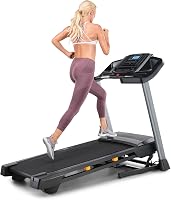
The main treadmill types are manual, powered, walking pad and folding models. These labels describe how a treadmill moves, what kind of workouts it suits, or how it stores.
Some models fit more than one category. A powered treadmill, for example, can also have a folding frame.
| Type | How it works or stores | A good fit when |
|---|---|---|
| Manual treadmill | Your steps move the belt; no outlet is needed | You want a walking workout and a self-powered design |
| Powered treadmill | A motor moves the belt at selected speeds | You want adjustable speed for walking, jogging or running |
| Walking pad | A slim design focused on walking | You want to walk at home, including during desk breaks |
| Folding treadmill | The deck or frame folds for storage | You want to clear some floor space after exercise |
These categories are starting points, not guarantees of fit. Check a model's own speed, deck, incline, frame and storage details.
Is a manual treadmill right for you?
A manual treadmill is a sensible choice if you want to walk without plugging in a motorized belt. Learn how treadmill motor types differ when comparing powered designs.
Your movement drives the belt, so the workout depends on your steps and the machine's design.
Manual models vary. Some have a flat walking surface, while others use a fixed incline to raise the effort of each step.
For steeper choices, compare 30% to 40% incline treadmills.
Check the deck dimensions and incline style, especially if you expect to walk for longer sessions.
The Sunny Health & Fitness Manual Walking Treadmill has a 42 x 13 in deck, a fixed 14% incline and a folding design. Its movement-powered belt and compact frame suit a buyer focused on walking who wants to store the machine between sessions.
A manual treadmill may not suit you if you want powered speed adjustments or a run-ready deck. Compare the controls and intended workout with how treadmills work to see how powered and self-propelled designs differ.
When does a powered treadmill make more sense?
Choose a powered treadmill if you want to set your pace using motor controls. Depending on the model, you may also get automatic incline, workout programs or connected training features.
The NordicTrack T Series Treadmills for Home include models with speeds up to 10 MPH and an incline range up to 10%. The T6.5S has a 55 x 20 in deck, folding frame, LCD display and KeyFlex cushioning; iFIT features require a membership.
This type can suit a household that wants to switch between walking and running workouts. For a model-to-model example, see the Sole F63 vs F65 comparison.
Before buying, check the exact model's dimensions, belt size and controls, since the T Series name covers several models.
A powered treadmill also needs a suitable outlet and room to operate. If you'll use it for steady walks in an apartment, compare it with a walking pad in our treadmill or walking pad for an apartment guide.
Is a walking pad different from a treadmill?
A walking pad is a type of treadmill designed mainly for walking, often with a compact shape that fits under or near a desk. Its small footprint can make storage easier, but the usable belt and controls still need to suit your walking pace and stride.
Walking pads may have a handrail, foldable frame or no rail, depending on the design. Check how the model is controlled and stored, and leave a clear path around it while it's running.
Don't choose one for jogging just because it has a moving belt. Look for clear guidance on speed and intended use, and compare the deck length with your stride.
Does a folding treadmill save enough space?
A folding treadmill can make a room easier to use between workouts, but it still occupies floor space when open. Measure both its operating dimensions and its folded size before choosing a storage spot.
Also check how you'll move the machine and whether its folded position blocks a doorway, closet or other equipment. A frame that folds is most useful when there's a practical place to put it.
The NordicTrack T Series folds and has an assisted lowering feature. Sunny Health & Fitness's fully assembled model also folds, with a one-click fold design; its 20 x 53 in running surface is intended for a wider range of movement than a compact walking pad.
This Sunny model can suit buyers who want a full running surface and incline features while keeping a folding option. Its dimensions are 63.8 x 30.9 x 44.1 in, so check that the open footprint fits your planned area.
Which treadmill type fits your workouts?
Match the machine to the activity you'll do most often. A design that suits regular walking may not have the belt length, speed range or incline options you want for running.
| Your main use | Type to compare | Details to check |
|---|---|---|
| Desk walking or short indoor walks | Walking pad | Belt dimensions, controls, rail design and storage |
| Walking without an outlet | Manual treadmill | Deck size, incline and movement style |
| Walking and jogging with pace control | Powered treadmill | Speed range, controls and deck length |
| Regular running | Full-size powered treadmill | Running surface, top speed, incline and room around the frame |
| Mixed use in a shared room | Folding powered treadmill | Open and folded dimensions, moving method and storage spot |
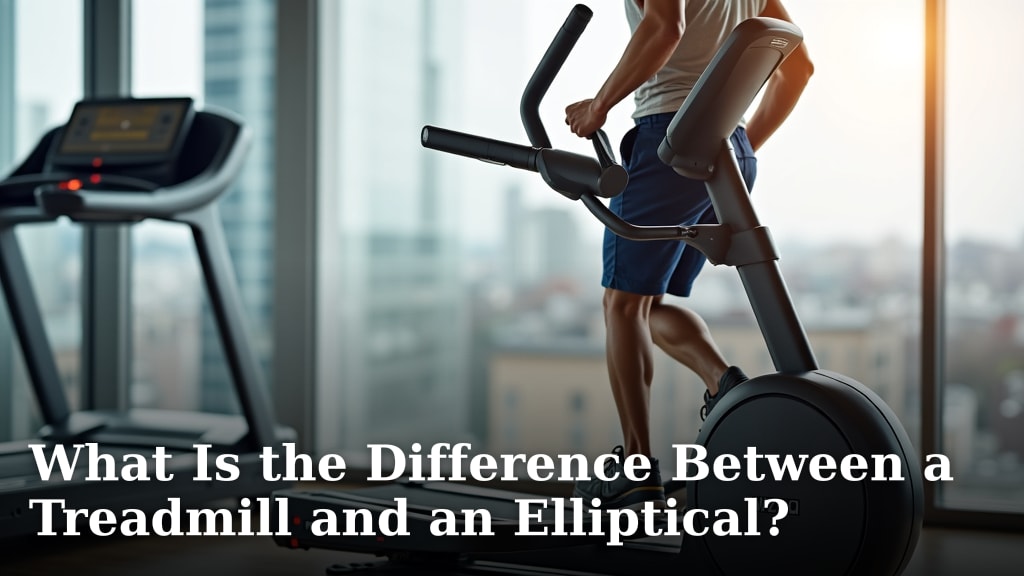
For a low-impact workout that uses a different motion, compare a treadmill with an elliptical. If you want seated cardio, our treadmill and stationary bike comparison explains the key differences.
What should you measure before choosing?
Measure the floor space, delivery path and usable walking or running surface before you buy. The treadmill must fit in the room and let you move safely on and off the belt.
- Measure the floor area where the treadmill will sit while in use.
- Check the full outside dimensions, including any rails or console.
- Measure the doorway and turns along the delivery route.
- For a folding model, compare the folded size with your storage spot.
- Check deck length and width against your stride and workout.
- Leave clearance around the treadmill as directed by its manufacturer.
A treadmill that fits through a door may still be awkward to turn into its final position. Plan the route before delivery, and make sure you can reach the controls and power connection once it's set up.
How should you choose between different treadmill types?
Choose a manual treadmill if you want a self-powered walking workout, a walking pad for compact walking, or a powered treadmill for adjustable pace and running options. A folding frame helps when storage matters, but measure both open and folded dimensions.
If you're ready to compare specific models, start with our Best Treadmill 2026 guide. Pick the type that fits your most common workout, then confirm the deck, controls and space suit your home.
Frequently asked questions
What are the main types of treadmill?
The main types are powered treadmills, manual treadmills, walking pads and folding treadmills. Powered models use a motor to move the belt, while manual models respond to your movement.
Walking pads usually focus on walking and a smaller footprint, while folding frames help free floor space when a workout ends.
Is a manual or electric treadmill better?
A manual treadmill can suit walking without access to an outlet and gives you direct control of belt movement through your steps. An electric treadmill suits people who want powered speed settings and features such as automatic incline.
Compare the specific deck, controls and workout goals before choosing.
Are folding treadmills sturdy enough for running?
Some folding treadmills are designed for running, but the hinge alone doesn't tell you how suitable a model is. Check the speed range, deck dimensions, weight capacity and frame guidance, then allow enough space for the treadmill to operate safely when unfolded.
Can you run on a walking pad?
Most walking pads are intended for walking, so don't assume one is suitable for running. Check its stated speed range, usable belt length, handrail design and maker guidance.
For regular running, a full-size powered treadmill with a longer deck is usually the more suitable type.
How much room do you need for a treadmill?
Measure the treadmill's full operating footprint, then add room to step on and off, use the controls and follow the maker's clearance guidance. A folding model still needs space while open, and a walking pad needs a safe path around it when stored or in use.