
What Is the Difference Between a Treadmill and an Elliptical?
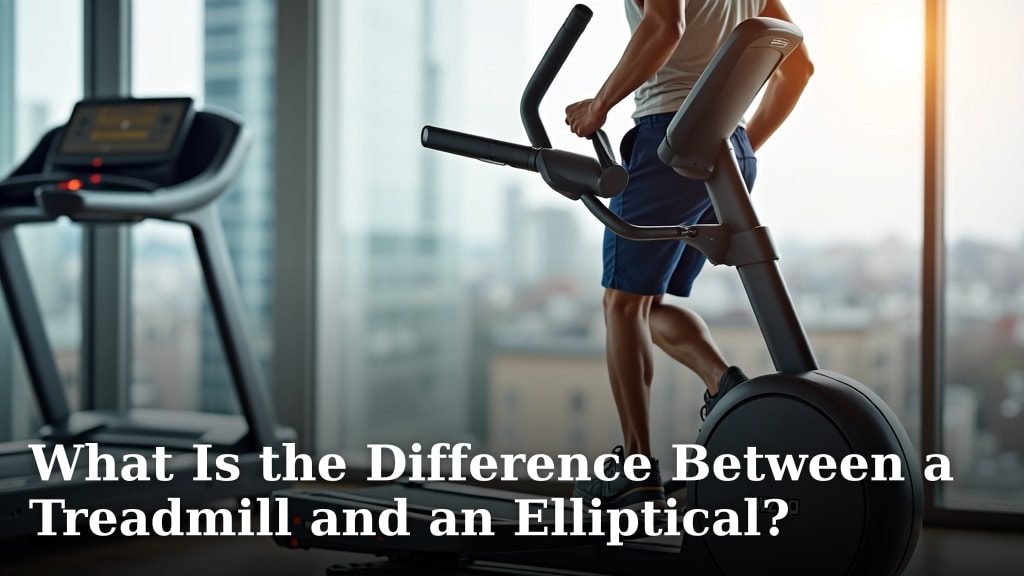
The main difference between a treadmill and an elliptical is the impact on your joints. A treadmill simulates running or walking, which means your feet lift off the belt, causing a higher impact. An elliptical provides a low-impact, fluid motion where your feet stay on the pedals, reducing stress on your knees and hips.
You might be wondering which machine is better for your fitness goals. Both offer excellent cardiovascular workouts. We’ve found that each has unique benefits depending on what you’re looking for in your exercise routine, like calorie burn or muscle engagement. Thinking about injury prevention is also key.
- Treadmills offer a natural walking/running motion.
- Ellipticals provide a low-impact, full-body workout.
- Calorie burn can be similar on both machines.
- Joint health is a major consideration.
- Your fitness goals will guide your choice.
Let’s dive into the specifics so you can make the best choice for your workout needs.
Comparing Treadmills and Ellipticals for Your Workout
You’re ready to get moving, and two popular cardio machines often come to mind: treadmills and ellipticals. Both are fantastic tools for improving your fitness, but they work your body in different ways. Understanding these differences can help you pick the perfect machine for your personal health journey.
The Treadmill Experience: Running, Walking, and Impact
Imagine stepping onto a moving belt. That’s a treadmill. It simulates the natural motion of walking, jogging, or running. Your feet lift off the surface with every stride, just like they would outside.
High-Impact Workout Potential
Because your feet leave the belt, treadmills are considered a high-impact exercise. This impact can be a double-edged sword. On one hand, it helps build bone density, which is a great benefit, especially as we age. On the other hand, it puts more stress on your joints, particularly your knees, ankles, and hips (American Academy of Orthopaedic Surgeons).
If you have joint pain or a history of certain injuries, the impact might be something you need to consider carefully. We’ve found that many people prefer treadmills for their straightforward, outdoor-like feel. If you have concerns about joint pain, our guide on using a treadmill with bad knees offers helpful advice.
Versatility and Control
Treadmills offer incredible versatility. You can adjust the speed to a gentle stroll or a challenging sprint. You can also change the incline, making your walk or run feel like you’re going uphill. This allows for diverse workouts, from a casual walk to intense interval training. Changing the incline can also target different leg muscles, giving you a more complete leg workout.
The Elliptical Experience: Smooth, Gliding Motion
Now, picture a machine where your feet remain on pedals, moving in a smooth, circular, or elliptical path. That’s an elliptical. It provides a unique kind of movement, often described as a cross between climbing stairs, cycling, and walking.
Low-Impact Workout: A Joint-Friendly Choice
The defining characteristic of an elliptical is its low-impact nature. Your feet never lift off the pedals, meaning there’s no jarring impact on your joints. This makes ellipticals an excellent choice if you’re recovering from an injury, have arthritis, or simply want to protect your knees and hips from extra stress.
Many rehabilitation programs incorporate ellipticals precisely for this reason. We’ve seen that people with joint concerns often find ellipticals much more comfortable than treadmills.
Full-Body Engagement
Most ellipticals come with moving handlebars. When you push and pull these handles, you engage your upper body muscles – your arms, shoulders, and back. This means you’re getting a more comprehensive, full-body workout compared to a treadmill, which primarily focuses on your lower body.
This added upper body component can lead to more calories burned in the same amount of time, depending on your intensity. It’s like getting two workouts in one!
Comparing Calorie Burn and Muscle Engagement
When it comes to burning calories, both machines can be highly effective. The actual number of calories you burn depends heavily on your effort, duration, and body weight. Intense workouts on either machine will torch calories. However, there are subtle differences in how they engage your muscles.
Muscle Activation Patterns
On a treadmill, your primary movers are your quadriceps, hamstrings, and glutes, especially with inclines. Your calf muscles also work hard. It mimics natural locomotion, so you’re using the same muscles you would for walking or running outdoors. While treadmills primarily focus on cardio, you can also build muscle on a treadmill, especially with incline training.
An elliptical also works your quads, hamstrings, and glutes, but with less emphasis on your calves due to the gliding motion. The addition of the moving handlebars means your chest, back, and arm muscles get involved. So, you’re distributing the workload across more muscle groups (American Council on Exercise).
| Feature | Treadmill | Elliptical |
|---|---|---|
| Impact on Joints | High (feet lift off) | Low (feet stay on pedals) |
| Primary Muscles | Lower body (quads, hamstrings, glutes, calves) | Full body (lower body + arms, chest, back) |
| Workout Type | Walking, running, incline training | Gliding, cross-training, simulating stairs/cycling |
| Balance & Coordination | More required, mimics natural movement | Less required, guided motion |
| Perceived Exertion | Often feels harder due to impact | Can feel easier due to smooth motion |
Which Machine is Right for Your Goals?
Choosing between a treadmill and an elliptical isn’t about one being “better” than the other. It’s about which machine best aligns with your fitness goals, physical condition, and personal preferences. What are you hoping to achieve?
Consider Your Fitness Objectives
If your goal is to train for a race, improve your running form, or build bone density, a treadmill is likely your best bet. It mimics the exact movements you’d perform outdoors. If you want a great cardio workout with minimal joint stress, or if you prefer to engage your upper and lower body simultaneously, the elliptical shines.
Many fitness enthusiasts actually use both machines in their routine. It’s like having different tools in your fitness toolbox for different jobs.
Listen to Your Body
This is perhaps the most important advice we can give you. How does each machine feel when you use it? Do you experience discomfort on the treadmill? Does the elliptical feel awkward or unnatural? Your body will tell you a lot.
We’ve found that some people simply enjoy one motion more than the other. If you enjoy your workout, you’re much more likely to stick with it. Consistency is key to seeing results.
Making Your Decision: A Quick Checklist
To help you decide, ask yourself these questions:
- Do you have any joint pain or injuries? (Consider elliptical for low impact.)
- Are you training for an outdoor running event? (Treadmill offers specific training.)
- Do you want to engage your upper body in your cardio? (Elliptical is great for this.)
- Is building bone density a priority for you? (Treadmills can help with this.)
- Do you simply enjoy the natural feel of walking or running? (Treadmills mimic this.)
- Do you prefer a smooth, gliding motion with less perceived effort? (Ellipticals offer this.)
There’s no wrong answer here. The best machine is the one you’ll use consistently and safely. Many gyms offer both, so why not try each one out for a few sessions? See which one feels more comfortable, challenging, and enjoyable for you.

Conclusion
Choosing between a treadmill and an elliptical truly comes down to your personal needs and fitness aspirations. We’ve seen that treadmills are excellent for replicating outdoor running and building bone density, though they are higher impact. Ellipticals, on the other hand, offer a gentle, full-body workout that’s kind to your joints.
There’s no single “best” machine; the ideal choice supports your body and keeps you motivated. Take what you’ve learned here, consider your own goals and body, and confidently choose the machine that feels right for you. Your consistent effort is what will make the biggest difference!
Frequently Asked Questions
Can I switch between a treadmill and an elliptical in the same workout?
Yes, absolutely! Many people incorporate both machines into their fitness routine. This allows you to reap the benefits of high-impact training from the treadmill and the low-impact, full-body workout from the elliptical, adding variety and engaging different muscles.
Which machine is better for weight loss?
Both machines are effective for weight loss. The key factor is how many calories you burn, which depends on the intensity and duration of your workout, not just the machine itself. Consistency and a healthy diet are more important than choosing one machine over the other.
Does an elliptical work your core muscles?
An elliptical can engage your core muscles, especially if you maintain good posture and actively use the moving handlebars. Focusing on keeping your abdominal muscles tight throughout the exercise helps to further strengthen your core.
Can treadmills help improve my balance?
Yes, treadmills can help improve your balance and coordination, particularly as you vary speed and incline. Walking or running requires continuous stabilization from your core and leg muscles, which helps to build better proprioception over time.
Is one machine generally safer to use than the other?
Both machines are generally safe when used correctly. Ellipticals might be perceived as safer due to their low-impact nature, reducing strain on joints. However, treadmills have safety features like emergency stop clips that can prevent falls if you stumble.
