How to Calibrate Treadmill Splits on Garmin
You can calibrate Garmin treadmill distance after an indoor run, but split corrections are limited. Use a measured route or track to improve future pacing, and change total distance only when the recorded activity is clearly wrong.
On this page (7 sections)
- How do you calibrate treadmill splits on Garmin?
- Can Garmin correct each treadmill split?
- What is the difference between calibration and changing distance?
- How can you get more reliable Garmin treadmill splits?
- Which simple health tools fit around treadmill training?
- What should you do if Garmin treadmill calibration stays inaccurate?
- What is the best way to handle Garmin treadmill splits?
You can calibrate Garmin treadmill distance after an indoor run, but you generally cannot repair individual treadmill splits with the same precision as the total distance. Garmin calibration uses your completed run as a reference, while split errors can also come from pauses, pace changes, arm movement, and the treadmill itself.
The practical rule is simple: calibrate when the total distance is close but Garmin needs a better reference. Edit the total distance only when the saved activity is clearly wrong, because that change does not rebuild every split.
How do you calibrate treadmill splits on Garmin?
Finish the treadmill activity, save it, and use Garmin's calibration prompt when it appears. Run at a steady pace for a useful distance, then enter the treadmill distance shown at the end.
The exact menu wording varies by Garmin model and software version. Keep the activity as an indoor run or treadmill activity, and follow the on-screen option that appears after you stop and save.
Calibration is most useful when you repeat the same type of run with a similar arm position. It gives Garmin a better relationship between your wrist movement and the distance shown by the treadmill.
If your watch does not show a calibration option, read why Garmin treadmill calibration is not working before changing the activity manually.
Can Garmin correct each treadmill split?
Garmin calibration mainly improves the recorded distance and future estimates, not every individual split. A split is affected by the time and distance Garmin assigned during that section, so a later total-distance correction cannot always make each pace segment match the treadmill.
For example, Garmin may record a slow first mile while you warm up, then estimate later miles differently after your arm motion changes. Entering the correct final distance can improve the activity total, but it cannot know exactly where each treadmill mile marker occurred.
This is why split correction has limits:
- The treadmill measures belt movement.
- Garmin estimates distance from motion and device history.
- Pauses can create gaps or strange pace values.
- Holding the rails changes wrist movement.
- Speed changes can make short splits less stable.
- A total-distance edit does not recreate missing split boundaries.
If split accuracy matters for intervals, use longer work periods and steady arm movement. Short repeats are harder for a wrist-based estimate than continuous running.
What should you do when only one split looks wrong?
Check the surrounding splits before changing the total distance. One unusual split may come from a pause, a speed adjustment, a slow transition, or a temporary change in arm swing.
Look at the full activity timeline. If the total distance is close to the treadmill but one section is unusual, leave the total alone and treat that split as an estimate.
If the entire activity is substantially short or long, correct the total distance or calibrate your next run. For model-specific steps, compare the guide for Garmin Fenix 8 treadmill calibration.
What is the difference between calibration and changing distance?
Calibration teaches Garmin how your movement relates to treadmill distance. Changing distance edits the saved activity after the run.
They solve different problems.
Use calibration when:
- The treadmill distance is known.
- Garmin's total is close but not consistent.
- You want better estimates on future treadmill runs.
- You can run with a steady, natural arm swing.
Change the saved distance when:
- The activity total is obviously incorrect.
- You forgot to calibrate at the end.
- The treadmill display gives you the only reliable total.
- You are correcting a record for training notes.
Changing the total can make the activity's distance look right, but it may not fix pace charts, split boundaries, or interval timing. Calibration is the better long-term choice when the watch repeatedly underestimates or overestimates similar runs.
The Fenix 7 Pro Solar treadmill calibration option explains the same decision for that model family.
How can you get more reliable Garmin treadmill splits?
Use a steady pace, keep your arms moving naturally, and avoid holding the treadmill rails. Consistent movement gives Garmin a cleaner signal for estimating indoor distance.
Before starting, choose the correct indoor activity and confirm that the watch is fitted securely. During the run, avoid switching between walking, jogging, and sprinting every few seconds if accurate short splits are your main goal.
Keep pauses short and record them consistently. If you step off the belt without stopping the activity, Garmin may treat the time as part of the run and create an unusually slow split.
A compatible heart rate device can add useful workout context, especially when pace data is uneven. A heart rate monitor can help you compare effort with treadmill speed, but it does not directly measure belt distance.
Does a chest strap fix treadmill distance?
A chest strap improves heart rate recording, not the distance estimate itself. It can help you judge whether an unusual split also came with a real effort change, but Garmin still needs movement data or another compatible distance source for indoor distance.
The Polar Pro Chest Strap is a wearable heart rate belt made from elasticized fabric. It uses a snap attachment method with Polar heart rate sensors and is compatible with Polar heart rate sensors, fitness trackers, smartwatches, and gym equipment supporting Polar's technology.
Choose it when heart rate trends matter during treadmill workouts and your setup supports Polar's technology. Skip it if your only goal is correcting treadmill distance, because the strap does not replace Garmin's calibration process.
Which simple health tools fit around treadmill training?
Health monitors can support workout awareness, but they do not calibrate Garmin distance. Use them for their intended measurements, not as substitutes for treadmill calibration.
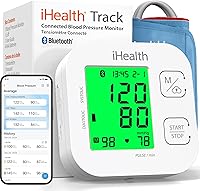
The iHealth Track Smart Upper Arm Blood Pressure Monitor has a wide-range cuff for upper arms measuring 8.7–16.5 in. It has a large multi-color backlit display, stores up to 99 readings, and can manage unlimited readings through its iOS and Android apps with the stated operating-system and Bluetooth requirements.
It includes 4 AAA batteries, an instruction manual, and a 12-month warranty. Follow the manual before use and keep blood pressure readings separate from Garmin workout calibration decisions.
The Zacurate Pro Series 500DL Fingertip Pulse Oximeter measures SpO2, pulse rate, and pulse strength. It has a large LED display, a Mystic Purple finish, a silicone cover, a lanyard, and 2 AAA batteries.
It is designed for ages 12 and above and has a stated measuring range of 70%–100% SpO2. The manufacturer describes it for sports and aviation use and says it is not a medical device.
What should you do if Garmin treadmill calibration stays inaccurate?
Repeat the calibration with a steady run before assuming the watch is faulty. Keep your pace consistent, avoid rail use, and enter the treadmill's final distance carefully.
If the same error continues, check whether the issue appears only during intervals, pauses, or changes in arm position. Compare several runs instead of judging the system from one unusual workout.
For a Forerunner 970, see how to calibrate a Garmin 970 to a treadmill. If you need to remove a bad reference and start again, use how to reset treadmill calibration on Garmin.
The treadmill itself can also affect the comparison. A belt that slips, a display that rounds distance, or a speed setting that changes during the run can make Garmin appear wrong even when the watch is estimating consistently.
Our guide to how to calibrate a treadmill covers the equipment side.
What is the best way to handle Garmin treadmill splits?
Use calibration for repeated improvement, and use a total-distance edit only for a clear saved-activity error. Do not expect one correction to rebuild every split exactly.
For the cleanest records, run with natural arm movement, limit unrecorded pauses, and keep the treadmill pace steady when split accuracy matters. Treat short interval splits as estimates unless you have a separate measurement method.
The Polar strap is useful when heart rate helps explain effort changes. The iHealth and Zacurate devices serve separate health-monitoring purposes and do not change Garmin distance calculations.
Choose the tool that matches the measurement you need, then keep treadmill calibration focused on distance and pace data.
Frequently asked questions
Can you calibrate individual treadmill splits on Garmin?
Usually, Garmin calibration is designed to improve the total indoor-run distance and future pace estimates rather than rewrite every split independently. If one split looks wrong, check pauses, pace changes, treadmill speed, and wrist movement before changing the full activity distance.
Should you change Garmin treadmill distance or calibrate it?
Calibrate when the treadmill distance is reasonably close but Garmin needs a better reference for future runs. Change the saved total only when the activity has a clear distance error, because changing the total does not recreate accurate split timing or pace data.
Why are Garmin treadmill splits different from the treadmill?
Garmin estimates indoor distance from wrist movement, arm motion, pace history, and device data rather than GPS. Different arm positions, speed changes, pauses, and treadmill belt conditions can make Garmin splits differ from the treadmill display.
Does a heart rate monitor improve Garmin treadmill distance?
A heart rate monitor can improve workout data by adding heart rate, but it does not directly measure treadmill distance. Use a compatible sensor for heart rate context, while calibration and consistent running form remain the main factors for indoor distance estimates.