
What Is the Best Treadmill for a Home Office Setup?
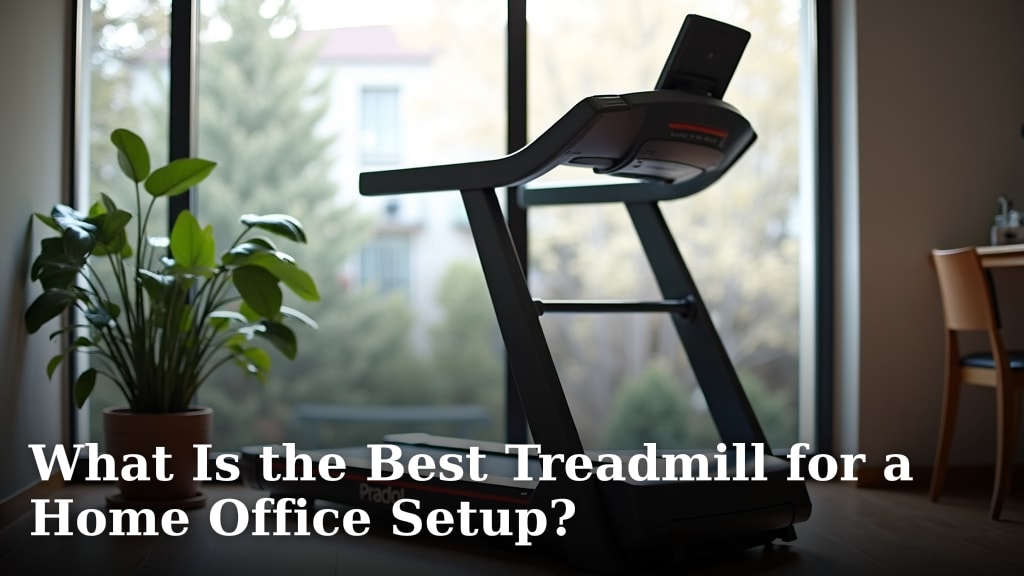
The best treadmill for a home office setup is often a compact, under-desk walking pad that fits neatly under your standing desk. These models are quiet, save space, and allow you to walk while you work without much fuss.
Finding the right one means balancing features like motor power, speed range, and noise level with your budget and space. You want something sturdy enough for daily use but also easy to tuck away when not in use. We found that many users prioritize a quiet motor to avoid disturbing calls or concentration.
- Under-desk walking pads are ideal.
- Look for quiet motors.
- Consider compact, foldable designs.
- Think about speed range and weight capacity.
- Set a budget that works for you.
Let’s walk through the details and help you find the perfect treadmill to keep you moving during your workday.
Choosing the Right Treadmill for Your Productive Workspace
The best treadmill for your home office is one that fits your space, budget, and work style. It should be quiet enough not to disturb calls and compact enough to store easily. We found that most people benefit from a walking pad designed for under-desk use.
Why a Treadmill Desk? The Unexpected Benefits
You might wonder, “Is this really for me?” The truth is, sitting all day isn’t ideal for your health. Research suggests too much sitting can increase risks for various health issues (Mayo Clinic). A treadmill desk helps you break up long periods of inactivity.
Imagine walking a few miles while answering emails. You’re not just burning calories; you’re also boosting your mood and focus. Many users report feeling more energized and less sluggish by the end of the workday. It’s a simple way to weave movement into your routine.
Key Features to Look For in Your Office Treadmill
Not all treadmills are created equal, especially when it comes to an office setting. You need specific features that cater to a work environment. Let’s break down what truly matters.
Motor Power and Noise Level: Your Office Harmony
This is probably the most critical factor for a home office. You don’t want a treadmill that sounds like a jet engine during your video calls. Look for models with a quiet, brushless motor. We found many brands highlight “whisper-quiet” operation for this very reason.
Motor power is often measured in Horsepower (HP) or Continuous Horsepower (CHP). For walking, 1.0 to 1.5 CHP is usually sufficient. More power often means more noise and bulk. Aim for a balance that keeps your workspace peaceful.
Speed Range: Walking, Not Running
For office use, you’re likely going to be walking, not sprinting. A treadmill that goes from 0.5 to 4.0 mph is perfect. You’ll typically find yourself walking between 1.0 and 2.5 mph while working. Anything faster might make typing difficult.
You don’t need a machine that hits 10 mph. That’s for serious runners! Focus on a smooth, low-speed range that allows you to maintain a steady pace without distractions. A gentle start and stop function is also a nice touch.
Size and Portability: Maximizing Your Office Space
Home offices vary greatly in size. A massive gym treadmill simply won’t do. Look for compact, under-desk designs. Many are designed to slide right under your standing desk when not in use. Some even fold in half for easier storage.
Consider the dimensions carefully. Measure your available space. Will it fit under your desk? Can you easily store it in a closet or against a wall? Lightweight models with wheels are a huge bonus for moving them around.
Weight Capacity: For Your Comfort and Safety
Every treadmill has a maximum user weight capacity. This isn’t just about whether the machine can hold you; it’s about safety and durability. Always choose a treadmill with a weight capacity comfortably above your own.
If you’re close to the limit, the machine might strain, leading to more noise and a shorter lifespan. A little extra capacity gives you peace of mind and ensures the treadmill will last longer. Don’t skimp here; it’s about your investment.
Comparing Top Treadmill Types for Office Use
When it comes to office treadmills, you usually have two main categories. Each has its pros and cons, depending on what you need most.
Under-Desk Walking Pads: The Stealthy Workhorse
These are the champions of the home office. They are typically flat, low-profile treadmills without handlebars or a console. You operate them via a remote control or app. Their main job is to fit seamlessly under a standing desk.
- Pros: Very compact, easy to store, generally quiet, perfect for walking while typing.
- Cons: Limited speed range, no incline, sometimes require a separate standing desk.
Compact Foldable Treadmills: Versatility with a Footprint
These treadmills offer a bit more than walking pads. They often have handlebars, a console, and sometimes a higher top speed. The key is that they can fold up, usually vertically, to save space when not in use.
- Pros: More features (like a display), sometimes higher speeds, can be used for light jogging, more stable feel.
- Cons: Larger footprint when in use, can be heavier, may still be too bulky for some small offices.
Here’s a quick comparison to help you visualize the differences:
| Feature | Under-Desk Walking Pad | Compact Foldable Treadmill |
|---|---|---|
| Size | Very compact, low profile | Medium, folds for storage |
| Speed | 0.5 – 4.0 mph (walking) | 0.5 – 6.0+ mph (walking/light jog) |
| Noise | Often very quiet | Quiet to moderate |
| Storage | Slides under desk/bed | Stands upright or folds flat |
| Features | Basic, remote control | Console, handlebars, sometimes incline |
| Best For | Walking while working | Walking, light jogging, more traditional feel |
Essential Checklist for Your Home Office Treadmill Purchase
Before you click “buy,” run through this quick checklist. It will help ensure you’re making a smart decision that perfectly suits your work-from-home life.
- Is it quiet enough for calls and focused work?
- Does it fit your space both in use and when stored?
- Is the speed range appropriate for walking while working?
- Does it meet your weight capacity requirements safely?
- Is it easy to move and store when not in use?
- Does it fit your budget without compromising on key features?

Conclusion
Choosing the best treadmill for your home office comes down to understanding your specific needs. You want a model that supports your health goals without disrupting your workday. Focus on a quiet, compact walking pad that fits your space and work style. Remember, even a little movement can make a big difference in how you feel and perform. Invest in your well-being by finding the right partner for your standing desk.
You now have the tools to make an informed choice. Take these considerations, measure your space, and select the treadmill that will help you stay active and productive, all from the comfort of your home office.
Frequently Asked Questions
Can I use a regular treadmill as a treadmill desk?
While you technically could, it’s generally not recommended. Regular treadmills are often too bulky, noisy, and have handlebars that get in the way of a desk setup. They are designed for running and vigorous exercise, not for walking at slow speeds while working.
How fast should I walk on a treadmill desk?
Most users find that a comfortable speed for walking while working is between 1.0 to 2.5 mph. This allows you to move and burn calories without making it difficult to type, read, or concentrate on your tasks. Experiment to find what works best for you. For specific recommendations, consult our guide to the best walking pad for office workers.
How much space do I need for an under-desk walking pad?
Under-desk walking pads are designed to be compact. You’ll need enough floor space for the pad itself, plus a little extra room for getting on and off safely. Many models are around 50-60 inches long and 20-25 inches wide. Always measure your available space to ensure a good fit.
Are treadmill desks good for your back?
Many users report that treadmill desks help alleviate back pain associated with prolonged sitting. By keeping you moving, they promote better circulation and reduce static posture. However, it’s important to start slowly and listen to your body to avoid overexertion.
How do I connect my standing desk to my walking pad?
You don’t typically “connect” them in a physical sense. You place your standing desk over the walking pad, ensuring there’s enough clearance for movement. Some specialized treadmill desks come as a single unit, but most people use a separate standing desk with an under-desk walking pad underneath.
