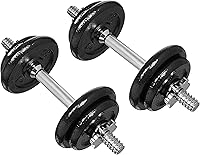
How to Choose Adjustable Dumbbells up to 100 lbs
Adjustable dumbbells up to 100 lbs should be judged by per-dumbbell capacity, not the pair's total weight. Check the starting weight, adjustment method, expansion options, handle grip and whether the set supports your heaviest lifts.
On this page (9 sections)
- How much weight do you need in each adjustable dumbbell?
- What adjustment range and increments work best?
- Do you need expansion options beyond the starting set?
- Which handle and adjustment design suits your workouts?
- How do you compare storage and setup needs?
- Are adjustable dumbbells enough for every strength exercise?
- How should you use and care for adjustable dumbbells?
- What should you avoid when choosing 100 lb adjustable dumbbells?
- Which adjustable dumbbell option fits your needs?
The right adjustable dumbbells up to 100 lbs should reach your heaviest planned lift per dumbbell, with a secure adjustment system and enough weight levels for your full routine. A pair rated at 100 lbs total is not the same as 100 lbs in each hand.
That difference matters most for exercises where both sides work together. A bench press, shoulder press or goblet squat will feel very different when each dumbbell can carry the load you need on its own.
Start by writing down the heaviest load you expect to use for presses, rows, squats and lunges. Then compare the set's starting weight, maximum per dumbbell, adjustment steps and expansion path.
Be specific about which movements drive the maximum. Curls and lateral raises usually sit at the lower end, while rows, presses and lunges often push you toward the top setting.
If you plan one-arm work, check the single dumbbell limit as well as the pair total.
Also note how many dumbbells you actually need for your routine. A single dumbbell can suit rows, carries and unilateral exercises, but presses and paired curls are easier with a matching pair that changes in the same way.
Think about the space these weights will live in during daily use. Heavy adjustable dumbbells need a clear pickup zone, a stable floor and a place where plates or blocks can stay organized between sessions.
A set that fits the load but not the room will be harder to use consistently.
How much weight do you need in each adjustable dumbbell?
Choose the maximum load per dumbbell based on your hardest exercise, not your average curl or lateral raise. A 100 lb pair may provide 50 lbs per hand, while a 100 lb-per-dumbbell set can reach 200 lbs across both hands.
Use separate targets for different movements:
- Isolation exercises usually need smaller jumps and lower loads.
- Presses and rows may need more weight per hand as your strength improves.
- Lunges and squats can require heavier total loading than upper-body exercises.
- One-arm rows may need a higher single-dumbbell maximum than curls.
The phrase “up to 100 lbs” is not enough by itself. Confirm whether the maximum applies to one dumbbell, one handle, or the complete set.
Also check whether the set includes one adjustable dumbbell or a pair. One dumbbell can work for single-arm rows, carries and unilateral exercises, but a pair is more practical for presses, curls and movements where both sides work together.
What adjustment range and increments work best?
The best adjustment range gives you small enough steps for control and enough top-end weight for progression. Small increments help you move gradually, while a wide range reduces the need for several separate dumbbell sets.
Dial systems can change weight quickly between exercises. Plate-and-collar systems let you add or remove plates directly, but the process takes more handling and requires a clear place to store the unused parts.
Look for these details:
- Starting weight for lighter exercises.
- Maximum weight per dumbbell.
- Increment size between settings.
- Whether both dumbbells can be changed in the same way.
- Whether the selected weight locks before you lift.
- Whether unused plates or blocks need separate storage.
A very wide range can make a dumbbell longer or harder to balance at certain settings. A smaller range may feel easier to handle but can leave you needing another set as your strength increases.
For a lower maximum, compare our guide to adjustable dumbbells up to 90 lbs and adjustable dumbbells up to 80 lbs. Those limits may fit your routine if 100 lbs per hand is more capacity than you need.
Do you need expansion options beyond the starting set?
Expansion matters if your training plan is still developing. A set with a clear path to heavier loads can cost less space than replacing the entire system later, but only if compatible additions are actually available.
Check whether expansion plates, blocks or heavier handles are made for the exact model. Do not assume that plates from another adjustable dumbbell system will fit.
Ask yourself:
- What is the heaviest load you need now?
- What load might you need after 6 to 12 months?
- Does the manufacturer identify compatible expansion parts?
- Will the expanded dumbbell still fit your storage space?
- Does the adjustment method remain stable at the higher setting?
If no expansion route is confirmed, treat the listed maximum as the system's long-term limit. That can still be a good choice when the maximum already covers your planned exercises.
Which handle and adjustment design suits your workouts?
Choose a handle that lets you grip the dumbbell securely during presses, rows and carries. Threaded collars require manual tightening, while quick-adjust systems reduce change time but add a built-in mechanism to inspect and use correctly.
The Amazon Basics set uses alloy steel handles with a 1 in handle diameter, threaded collars and removable plates. Its set includes 2 dumbbells, 2 handles, 4 2.5 lb plates, 4 5 lb plates and 4 0.5 lb collars, for 38 lbs total.
This design suits lighter full-body training and users who prefer to see and handle each plate. Its 38 lb total weight is below a 100 lb-per-dumbbell target, so it is not the right capacity match for heavy lifting that requires 100 lbs in each hand.
A quick-adjust dial can be useful when your workout moves between several loads. Lifepro's adjustable dumbbell changes between 5 and 25 lbs in 2.5 lb increments, with an alloy steel handle, textured non-slip grip and secure locking mechanism.
The Lifepro set suits moderate-load routines where fast changes matter more than a 100 lb maximum. Its product information includes a 25 lb pair set and also mentions single or pair options, so confirm the exact configuration you choose before ordering.
For broader home strength planning, our home strength equipment guide covers how adjustable weights fit with other compact training tools.
How do you compare storage and setup needs?
Measure the storage area before choosing a heavy adjustable set. **The dumbbells need space for the handles, plates or blocks, and any stand or case used to keep the system organized.
A dumbbell set with a rack can help keep the weights together.**
Plate-based sets need a secure place for unused plates and collars. Keep those parts together so a missing collar or plate does not interrupt your workout.
The Amazon Basics set includes a black storage case with a carry handle. That can suit a small training area where you need to move the set after each session.
Quick-adjust dumbbells can reduce loose parts, but the shape may be less compact at higher settings. Leave enough room to pick up and lower the dumbbell without striking a wall, bench or nearby equipment.
If you are building a complete home gym, compare these dumbbells with our guide to the best adjustable dumbbells for home gym. It focuses on sets that fit a wider range of home training needs.
Are adjustable dumbbells enough for every strength exercise?
Adjustable dumbbells can cover presses, curls, rows, lunges, squats and triceps work when the load and shape suit the movement. **They are less useful when the exercise needs a fixed kettlebell shape, very fast changes or a load beyond the set's per-dumbbell limit.
For another compact strength option, compare adjustable kettlebells for home gyms.**
A kettlebell can add a different grip and movement pattern to a home routine. The Amazon Basics Vinyl Kettlebell is a 15 lb cast iron kettlebell with a pink vinyl coating, flat base and wide curved handle.
This product is not an adjustable dumbbell and does not expand to 100 lbs. It makes sense as a separate tool for swings, squats, lunges and other exercises that use a single kettlebell, with additional weights sold separately in the product range.
If you are considering another compact adjustable tool, see our guide to an adjustable kettlebell with stand. Choose based on the movement patterns you actually plan to perform.
How should you use and care for adjustable dumbbells?
Set the weight before starting the exercise, confirm that every collar or locking mechanism is secure, and place the dumbbell down under control. Do not lift an adjustable dumbbell when a plate, dial or block is not fully seated.
Build a simple habit for setting the weight. Put the dumbbell on a flat surface, change the load, check the lock, and only then pick it up with a controlled grip.
That pause takes seconds and helps you avoid a plate shifting during the first rep.
Keep threaded collars clean and tightened during plate-based workouts. Store plates, collars and handles together, and avoid dropping the dumbbells because impact can damage adjustment parts or the training surface.
With plate and collar systems, keep the parts in one place so the next session starts without searching. A small case or tray can hold the unused plates while you train, and it also protects collars from rolling under furniture or getting knocked off a shelf.
After the workout, return each plate to the case so the full set stays complete.
For quick-adjust systems, return the dumbbell to its storage position before changing the setting unless the instructions for that model say otherwise. Keep the adjustment area clear so the mechanism can move fully.
Quick-adjust dials work best when you treat them as part of the routine rather than a shortcut. Change the setting, confirm the lock, test the weight with a small lift, and then begin the exercise.
This matters when you move between curls, presses and rows that need different loads.
Wipe sweat from handles after use and keep the equipment dry. A flat, stable workout surface also helps reduce movement while you set the dumbbells down.
Dry storage helps protect alloy steel handles and metal plates from moisture over time. Store the set away from damp floors if you can, and give the storage case or rack a quick check every few weeks for loose parts.
If a collar feels gritty or a dial feels stiff, clean the area gently before your next session.
Place the dumbbells down slowly at the end of each set, especially when the load is heavier. Lowering under control protects the floor, keeps the adjustment parts aligned and makes the next set easier to set up.
Choose your lifting spot with care as well. Keep enough room around the dumbbells so you can bend, grip and stand without twisting or stepping around loose plates.
A clear path from storage to your bench or mat makes setup safer and more likely to happen regularly.
What should you avoid when choosing 100 lb adjustable dumbbells?
Avoid choosing by the headline maximum alone. The most useful set is the one that reaches your target load, changes in practical steps and remains manageable in your available space.
Watch for these common mismatches:
- A 100 lb total set mistaken for 100 lbs per hand.
- One dumbbell mistaken for a pair.
- Large jumps that make progression difficult.
- No confirmed expansion path when you expect to lift more later.
- A handle or block shape that limits your preferred exercises.
- A heavy set with no safe storage plan.
- A quick-adjust system chosen without checking its locking method.
- A plate-based set chosen without room for loose parts.
Your training space matters too. Measure the floor, storage shelf and path to the workout area, then consider how you will lift the set from the floor.
A handle that feels fine for curls may feel awkward for presses, rows or carries. Think about grip width, handle texture and how the weight sits in your hand when the dumbbell is longer at higher settings.
If a shape limits your preferred movements, the listed maximum will not help you much in practice.
Storage deserves the same attention as the exercise list. Plate systems need room for unused plates and collars, while quick-adjust systems need space for the full handle length when it is loaded.
A rack or case can keep parts together, but it also needs a stable spot that does not block walkways.
Check the adjustment steps against your actual routine as well. Large jumps can make it hard to progress steadily on isolation work, and they can leave you choosing between a load that is too light and one that is too heavy.
Smaller increments suit gradual strength gains, especially for arms, shoulders and smaller muscle groups.
Also confirm what is included in the box before you decide. Some listings describe a single dumbbell, some describe a pair, and some mention storage only as an option.
Knowing the exact contents helps you plan for presses and paired movements without buying a second set later.
Heavy lifting adds another layer to the decision. A set that reaches 100 lbs per dumbbell may be longer and harder to maneuver at the top setting, so consider balance and pickup height.
If you train alone in a small room, a slightly lower maximum with better control may serve you better than a larger set you cannot move safely.
Which adjustable dumbbell option fits your needs?
Choose the Amazon Basics 38 lb set if you want a plate-and-collar design, a 1 in handle diameter and a storage case for compact home training. This set includes two dumbbell handles, four 2.5 lb plates, four 5 lb plates and four 0.5 lb collars for 38 lbs in total.
It works well for lighter full-body routines and targeted work for arms, shoulders and back, where you can choose each load directly. The black storage case with carry handle also helps if you need to move the set after each session.
Choose the Lifepro set if 5 to 25 lb settings, 2.5 lb increments and quick adjustment fit your routine better. The quick-adjust dial lets you change loads between curls, presses, rows and lunges without handling loose plates.
Lifepro uses alloy steel construction with a textured non-slip grip and a secure locking mechanism. The compact shape can suit a home gym where floor space is limited and you want one dumbbell to cover several moderate loads.
The exact configuration matters with this option, so confirm whether you are choosing a single dumbbell or a pair. A pair is more practical for presses and two-sided work, while a single dumbbell can still cover rows, extensions and other one-arm movements.
Choose the Amazon Basics 15 lb vinyl kettlebell only when you want a separate fixed kettlebell for kettlebell-based exercises. It has a solid cast iron body with a pink vinyl coating, a flat base and a wide curved handle for one-hand or two-hand use.
This kettlebell suits swings, squats, lunges and agility work where a kettlebell shape creates a different movement pattern. It is not an adjustable dumbbell and it does not expand to 100 lbs, so treat it as a companion tool rather than a replacement for adjustable dumbbells.
The key decision rule is simple: confirm the maximum per dumbbell first, then compare adjustment steps, expansion options, grip, storage and the number of dumbbells included. If you need a lower capacity, our best budget adjustable dumbbells guide can help you compare more budget-focused choices.
Match the final choice to the exercises you will repeat most often. Plate-based adjustment, quick dials and a fixed kettlebell each solve a different problem, and the best fit depends on your loads, your space and your preferred movement style.
Frequently asked questions
What does adjustable dumbbells up to 100 lbs mean?
Adjustable dumbbells up to 100 lbs can mean 100 lbs per dumbbell or 100 lbs for the full pair, so check the exact wording before you buy. A pair with 100 lbs per hand gives you more loading room for presses, rows and lower-body work than a 100 lb total set.
Are adjustable dumbbells good for heavy lifting?
Adjustable dumbbells can suit heavy lifting when each dumbbell reaches the load you need and the adjustment system stays secure during the exercise. Check the per-dumbbell maximum, handle comfort, plate or block length, storage space and whether the set can expand before choosing it for heavy training.
Can adjustable dumbbells replace a full rack?
Adjustable dumbbells can replace much of a fixed-weight rack for home training, especially when you need several weight levels in a small space. They may not match a rack for instant changes between exercises, and some designs are better for moderate loads than near-maximum lifting.
What should I check before buying 100 lb adjustable dumbbells?
Check whether the stated weight is per dumbbell, how quickly you can change loads, whether expansion plates are available, and how the handles or blocks fit your movements. Also measure the storage area and confirm that the set includes the number of dumbbells you need.