Home Strength Equipment: The Complete Buying Guide
Resistance bands are the best starting point for most home strength setups because they cost less space, support many exercises and are easy to store. Add dumbbells, kettlebells, a bench or a weighted vest when your training needs more load or variety.
On this page (12 sections)
- What should a home strength setup include?
- Why start with resistance bands?
- Which resistance band products fit a home gym?
- When should you add dumbbells?
- When does a kettlebell or bench make sense?
- How can a weighted vest fit home workouts?
- Which resistance band style should you buy?
- What equipment does not belong in a strength setup?
- How should you organize a small home gym?
- How do you choose home strength equipment by budget and space?
- How should you care for resistance bands and weights?
- What is the best home strength equipment choice?
Resistance bands are the best first purchase for many home strength setups because they support many exercises without taking over a room. They work for legs and glutes, arms, core and warmups, so one small purchase covers a lot of training.
Add dumbbells, kettlebells, a bench or a weighted vest when you need heavier loading, more stability or a different training style. A band that once felt challenging may start to feel easy, and that is often when another tool starts to help.
Start with the exercises you plan to repeat, then choose the smallest set of tools that makes those movements easier to train and progress. A strong home gym does not need every piece of equipment.
Think about how you like to train and the room you have. If most workouts use standing moves, a compact option suits you better than a large bench.
Consider storage and setup time too. Equipment that fits in a drawer or small bag is easier to keep using than equipment that blocks a doorway, and a loop band is ready in seconds while a bench needs space to open, adjust and clear.
Progression still matters in a small setup. Different resistance levels, longer ranges of motion and slower repetitions can make simple exercises harder over time, and bands suit travel or training in more than one place.
Dumbbells can come later for presses, rows or carries, and a kettlebell can come later for swings and offset work. A bench makes sense when seated or supported movements become central, while a weighted vest suits walking and bodyweight work that needs extra challenge.
Choosing in this order avoids buying tools for exercises you never do. It also keeps the training area open, which makes each session safer and easier to start.
Start with the tool you will use most often, then add only what your routine clearly needs.
What should a home strength setup include?
A useful home strength setup includes one resistance option, one way to organize it and enough open floor space to move safely. For many people, that means resistance bands first, followed by dumbbells or a bench if their routine expands.
Think about your training in movement patterns:
| Training need | Useful equipment |
|---|---|
| Leg and glute exercises | Loop resistance bands, dumbbells or a weighted vest |
| Presses and rows | Resistance bands with handles, dumbbells or a bench |
| Squats and lunges | Bands, dumbbells, kettlebells or a weighted vest |
| Carries and swings | Kettlebells or dumbbells |
| Supported pressing | Adjustable weight bench and dumbbells |
| Walking and bodyweight work | Weighted vest |
| Small-space workouts | Fabric loops, tubes or compact dumbbells |
You do not need to fill every category at once. Choose equipment that matches your current routine, available storage and preferred exercises.
A useful setup usually starts with one clear purpose, such as lower-body strength, general fitness, mobility work or a mix of all three. If you plan mostly standing exercises, loops and dumbbells may cover your needs for a long time.
If you plan seated presses or supported rows, a bench may deserve an earlier place in your list. Storage should shape the decision from the start, so measure the cupboard, shelf or floor area before you buy anything larger.
Think about how each tool enters and leaves storage too. A set that is quick to fetch and put away is more likely to be used each week.
If you are also building a wider cardio area, compare our guides to the Best Treadmill For Home Use and What Is the Best Treadmill for Home Use?. Cardio equipment and strength equipment can share a room, but each needs a clear operating area.
Planning both areas together helps you avoid cramped walkways and blocked exits. It also lets you keep noisy or larger machines away from small strength tools.
A treadmill needs a level floor and enough length to use safely. Resistance bands need open space around you, but they can be stored in a much smaller place.
Do not let one category crowd out the other. A clear training zone for strength work and a clear operating zone for cardio will make both easier to use.
Budget should follow use as well. It is often smarter to buy one well-chosen tool first and add another after a few weeks of regular training.
That slower approach shows which movements you enjoy and which ones you skip. You can then spend money on load, stability or variety where it will actually help.
A small setup that matches your routine will serve you better than a full room of unused equipment.
Why start with resistance bands?
Resistance bands suit home workouts because they are light, compact and available in several styles. They can support warmups, strength exercises, mobility work and travel workouts without requiring a rack or large floor footprint.
Fabric loop bands are especially useful for leg and glute exercises. A loop sits around the legs, so you can train movements such as lateral steps, squats and hip-focused exercises without holding a handle.
Choose a set with several tension levels if you want room to progress. You can also change difficulty by adjusting your stance, the length of the band or the number of repetitions.
Our guide to the best resistance bands for home workout compares more options for people who want a compact starting point.
Resistance bands vs weights: which fits your routine?
Resistance bands suit people who value portability, simple storage and variable tension. Weights suit people who prefer a fixed load that is easy to compare from one session to the next.
Bands create more tension as they stretch, so the hardest part of an exercise may come near the end of the movement. Dumbbells provide a more consistent external load through the full range.
Neither tool is automatically better for every home gym. Read our comparison of resistance bands vs weights if you are deciding between a band-only setup and free weights.
Resistance bands vs tubes: what is the difference?
Loop bands form a continuous circle and are convenient for leg and glute exercises. Tube bands are usually easier to use for presses, rows and other movements where handles or an anchor point feel more natural.
Your exercise list should decide the style. If you mainly train hips, thighs and glutes, loops may be the simpler choice.
If you want more upper-body pulling and pressing, tubes may fit better.
Our resistance bands vs tubes guide explains the main differences before you choose a set.
How do you choose resistance band size?
Choose resistance band size by matching the band length and tension to the exercise, your current strength and the amount of stretch required. A band that is too short can make setup awkward, while one that is too light may not challenge you.
Several bands give you more control than one band. You can use a lighter level for warmups and smaller muscle groups, then move to stronger levels for squats, rows or glute work.
See how resistance bands different sizes affect exercise choice and progression.
Which resistance band products fit a home gym?
These products cover two fabric loop options, a pair of dumbbell hand weights and one non-fitness item that does not belong in a strength setup. The final product is included because a careful buying guide should show when an item is not a substitute for exercise equipment.
Renoj Fabric Resistance Bands for Working Out
The Renoj set suits home users who want 3 fabric exercise loops with 3 resistance levels for legs, glutes, yoga, Pilates or general strength training. The bands are made from cotton and polyester, weigh 12.7 oz as an item and include a carry bag.
The non-slip design can help the loops stay in place during lower-body exercises. The 28.35 in by 3.15 in dimensions give you a clear starting point for storage and setup, while the black fabric keeps the set visually simple.
Renoj describes this as a starter set for yoga, Pilates, indoor and outdoor activity, office exercise and body-building work. That broad use makes it a practical choice when you want one small set for several settings.
The trade-off is that a 3-level set gives you fewer steps between light and heavy resistance than a 4-level set. It also focuses on loop-style work rather than handle-based presses and rows.
Vergali Resistance Bands for Working Out
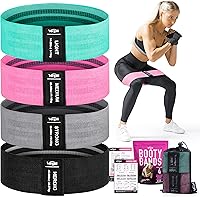
The Vergali set suits users who want 4 fabric resistance levels for leg, hip, thigh, glute and core exercises. It includes 4 bands, a carry bag, a printed training guide and access to online glute-band training videos.
The stated tension ranges run from Light at 14–25 lb to Heroic at 45–60 lb. That spread gives beginners and more experienced users several starting points, although the right level still depends on the exercise and your form.
The bands use fabric and are designed as non-slip, anti-snap loops. Vergali also describes them as suitable over clothes or on bare skin, which may matter if you want to train without the pinching some elastic bands can cause.
The trade-off is a larger set than the Renoj option, with more levels but also more pieces to store. The 13.6 in by 3.15 in dimensions and 0.1 cm thickness describe the individual band format, not the amount of room you need to perform the exercises.
When should you add dumbbells?
Add dumbbells when you want a fixed external load for presses, rows, curls, carries, squats or lunges. For band-based presses and rows, see resistance band upper body workouts.
They are also useful when you find it difficult to keep a band at the same starting position from one session to the next.
Dumbbells need more storage than fabric loops, but a pair can still work well in a small home gym. Hex-shaped ends can also reduce rolling when the weights are placed on the floor.
The best adjustable dumbbells for home gym guide is useful if you want several loads without buying many separate pairs. If you prefer fixed pairs, compare the best dumbbell set for home gym options.
Amazon Basics Neoprene Dumbbell Hand Weights
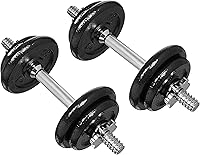
The Amazon Basics pair suits users who want 2 navy blue 10 lb dumbbell hand weights for exercise and muscle toning. Each dumbbell has a neoprene coating, a nonslip grip and hex-shaped ends that help prevent rolling.
The pair gives you a simple 20 lb total load, but each hand receives a 10 lb dumbbell. That distinction matters for presses, curls and lateral raises, where the load is split between both sides.
The neoprene coating is designed for a comfortable grip, while the printed weight number and color-coded identification make the pair easy to recognize among other weights. The 8.6 in by 4.02 in dimensions help you plan storage.
If you use adjustable dumbbells, see stands for adjustable dumbbells.
This is a fixed-weight option, so it does not replace an adjustable set when you need many resistance steps. If you plan to keep several pairs on the floor, a best dumbbell rack for home gym guide can help you think through storage and access.
When does a kettlebell or bench make sense?
Add a kettlebell when you want a single offset weight for swings, carries, squats and similar exercises. Add an adjustable bench when you want supported or seated movements and a more stable position for presses.
An adjustable kettlebell can save space compared with several fixed kettlebells. Compare the best adjustable kettlebell for home gym options if you want one tool that can cover more than one load.
A bench expands exercise choices, but it also needs a permanent footprint and enough clearance around each end. Check the height, adjustment positions, folded size and total working area before choosing.
Our adjustable-height weight bench guide explains what to compare.
Our best adjustable weight bench for home gym guide covers the main buying points.
Do not add a bench just because it looks like standard gym equipment. If your current routine is mostly standing band work, a bench may take up space without solving a real training problem.
How can a weighted vest fit home workouts?
A weighted vest adds load to walking, step-ups, squats, lunges and other bodyweight movements without requiring you to hold dumbbells. It can suit people who want a more portable way to increase difficulty.
Start with movement quality and comfort. A vest that changes your posture, limits breathing or makes walking awkward is too demanding for the session, even if you can technically wear it.
Read how heavy a weighted vest should be before choosing a load. The right starting point depends on your exercise, experience and session length.
If walking is your main use, compare the best weighted vest for walking. A walking-focused choice should let you keep a steady stride and comfortable posture.
Adjustable ankle weights can serve a different purpose by adding load farther from your center of mass. See the best adjustable ankle weights if you want to add resistance to leg lifts or controlled lower-body movements.
Which resistance band style should you buy?
Choose the band style that matches the movement you perform most often.
Fabric loops
Fabric loops suit lower-body exercises, especially squats, lateral steps and glute work. They are easy to carry and do not require a door anchor, handle or large storage container.
The Renoj set offers 3 fabric loops and 3 resistance levels. The Vergali set offers 4 fabric bands with Light, Medium, Strong and Heroic tension ranges.
Bands with handles
Bands with handles suit rows, presses, curls and other exercises where you want a grip at each end. They can feel closer to cable-machine movements than a loop around the legs.
Use the best resistance bands with handles guide when upper-body training is a major part of your plan.
Loop bands
Loop bands are useful when you want a simple, continuous band for lower-body work. Their main advantage is quick setup, but you still need to choose a level that lets you complete the movement without losing control.
Compare the best resistance loop bands for more options.
Therapy bands
Therapy bands are often chosen for gentle movement, rehabilitation exercises or controlled progression. If you are buying for physical therapy, follow the exercise plan given by your qualified professional rather than choosing resistance based only on a color or label.
Our guide to the best resistance bands for physical therapy covers the buying factors that matter for that use.
What equipment does not belong in a strength setup?
Not every item with a fitness or wellness connection should be used as exercise equipment. The hand2mind Sensory Fidget Tubes are designed for children’s focus, calm engagement and social-emotional learning, not resistance training.
hand2mind Sensory Fidget Tubes
The hand2mind set contains 4 plastic sensory fidget tubes for children ages 3 and older. The tubes are for indoor, manual use, require no power and include a Getting Started Guide with 4 activities.
Each tube has a different design and interaction. Children can shake, flip and handle them while practicing quiet focus, with one player using the set at a time.
The product is relevant here as a buying boundary. A home gym plan should separate strength tools from sensory, classroom or calming supplies, even when both are stored in the same family room.
The set is not a weight, band, fidget-free exercise tool or training load. Its plastic construction, 2.5 x 8 x 9 in package dimensions and 1.4 lb item weight describe a children’s sensory product rather than gym equipment.
How should you organize a small home gym?
Organize equipment by how often you use it. Keep resistance loops in their carry bag where you can reach them, place dumbbells on a stable surface and leave the center of the room open for movement.
Measure storage before adding equipment. A compact setup can become difficult to use when bands, dumbbells, a bench and other items compete for the same floor area.
Use a simple three-zone layout:
- Store small items such as bands, ankle weights and handles near the edge of the room.
- Keep dumbbells and kettlebells where they cannot roll into the walking path.
- Leave a clear training zone for squats, lunges, rows and floor exercises.
A bench needs extra clearance for getting on, changing positions and handling weights. A weighted vest needs less storage space, but you still need room to walk and move safely.
If you plan to use adjustable dumbbells, learn the movement and locking system before adding speed or load. Our guide on how to use Bowflex adjustable dumbbells explains the basic handling considerations for that type of equipment.
How do you choose home strength equipment by budget and space?
Choose resistance bands first when space and storage matter most. Choose fixed dumbbells when you want a simple, repeatable load.
Choose adjustable equipment when you need several load levels but cannot store many separate pieces. That choice can save floor space, but it also asks you to learn the adjustment system before training.
A practical progression looks like this:
- Start with a 3- or 4-level fabric loop set for lower-body work.
- Add dumbbells for fixed-load upper-body and full-body exercises.
- Add a bench when supported or seated movements become central to your routine.
- Add a kettlebell when swings, carries and offset loading fit your training.
- Add a weighted vest when walking and bodyweight exercises need more challenge.
This order is not a rule. If you already walk often, a weighted vest may solve your main training need before dumbbells do.
If you prefer pressing and rowing, bands with handles or dumbbells may be the better second purchase. Your favorite movements should decide the order, not a standard list.
Set a simple budget for each step and test the setup for a few weeks. Adding tools slowly keeps costs under control and leaves room to change direction if your routine changes.
How should you care for resistance bands and weights?
Store fabric bands dry and away from sharp edges that could catch or cut the material. A drawer, shelf or bag in a dry room is usually enough for daily use.
Check each band before use for visible wear, loose stitching or damage, and replace it if the condition makes exercise unsafe. Pay close attention to areas that rub against skin, clothing or floor surfaces.
Keep bands away from direct heat and prolonged sunlight when you can, as heat and light can change how materials feel and perform over time. Fold fabric loops loosely instead of creasing them hard for long periods.
Clean fabric bands according to the care guidance for the material. Gentle cleaning removes sweat and dust, and air drying avoids extra heat.
Keep dumbbells on a stable surface where they will not roll or fall. A flat floor area or a rack can keep them out of walkways and away from feet.
Wipe surfaces according to the material and avoid storing weights where moisture can damage the coating or floor. Handle dumbbells with two hands when the load is heavy for you, to reduce the chance of dropping them.
Do not stretch a band beyond the movement you can control. Longer stretch is not always better, especially when it pulls your body out of position.
Keep hands, feet and anchor points stable, and stop if the band shifts, snaps back or changes position unexpectedly. Set up on a clear floor with enough room for the full range of motion, and clear away sharp objects and cords.
Inspect handles, clips and anchor points if you use them with other band styles, as worn fittings can fail under load. A carry bag helps keep a small loop set together, but it does not remove the need for inspection.
The Renoj set includes a carry bag, and the Vergali set includes a carry bag and training guide. Keep the bag for transport and storage, not as a substitute for checking condition.
Store each level in the same place so you can track wear over time, and label or group bands by resistance if your set has several levels. If one band shows damage, remove it from use rather than hoping it will hold for one more set.
Keep children and pets away from bands under tension. Loops can snap back quickly, so clear finished sets away as part of your normal routine.
What is the best home strength equipment choice?
The best home strength equipment choice depends on the exercises you will repeat, the load you need and the space you can keep clear. For most beginners, start with fabric resistance bands, then add one heavier or more stable tool when your routine shows the need.
Choose the Renoj set if you want 3 fabric loops for compact lower-body and mixed workouts. Choose Vergali if 4 tension levels, a training guide and online training videos fit your plan.
Choose the Amazon Basics dumbbell pair when you want two fixed 10 lb hand weights with neoprene coating and no-roll heads. Skip the hand2mind sensory tubes for strength training because they are children’s focus and calming tools, not exercise equipment.
Build slowly, keep the training area open and let your movement needs decide what comes next. That approach gives you a home gym that is easier to store, easier to use and less likely to be crowded with equipment you do not need.
Frequently asked questions
What is the best home strength equipment for beginners?
Resistance bands are a useful starting point for beginners because they take little storage space and support lower-body, upper-body and core exercises. Choose a loop set for simple leg and glute work, then add dumbbells or a bench when you need more load or exercise options.
Are resistance bands enough for strength training at home?
Resistance bands can support many strength exercises, especially when you use different tensions, controlled repetitions and challenging movement angles. They may not replace heavier weights for every goal, so add dumbbells, kettlebells or a weighted vest when your current resistance no longer challenges you.
How do I choose resistance bands?
Choose resistance bands by band style, tension range, material, exercise type and storage needs. Fabric loops suit many leg and glute exercises, while handle bands can feel more natural for presses and rows.
A set with several levels gives you more room to progress.
How heavy should a weighted vest be?
Start with a weighted vest that lets you walk, squat and move with steady form. A lighter vest suits beginners and longer sessions, while a heavier vest increases the challenge but can change your posture and movement.
Build up gradually instead of choosing the heaviest option first.
What equipment should I add after resistance bands?
Add equipment based on the movement you cannot train well with bands. Dumbbells add simple external load, a bench expands pressing and supported-row options, a kettlebell supports swings and carries, and a weighted vest adds load to walking and bodyweight exercises.