How to Choose an Adjustable Height Weight Bench
Choose an adjustable height weight bench by checking seat height first, then backrest angles, stability, padding and fit. Seat height affects your position over the floor, while backrest adjustment changes your training angle.
On this page (7 sections)
- What should you check on an adjustable height weight bench?
- How is seat height different from backrest angle?
- Which adjustment points matter most?
- How should the bench fit your body and room?
- Which products can complement an adjustable bench?
- How do you set up and care for an adjustable bench?
- What is the final adjustable weight bench height rule?
An adjustable height weight bench should let you set a stable body position for your exercises, not just offer more incline angles. Separate seat height adjustment from backrest adjustment, then compare the bench's range with your leg length, equipment and available floor space.
The phrase adjustable height weight bench can mean different things on different product pages. Some benches change only the seat height, some change only the backrest angle, and some do both, so checking the description matters before you compare prices or features.
Seat height affects your feet, hips and reach over the floor. Backrest angle affects the position of your torso during presses, rows and other supported movements.
When seat height is too high, your feet may not sit flat and your brace can feel less secure during pressing. When it is too low, your hips and knees may bend more than you want and your shoulders may sit below the useful support of the pad.
Backrest angle works in a different way because it changes the line of your torso rather than its distance from the floor. A flat position supports one pattern of pressing, while an incline position shifts the angle of the shoulders and changes how the weight travels.
Think about the exercises you plan to do most often before you choose a bench. Pressing, rows, step ups and supported core work all use the bench in slightly different ways, and the right adjustment range depends on that mix.
A good starting point is the Home Strength Equipment: The Complete Buying Guide, especially if your bench will share space with resistance bands, dumbbells and other compact tools.
That shared space point is easy to miss in a small home gym. A bench may fit on paper but still leave too little room to load weights, change position or store other equipment nearby.
It also helps to separate what you need now from what you might want later. A simple range that fits your body well today can serve you better than a long list of positions you rarely use.
This guide focuses on seat height, backrest angles, stability, padding and fit because those details shape daily use. Keep those checks in mind as you compare models, and the right choice becomes clearer.
What should you check on an adjustable height weight bench?
Check seat height, backrest angles, locking points and stability before focusing on appearance. These features determine whether the bench fits your body and supports the exercises you plan to do.
Appearance still matters for a piece of equipment you will see every day, but it should come after fit and function. Colour, cushion style and frame finish do not help if your feet cannot reach the floor or the bench moves during use.
Use this order when comparing models:
- Lowest and highest seat height
- Backrest angle positions
- Seat and backrest width
- Frame and foot stability
- Adjustment hardware
- Folded or stored size
- Weight capacity and intended exercises
Seat height comes first because it sets your base position before you consider any other adjustment. If the lowest setting is still too high for you, extra backrest positions will not fix the problem.
The highest seat height matters for taller users, but it should not be judged on its own. A bench that rises high enough may feel less stable at that setting, so you need to consider the whole range together.
Backrest angle positions come next because they decide which supported exercises you can do. Flat and incline setups suit different movements, and a bench that only covers one may limit your routine as it changes.
Seat and backrest width affect how supported your body feels during a set. A narrow seat can feel less secure for pressing, while a short backrest may not support your shoulders and upper back as fully as you want.
Frame and foot stability should be checked early in the process rather than as an afterthought. A bench with a wide stance and firm feet is more likely to stay put on the floor when you sit, press or change position.
Adjustment hardware deserves close attention because you will use it often. Pins, ladders, hinges and locks should move clearly, sit fully in place and not require force that makes you question the setup.
Folded or stored size matters most in smaller rooms where the bench must move aside between sessions. Measure the stored size against your actual cupboard, wall space or corner rather than relying on a general idea of compact storage.
Weight capacity should match your intended exercises and the loads you plan to use with a partner or heavy dumbbells. It is a safety and suitability check, not a number to choose as high as possible without reason.
The lowest seat position matters for shorter users and exercises that need a firm foot connection. Shorter users often need a low starting point to keep both feet flat while their hips stay supported.
Do not assume that a bench with more positions is automatically better. A simple adjustment range that fits your body can be more useful than several settings you cannot use comfortably.
Work through the list in order for each bench you consider and note the answers in the same format. That simple habit makes it easier to spot the model that suits your body, your exercises and your room.
How is seat height different from backrest angle?
Seat height changes your distance from the floor; backrest angle changes your torso position. Treat them as separate measurements when you compare an adjustable height flat weight bench or a flat weight bench with adjustable height.
Seat height can affect:
- Whether both feet rest flat
- How easily you brace during pressing
- Hip and knee position
- How far your hands travel over the floor
- Whether the bench feels too high or too low for your frame
Backrest angle can affect:
- Flat pressing position
- Incline pressing position
- Shoulder and upper-back support
- The direction of the weight path
- How much of your torso stays supported
A flat weight bench adjustable height feature is useful when the bench's base position needs to match your body. It does not replace a backrest mechanism if you also want incline positions.
How do you compare adjustable weight bench height?
Compare the actual adjustable weight bench height range, not just the number of settings. A useful range starts low enough for secure foot contact and rises high enough to support your preferred setup without making the bench feel unstable.
Measure from the floor to the top of the seat cushion, and check whether the manufacturer uses the same reference point. If dimensions are missing, ask for the lowest and highest seat heights before ordering.
Which adjustment points matter most?
The most useful adjustment points are the ones you can lock securely and change without fighting the frame. Inspect the support points under the seat and backrest, including the pins, ladders, hinges or other locking parts.
You will change these points between exercises, sometimes with sweaty hands or limited time between sets. Hardware that is stiff, unclear or hard to reach can make a bench annoying to use even if the main dimensions look right.
Look for a clear lock position rather than a setting that depends on friction alone. After adjustment, press down on the bench and check for movement before adding weight.
A clear lock gives you a definite point where the bench is meant to sit, rather than a position that can drift under load. If you have to guess whether it is set correctly, the design may not be ideal for regular training.
Check both sides of the bench where hardware is fitted, because some designs use one central mechanism and others use paired supports. A single side that looks secure while the other side sits loose can cause the bench to feel uneven.
The backrest should meet the seat without a large gap in the positions you plan to use. A gap can affect support and comfort, especially when you move between flat and incline setups.
Try the exact positions you expect to use most often rather than judging only the flat setting. Padding also affects how the joint between seat and backrest feels, since thin or hard padding can make a gap more noticeable.
Think about who the adjustment suits in daily use. Someone training alone at home may want a bench that changes quickly and locks with one hand, while someone training with a partner may prefer hardware that is slower but very positive in its lock.
Set up and care affect adjustment too, because dirt and grit can make pins and ladders harder to move. Keep the moving parts clean and check them when you clean the frame.
If the bench will be folded or moved often, check how the adjustment points behave in the stored position as well. Hardware that protrudes or catches on the floor can make storage less tidy than the folded dimensions suggest.
If you want more angle choices, compare our Best Incline and Decline Adjustable Weight Benches guide. If your priority is a simple flat platform, see the Best Folding Flat Weight Benches guide.
Use those guides to narrow the type of bench before you return to the hardware details. That order helps you avoid choosing a complex adjustment system when a simpler platform would meet your needs.
How should the bench fit your body and room?
Your bench should support your shoulders, hips and back while leaving both feet stable on the floor. In the room, it should leave enough space to load dumbbells, move around the sides and fold or store the frame if needed.
Fit and space need to be checked together, because a bench that suits your body may still be awkward in the room where you train. A good home setup leaves room to get on and off safely without moving furniture or stepping over stored weights.
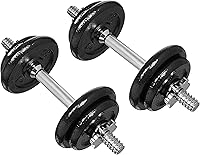
For heavier home training, compare adjustable dumbbells up to 90 lbs.
Heavier dumbbells also need more clear space for loading, lifting and setting down between sets. If the bench footprint leaves no room for those movements, training can feel cramped even when the bench itself is well made.
Check these measurements before buying:
- Seat height at every useful setting
- Seat width and cushion length
- Backrest length and angle range
- Total bench length
- Folded size, if it folds
- Clear space around the bench
- Doorway and storage measurements
Seat height at every useful setting is more helpful than a single headline number. You can then see whether the range covers your preferred pressing position without forcing your feet off the floor.
Seat width and cushion length affect how your hips sit and how secure the bench feels during pressing. A longer cushion may support more of your body, while a narrower seat can feel less steady when you brace.
Backrest length and angle range decide how fully your shoulders and upper back are supported. A short backrest may work for some movements but feel limiting for others, especially when you train at an incline.
Total bench length matters for the room as well as for your body. A longer bench may need more floor space end to end, which can affect where it sits in relation to walls, doors and other equipment.
Folded size, if it folds, should be checked against the place where you will actually store it. A bench that folds flat may still be too wide for a cupboard or too long for a corner, so measure the storage spot directly.
Clear space around the bench includes the area you need to stand, sit, load weights and move between exercises. Leave room at the ends for getting on and off, and at the sides for dumbbell work and changing the adjustment.
Doorway and storage measurements help you avoid a bench that cannot be moved into the room in the first place. Check the width and height of the route as well as the final storage position.
Mark the bench's full footprint with tape, then leave room for your stance and dumbbell movement. Walk around the taped outline, set weights where you would normally place them and check that doors still open fully.
For smaller rooms, compare the Best Compact Adjustable Weight Benches guide. Compact dimensions can help with storage, but a shorter bench may change how fully your back and hips are supported.
The best fit balances body support, room clearance and storage in one plan. Measure twice, test the layout on the floor and choose a bench that works as well in your room as it does on paper.
Which products can complement an adjustable bench?
An adjustable bench works best when the rest of your training setup matches its size and intended use. If you want barbell support, compare adjustable weight benches with racks.
These products add resistance without requiring a large rack or machine.
Use the bench for supported dumbbell work, then remove the load before changing the bench position. For band sessions, see upper-body resistance band exercises.
Changing position with weights still on the bench can put strain on the hardware and make the bench harder to control. Clearing the load first also gives you room to check that each setting locks fully before you start the next exercise.
For band-based sessions, learn how to anchor resistance bands so the anchor point does not interfere with the bench footprint.
Bands can pull the bench or your body in a different direction from dumbbell work, so the anchor position needs thought. A band anchored too close may wrap around the frame or restrict how you move between positions.
If you are comparing complete bench options, start with the Best Adjustable Weight Benches for Home Gyms guide. For other conditioning sessions, you may also need Best Treadmill Shoes For Flat Feet or Best Treadmill For Weight Loss, depending on how you divide your home workout space.
Dividing the space matters because a bench, a treadmill and storage for weights can compete for the same floor. Planning each area separately helps you avoid a room that feels crowded in every direction.
A bench works best as part of a setup where each piece has a clear role. Supported pressing and rows at the bench, band work nearby and conditioning in its own area can then share the room without constant rearranging.
How do you set up and care for an adjustable bench?
Set the bench on a level, clear surface and lock every adjustment before use. Keep the feet fully supported, place the bench away from loose mats or obstacles, and start with a light load while you confirm the position.
A level surface helps the bench sit evenly and makes it easier to judge whether the frame is stable. Loose mats or uneven flooring can let the feet shift, so clear the area and check that all four feet make firm contact before you begin.
Start with a light load or no load at all while you confirm the seat height and backrest angle. Sit on the bench, place your feet and check that the position feels right before you add the weights you plan to lift.
Wipe the frame and pads after training, keep adjustment points clear of dirt and inspect the hardware regularly. Stop using the bench if a pin, hinge or support point does not lock correctly.
Regular wiping helps remove sweat and chalk that can make pads slippery or leave residue on the frame. Keeping pins, ladders and hinges clear of dirt also helps them move smoothly and lock more clearly when you need to change position.
Inspect the hardware as part of your routine rather than waiting for a problem to appear. Look for loose fixings, bent parts or a lock that no longer sits fully in place, and deal with any issue before the next session.
Avoid changing the seat or backrest while weight is resting on it. Return the bench to a stable flat or stored position before moving it.
Changing position under load can make the bench tip or make the hardware hard to control. Moving it back to a stable position first also makes it safer to carry or slide into storage.
Store the bench in a dry place where the adjustment points are not knocked or bent. That simple habit helps keep the frame, pads and locking parts in good condition for regular use.
What is the final adjustable weight bench height rule?
Choose an adjustable height weight bench by matching seat height to your foot position, then choosing backrest angles for your exercises. Pick a compact model if storage limits the room, a folding flat bench if you need simple storage, or a broader adjustable bench if you need more supported positions.
Each option involves a trade-off, so let your room and training style guide the final pick. A compact model can suit a small space, a folding flat bench can simplify storage and a broader adjustable bench can support more exercise positions.
The best height is the one that keeps your feet planted, your body supported and the frame stable. Measure your space and compare the full adjustment range before you order.
That final check should cover seat height, backrest angles, locking points, padding and the footprint the bench needs in your room. If those details fit your body and your space, you are more likely to use the bench regularly and get the most from it.
Frequently asked questions
What is an adjustable height weight bench?
An adjustable height weight bench lets you change the bench's position to suit your body, exercise and equipment. Check whether the adjustment changes seat height, backrest angle or both, because those functions solve different fit problems.
Is seat height the same as backrest adjustment?
No. Seat height changes how far your body sits above the floor, while backrest adjustment changes your torso angle.
A bench can offer several backrest positions without offering a useful seat-height range.
What height should a weight bench be?
The right weight bench height lets your feet sit firmly on the floor while your shoulders and hips stay supported. Measure your leg position during a press setup, then compare it with the bench's lowest and highest seat settings.
Are adjustable weight benches stable?
Adjustable weight benches can be stable when the frame, feet and adjustment hardware keep the bench from rocking. Test the adjustment points without a load, check that the bench locks fully and leave enough floor space around it.