How to Anchor Resistance Bands
Anchor resistance bands to a closed, sturdy door or an approved wall point, then check the strap, anchor, and clearance before each set. Choose the attachment height based on the exercise and keep the band away from sharp edges.
On this page (8 sections)
- What do you need before you anchor resistance bands?
- How do you anchor a resistance band to a door?
- Can you use a wall or rack as an anchor?
- Which resistance bands work best with an anchor?
- How should you stand when using an anchored band?
- How do you anchor resistance bands for a compact home gym?
- What should you check after anchoring a resistance band?
- How do you anchor resistance bands safely for different exercises?
To anchor resistance bands, use a closed sturdy door, a fixed wall point, or a suitable rack attachment made for pulling force. Match the anchor height to the exercise, keep the band clear of sharp edges, and inspect every connection before you begin.
The right setup gives you a stable point for rows, presses, pulldowns, rotations, and leg exercises. If you're still choosing bands, start with the resistance bands buying guide to compare common band types and uses.
What do you need before you anchor resistance bands?
You need a resistance band, a compatible anchor, a stable attachment point, and enough open floor space. The anchor should hold the band without cutting into it, while the room should let you step back without hitting furniture.
Door anchors are useful because they can create high, middle, or low attachment points without permanent installation. Wall anchors and rack points can offer a more fixed setup, but they must be designed and installed for the force involved.
Check the band for cuts, flat spots, cracks, or stretched sections before use. The [U.S.
Consumer Product Safety Commission's resistance band safety guidance](https://www.cpsc.gov/Newsroom/News-Releases/2010/CPSC-Warns-Consumers-to-Inspect-Resistance-Bands-for-Safety) also recommends checking bands for damage before exercise.
How do you anchor a resistance band to a door?
Place the door anchor on the correct side of a closed door, then close and secure the door before pulling. The exact placement depends on whether you want a high, middle, or low attachment point.
A typical door anchor uses a padded stopper, loop, or strap that rests against the door. Feed the band through the intended loop, position the anchor where you need it, and close the door firmly.
Pull in the direction that keeps the door closed. Avoid a setup where your movement pulls the door toward you or places the anchor against a sharp edge.
Test the connection with light tension first. If the door opens, the anchor slides, or the strap twists, stop and change the setup.
How do you choose a door anchor height?
Choose high anchors for pulldowns and downward pulls, middle anchors for rows and presses, and low anchors for leg work and low rows. For lower-body routines, compare fabric resistance loop bands for legs.
Your body position should let the band travel in a straight path without crossing your face.
A high anchor works for movements where your hands travel down toward your ribs or shoulders. For more on upper-body resistance band exercises, see our guide.
A middle anchor suits standing rows and chest-height presses.
A low anchor works for movements that start near the floor.
Keep the band away from the door hinge, knob, rough trim, and any exposed metal. If the band rubs during a repetition, reduce the angle or move to another attachment point.
For the full setup sequence, read how to use a resistance band door anchor. If you need to compare attachment styles first, see the best door anchor for resistance bands.
Can you use a wall or rack as an anchor?
Use a wall or rack only when the attachment point is fixed, rated for pulling force, and free from sharp edges. A loose shelf, chair, table leg, or lightweight furniture piece is not a suitable substitute.
A permanent wall anchor can work well in a home gym when it is installed into an appropriate structural point. Follow the hardware instructions, use the required fasteners, and confirm that the anchor does not rotate or pull away from the wall.
A squat rack or power rack may provide a convenient attachment point if the band can sit without rubbing against unfinished metal. Keep the band from catching on adjustment holes or moving parts.
Don't wrap a band around a thin decorative rail, a rolling chair, or a door that cannot stay closed. The most convenient anchor is not useful if it moves during the exercise.
Which resistance bands work best with an anchor?
Bands with handles, loops, or compatible clips can work with an anchor, but the connection must match the band design. For handle options, see fabric resistance bands with handles.
A handle set is often easiest for rows and presses, while a loop band can work around an anchor when the anchor supports that style.
The best resistance bands with handles can suit readers who want a hand grip for upper-body movements. Sets with a door anchor can reduce the need to match separate parts, but check how the band attaches before ordering.
For a combined option, compare the best resistance bands with handles and door anchor. The useful choice is the one that fits your exercises, available space, and preferred grip.
Does a weighted vest replace a resistance band anchor?
A weighted vest does not replace a fixed anchor, but it can add resistance to exercises that do not need one. For more on weighted vests and ankle weights, see our guide.
It may suit squats, lunges, walking, and push-ups when you want load on your body instead of a pulling line.
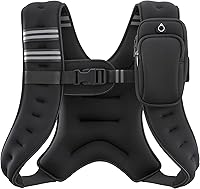
The CAP Adjustable Weighted Vest 20–150 lbs has an adjustable design, a 40 lb product style, a hook-and-loop closure, padded shoulders, an adjustable waist belt, reinforced nylon and polyester construction, and reflective stripes. Its adjustable weights are described as 2.5–40 lb packets filled with iron ore fines.
Choose it when you want progressive load without setting up a door or wall point. Skip it for exercises that specifically need a band pulling from behind, above, or beside you.
The ZELUS Weighted Vest is another option for body-loaded movements. It comes in a 12 lb size, uses evenly distributed iron sand, has adjustable buckle straps for chest sizes between 31.5 and 45 in, and includes reflective stripes, an armband pouch, and a rear mesh pocket.
The ZELUS vest suits lighter added resistance and portable workouts. Begin with a manageable load, especially for movements that involve jumping, running, or repeated changes in direction.
For a direct comparison of body-loaded training options, read weighted vest vs backpack. You can also compare the best weighted vest on sale when a vest fits your routine better than an anchored band.
How should you stand when using an anchored band?
Stand far enough away to create light tension before the first repetition, then keep your feet stable and your body facing the intended pull. Your starting position should not require a sudden tug to make the band tight.
Keep your knees soft and your spine in a neutral position that matches the exercise. Step closer to reduce tension or farther away to increase it, but don't stretch the band so far that it reaches your face or loses control.
Move slowly through the return portion. A band stores energy as it stretches, so releasing it quickly can pull your hands or body toward the anchor.
Keep children, pets, and other people away from the band path. Don't let anyone stand between you and the anchor.
How do you anchor resistance bands for a compact home gym?
Use a door anchor when you need a temporary setup, and store the bands where they won't stay stretched or rub against rough surfaces. A compact space works best when the anchor point, training area, and storage spot are planned together.
Clear a straight path from the door to your standing position. Move chairs, lamps, tables, and loose mats out of the band's travel area.
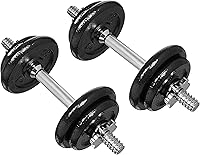
A small dumbbell set can complement anchored work without needing another fixed point. For more on dumbbell sets with racks, see our guide.
The Amazon Basics Adjustable Dumbbell Hand Weight Set includes 2 dumbbell handles, 4 2.5 lb plates, 4 5 lb plates, 4 0.5 lb collars, and a black storage case with carry handle, for 38 lb total weight.
Choose it for movements where you prefer a stable hand weight instead of continuous band tension. Its adjustable plates let you change the load between exercises, while the case helps keep the pieces together in a small workout area.
What should you check after anchoring a resistance band?
Check the door, anchor, band, attachment, and floor position before every set. A safe setup should stay still under light test tension and should not show rubbing, twisting, or damage.
Use this quick check:
- Close the door fully and confirm it stays shut.
- Make sure the anchor sits flat and does not twist.
- Inspect the band for cuts, cracks, or worn areas.
- Pull gently to test the connection.
- Confirm that your feet have stable flooring.
- Stop if the band shifts, snaps, or rubs on an edge.
Wipe the band and anchor as appropriate for their materials, then let them dry before storage. Don't leave a band stretched around a door or fixed point between workouts.
How do you anchor resistance bands safely for different exercises?
Choose the attachment height that keeps the band path controlled and the anchor behind or beside you, not across your face or neck. High anchors suit pulldown patterns, middle anchors suit rows and presses, and low anchors suit leg work and low pulls.
Use a door anchor when you need flexible height options in a rental or compact room. Use a fixed wall or rack point when the installation is appropriate and you want a more permanent training station.
Pick the CAP vest when adjustable body-loaded resistance fits your whole-body routine. Pick the ZELUS vest when a lighter 12 lb option and portable workout features suit you.
Pick the Amazon Basics set when adjustable dumbbell work is more useful than a fixed band path.
Once you know how to anchor resistance bands, the best setup is the one that stays secure, leaves a clear movement path, and matches the exercise you plan to do.
Frequently asked questions
Where is the safest place to anchor resistance bands?
Use a closed, sturdy door with a door anchor designed for resistance bands, or use a wall or rack point that is made to handle pulling force. Avoid loose furniture, glass, sharp corners, and damaged hardware.
Check the anchor and band before every workout, and leave enough space for the band to move without rubbing.
Can you anchor resistance bands without a door?
Yes. You can use a suitable wall anchor, squat rack point, or other fixed attachment made for resistance training.
A door is often the simplest home option, but the anchor must stay secure under tension.
If you cannot confirm that a point is fixed and strong enough, choose a different setup.
What height should a resistance band anchor be?
Set the anchor at shoulder or chest height for many rows and presses, above your head for pulldown-style movements, and near floor level for leg work or low rows. The correct height depends on the movement.
Keep your path clear and avoid pulling the band across your face or neck.
How do you stop a resistance band anchor from slipping?
Use the anchor as directed, close and lock the door against the anchor, and keep the anchor on the correct side of the door for the pull direction. Inspect the strap and stitching before use.
If the anchor shifts, twists, or rubs against the door edge, stop and reset it.