Can You Fold a Treadmill without Help?
On this page (8 sections)
Yes, you can often fold a treadmill without help, especially if it’s designed for easy storage. Many modern treadmills feature a folding mechanism that allows you to lift the deck to a vertical position. This makes it much easier to move and store your machine when you’re not using it. Always check your specific model’s instructions to ensure you fold it correctly and safely.
Folding a treadmill is a common feature many users look for. It’s a great space-saving solution for home gyms. We found that manufacturers prioritize ease of use and safety in their folding designs. This means you likely won’t need an extra pair of hands to get the job done. Understanding the proper technique is key to avoiding strain.
- Most treadmills can be folded.
- Look for models with an easy-lift or folding deck.
- Always consult your owner’s manual for specific instructions.
- Folding saves space and makes moving easier.
Let’s walk through exactly how you can fold your treadmill safely and efficiently.
Storing Your Treadmill: Folding It Solo
So, can you fold a treadmill by yourself? The short answer is usually yes. Most modern treadmills are designed with this very convenience in mind. Manufacturers understand that not everyone has a built-in gym assistant. They want you to be able to tuck your machine away easily. We found that the key is understanding your treadmill’s specific folding mechanism and using the right technique.
You’re probably thinking about how much space a treadmill takes up. It’s like a piece of exercise furniture that lives permanently in your room. But with a little know-how, you can transform it. You can make it stand upright and take up a fraction of its footprint. This is a huge win for smaller homes or multi-purpose rooms. Let’s break down how you can make this happen safely. If you’re concerned about space, our guide to the best folding treadmill for small spaces can help.
Understanding Your Treadmill’s Folding System
Before you even think about lifting, it’s important to know what you’re working with. Treadmills generally have two main types of folding systems. One is the manual fold, which is most common. The other is a power-assisted fold, which is less common and usually found on higher-end models.
The Manual Fold: Your Most Likely Scenario
This is what you’ll find on the vast majority of home treadmills. The deck, which is the part you run on, is hinged to the frame. This hinge allows you to lift the deck up towards the upright console. It’s like closing a book or a car hood.
Identifying the Folding Mechanism
Look for a lever, a handle, or sometimes just a specific spot on the frame near the base of the deck. This is often labeled or designed to be easily accessible. Sometimes, it’s a small pedal release near the bottom of the treadmill base. We found that knowing this release point is your first step. It’s usually quite straightforward to locate.
Safety First: Disconnecting Power
This is non-negotiable. Before you attempt to fold any treadmill, make sure it’s unplugged. You don’t want any accidental power surges or the motor engaging while you’re trying to lift. So, always find the power cord and disconnect it from the wall outlet. This is a simple step that greatly enhances your safety.
The Power-Assisted Fold: A Bit More High-Tech
Some premium treadmills offer a power-assist feature. This means a small motor helps lift the deck for you. You might press a button or activate a switch, and the treadmill does most of the work. While convenient, these still usually require some guidance from you to ensure a smooth fold. We found that even with power assist, checking your manual is still the best approach.
Step-by-Step Guide to Folding Your Treadmill Solo
Alright, you’ve identified your folding mechanism and unplugged the machine. Now comes the actual folding process. Remember, the goal is to use the treadmill’s design to your advantage, not your brute strength.
1. Clear the Area
Before you lift, ensure there’s nothing obstructing the path. You’ll need space behind the treadmill for the deck to swing up. Also, make sure no pets or children are wandering nearby. A clear space makes the process smoother and safer. We recommend at least a couple of feet of clearance.
2. Locate the Release Mechanism
As we mentioned, find that lever, pedal, or handle. It might be on the side of the deck or near the base. Some models have a hydraulic system that needs a gentle push to release. Consult your owner’s manual if you’re unsure. It will show you exactly where to look and what to do.
3. Initiate the Lift with Your Foot (Often)
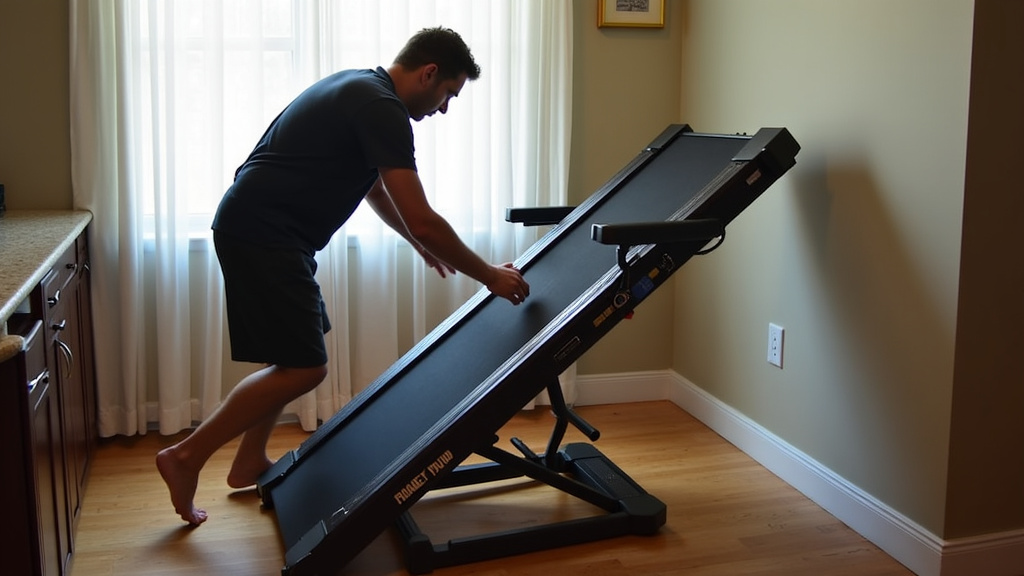
For many treadmills with a deck-release pedal, you’ll use your foot. Place your foot on the pedal and press down. This action usually disengages a lock. Simultaneously, you might need to gently push down on the back of the treadmill deck. This starts the lifting motion. It’s a coordinated effort, but one you can manage.
4. Guide the Deck Upward
Once the lock is released and you’ve started the lift, the deck will begin to pivot. Use your hands to guide it upwards. Don’t force it. The hydraulics or the design should allow it to lift smoothly. As you raise it, you’ll feel it becoming lighter. Keep your fingers clear of pinch points. We found that a steady, controlled motion is key here.
The ‘Soft Drop’ Feature: A Closer Look
Many newer treadmills come with a “soft drop” or “hydraulic assist” feature. This means the deck won’t just slam down if you let go. Instead, it will slowly lower itself. This is fantastic for safety and helps prevent accidental damage. You might activate this by just gently pushing the deck down a bit after you’ve lifted it. It then takes over. This is a feature we really appreciate for its user-friendliness.
5. Secure the Treadmill in the Upright Position
As you bring the deck all the way up, you’ll hear or feel it click into place. There’s usually a safety latch or a locking mechanism that holds the deck vertically. Make sure it’s fully engaged. You want to be absolutely sure it won’t accidentally fall back down. Give it a gentle tug to confirm it’s secure. This locking point is critical for stability.
6. Check for Stability
Once folded and locked, give the treadmill a little nudge. It should feel stable and secure in its upright position. It shouldn’t wobble or lean precariously. If it feels unstable, re-check the locking mechanism. Ensure the deck is fully secured. Sometimes, a slight adjustment is all that’s needed. We found that a quick stability check prevents potential accidents.
Tips for a Smooth Folding Experience
Folding a treadmill solo is absolutely achievable with a little practice. Here are some extra tips to make the process even easier and safer for you.
- Read Your Manual: We can’t stress this enough. Every treadmill is slightly different. Your owner’s manual is the ultimate guide for your specific model.
- Lubricate Hinges: If you notice the folding mechanism is stiff or squeaky, consider lubricating the hinges. A bit of silicone spray can work wonders. Do this sparingly and according to manufacturer recommendations.
- Practice Makes Perfect: The first few times might feel a bit awkward. Don’t get discouraged! The more you fold and unfold it, the more natural it will become.
- Don’t Rush: Take your time. Folding is not a race. Rushing can lead to mistakes or injuries.
- Know Your Limits: While most treadmills are designed for solo folding, if you have physical limitations or are concerned about safety, it’s always okay to ask for help.
What If Your Treadmill Doesn’t Fold?
Not all treadmills are designed to fold. If yours is a heavy-duty, commercial-style machine, or an older model, it might be a fixed, non-folding unit. In this case, you’ll need to plan for its permanent placement. You might need a dedicated space or assistance if you ever need to move it.
We found that checking the product description or your manual is the best way to confirm if your treadmill has a folding feature. If it doesn’t, you’ll know not to attempt to fold it. Trying to force a non-folding treadmill into a folded position could cause serious damage. Plus, it could be dangerous.
When to Seek Assistance
While the goal is to fold it yourself, there are situations where help is a good idea. If you’ve just purchased a very heavy treadmill, the initial setup might be easier with a friend. If you’re recovering from an injury, don’t risk reinjury. And if you simply feel uncomfortable or unsafe performing the folding motion, that’s perfectly valid. Asking a family member, friend, or even a neighbor for a hand is a smart move. Safety always comes first.
Treadmill Folding Checklist
Here’s a quick checklist to ensure you’re ready to fold your treadmill:
- Is the treadmill unplugged?
- Is the area around the treadmill clear?
- Do you know where the release mechanism is?
- Are you confident the deck will lock securely upright?
- Do you feel physically able to lift and guide the deck?
Conclusion
You’ve learned that folding your treadmill solo is usually quite feasible. Most modern machines are designed for this convenience. The key is understanding your specific model’s folding mechanism. Always prioritize safety by unplugging the unit and clearing the area. With a little practice and by following the steps outlined, you can easily reclaim your space.
Your next step is to confidently approach your treadmill. Locate that release mechanism and give it a try! Remember to always consult your owner’s manual if you encounter any confusion. Enjoy the extra room your neatly folded treadmill now provides!
Frequently Asked Questions
How do I know if my treadmill can be folded?
Most home treadmills are foldable, but not all. Check your treadmill’s product description or your owner’s manual. If it doesn’t explicitly mention a folding feature, it likely has a fixed frame. Attempting to fold a non-folding treadmill could damage the machine or cause injury.
What if the folding mechanism feels stiff or squeaky?
A stiff or squeaky folding mechanism usually just needs a little lubrication. We recommend using a silicone-based lubricant spray sparingly on the hinges. Refer to your manual for any specific lubrication advice for your model. This can make the folding process much smoother and quieter.
Can I fold my treadmill if I have back pain?
While many treadmills are designed for solo folding, it’s wise to listen to your body. If you have back pain or any other physical limitations, it’s best to ask someone for assistance. Trying to force the fold could worsen your pain or cause further injury. Your health is the priority.
What’s the purpose of a “soft drop” feature on treadmills?
The “soft drop” or hydraulic assist feature is a safety mechanism. It prevents the treadmill deck from slamming down suddenly when you’re folding it. Instead, it slowly lowers the deck, reducing the risk of pinched fingers or damage to the treadmill and your floor. It makes the folding process much safer and more controlled.
How much space do I need around my treadmill to fold it?
You’ll typically need a few feet of clear space behind and to the sides of your treadmill. This allows the deck to pivot upwards without hitting walls or furniture. Always ensure the area is clear of pets, children, and any other obstructions before you begin the folding process for maximum safety.