
How Long Should You Walk on a Treadmill to Lose Weight?
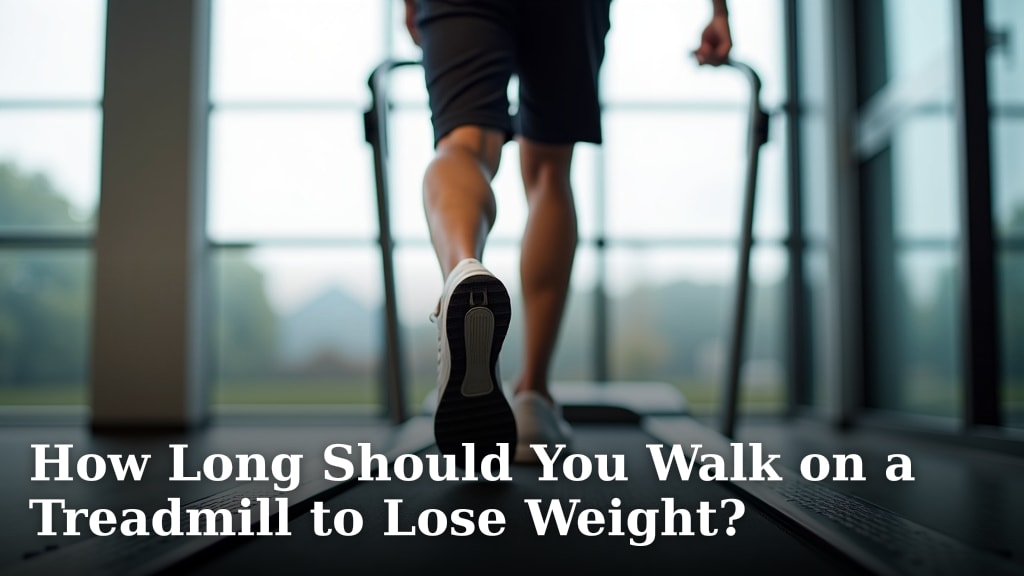
To really see results, you should walk on a treadmill for 30-60 minutes per session to lose weight, at least 3-5 times a week. Consistency is key here. It’s not just about the length of your walk; it’s also about how often you do it and the intensity you bring.
How long should you walk on a treadmill to lose weight? Well, it depends on your current fitness level and goals. We found that mixing up your routine keeps things interesting. You can burn more calories by adding inclines or varying your speed. What works for one person might not work for another, right?
TL;DR:
- Aim for 30-60 minutes per session.
- Walk 3-5 times a week consistently.
- Vary your speed and incline for better results.
- Listen to your body and adjust as needed.
- Combine with a healthy diet for best weight loss.
Ready to get moving? Let’s walk through how to make your treadmill sessions super effective for shedding those extra pounds.
Treadmill Walking for Weight Loss: How Long Should You Go?
To lose weight effectively, you’ll need to create a calorie deficit. This means burning more calories than you consume. Treadmill walking is a fantastic way to do this. We found that the magic number for weight loss isn’t just about speed; it’s about sustained effort.
Many experts suggest dedicating 30 to 60 minutes to your treadmill workouts. This timeframe allows your body to tap into fat stores for fuel, especially after about 20 minutes of consistent activity.
Understanding Calorie Burn and Weight Loss
Weight loss boils down to a simple equation: calories in versus calories out. To lose one pound of fat, you need to burn roughly 3,500 more calories than you eat. This deficit can be achieved through diet, exercise, or a combination of both.
Walking on a treadmill helps boost your “calories out” side of the equation. The longer and more intensely you walk, the more calories you’ll burn. It’s a straightforward path to progress.
Factors Affecting Calorie Burn
Several things influence how many calories you torch on the treadmill. Your body weight is a big one; heavier individuals generally burn more calories. Your pace and the incline you choose also play a huge role.
Even your individual metabolism can affect the numbers. Everyone’s body is a little different, right? So, what you burn might not be exactly what your friend burns at the same setting.
Getting Started: Your First Steps on the Treadmill
If you’re new to exercise or getting back into it, don’t feel pressure to hit those 60-minute marks right away. Start slow and build up gradually. Consistency is more important than immediate intensity.
Begin with 15-20 minute sessions, a few times a week. Focus on maintaining a comfortable pace where you can still talk but feel like you’re working. This helps you avoid burnout and injury.
Listen to Your Body
Your body sends important signals. If you’re feeling pain, not just a little muscle soreness, it’s time to ease up. Pushing too hard too soon can lead to injuries that stall your progress.
Hydration is super important too. Make sure you’re drinking water before, during, and after your workouts. Feeling dizzy or overly tired? Take a break.
Optimizing Your Treadmill Workout for Maximum Fat Loss
Once you’re comfortable with consistent walking, it’s time to turn up the heat. Adding variety and intensity can significantly increase your calorie burn and make your workouts more effective.
Think of it like cooking: a bland meal is okay, but a dish with different spices and textures is so much better. Same goes for your workouts!
Incline Training
Walking uphill is much harder than walking on a flat surface. This means more muscles engaged and more calories burned. We found that even a slight incline can make a big difference.
Try gradually increasing the incline percentage on your treadmill. Start with 1-2% and slowly work your way up. It feels like you’re climbing a gentle hill, which can be surprisingly challenging.
Varying Your Speed (Interval Training)
Interval training involves alternating between periods of higher intensity and lower intensity. This “burst and recover” method is highly effective for burning calories and improving cardiovascular fitness.
For example, you might walk briskly for 2 minutes, then slow down to a recovery pace for 1 minute. Repeat this cycle throughout your workout. This keeps your body guessing and prevents plateaus.
| Workout Type | Duration | Intensity | Key Benefit |
|---|---|---|---|
| Steady-State Walk | 30-60 min | Moderate RPE 4-6 | Consistent calorie burn, endurance |
| Incline Walk | 25-45 min | Moderate-High RPE 5-7 | Higher calorie burn, leg strength |
| Interval Walk | 20-40 min | Varying RPE 4-8 | Maximizes fat burn, cardio fitness |
| Longer Walk | 60-90 min | Light-Moderate RPE 3-5 | Extended calorie burn, mental focus |
Consistency and Frequency: Your Weight Loss Allies
Even the longest, most intense workout won’t help much if it only happens once a month. The real secret sauce for weight loss is consistency. Aim for regular workouts, even if they’re shorter sometimes.
Many reputable health organizations, including the Centers for Disease Control and Prevention (CDC), recommend at least 150 minutes of moderate-intensity activity per week. That breaks down to about 30 minutes, five days a week.
Making it a Habit
Find a routine that works for you. Maybe it’s a brisk walk before work, or a longer session in the evening. Scheduling your treadmill time like any other appointment can help you stick to it.
Think of it as brushing your teeth – it’s just something you do. The more automatic it becomes, the easier it is to maintain.
Beyond the Treadmill: A Holistic Approach to Weight Loss
While the treadmill is a powerful tool, it’s just one piece of the puzzle. For sustainable weight loss, you need to look at the bigger picture. Your diet and overall lifestyle are incredibly important.
Combining exercise with healthy eating is where you’ll see the most dramatic and lasting results. It’s like having two engines propelling you forward instead of one.
Fueling Your Body Right
You can’t out-exercise a bad diet. What you eat has a massive impact on your weight loss journey. Focus on whole, unprocessed foods like fruits, vegetables, lean proteins, and whole grains.
Cutting down on sugary drinks and processed snacks can make a huge difference. Small changes in your diet can add up significantly over time, just like your treadmill sessions.
The Importance of Sleep and Stress Management
Don’t underestimate the power of a good night’s sleep. When you’re well-rested, you have more energy for your workouts and you’re less likely to crave unhealthy foods. Lack of sleep can also mess with your metabolism.
Stress can also hinder weight loss by affecting hormones that regulate appetite. Finding ways to manage stress, whether it’s through meditation, hobbies, or simply relaxing, is a key component of a healthy lifestyle.
Your Weight Loss Treadmill Checklist
Ready to make your treadmill sessions super effective? Here’s a quick checklist:
- Plan to walk for 30-60 minutes per session.
- Aim for at least 3-5 sessions each week.
- Vary your speed and incline to keep your body challenged.
- Stay properly hydrated before, during, and after.
- Combine your workouts with a balanced, healthy diet.
- Prioritize rest and stress management for overall well-being.
Conclusion
You’ve seen that losing weight with a treadmill is very achievable. It takes a consistent effort. Aim for those 30-60 minute sessions, a few times each week. Remember to mix up your speed and incline for better results. We found that pairing your treadmill walks with smart food choices makes all the difference. Your journey is unique, so listen to your body and celebrate every step. Start small, stay consistent, and you will see progress.
Frequently Asked Questions
How often should I walk on a treadmill to see weight loss results?
To see noticeable weight loss, you should aim for at least 3-5 treadmill sessions per week. Consistency is more important than occasional long workouts. Regular activity creates the calorie deficit needed for weight loss.
Can I lose weight by walking on a treadmill for only 15 minutes a day?
While 15 minutes is a good starting point, it generally isn’t enough to create a significant calorie deficit for substantial weight loss. We found that longer sessions, ideally 30-60 minutes, are more effective for burning fat. Keep up the 15 minutes as a warm-up towards longer sessions.
What’s the best treadmill speed for weight loss?
The best speed isn’t a fixed number; it’s about your effort level. You want to be at a brisk pace where you can still talk but feel slightly out of breath. Incorporating speed variations (interval training) can also boost calorie burn more effectively than a constant pace.
Do inclines on a treadmill help with weight loss more than flat walking?
Yes, walking on an incline significantly increases your calorie burn compared to walking on a flat surface. It engages more muscles, especially in your legs and glutes. This makes incline training a very effective strategy for accelerating weight loss.
Is it better to walk on a treadmill in the morning or evening for weight loss?
The “best” time depends on your personal schedule and what you can stick with consistently. Some research suggests morning workouts can kickstart your metabolism. However, fitting your treadmill walk in whenever you can maintain the habit is most important for long-term weight loss success.
