
How Much Space Do You Need for a Treadmill?
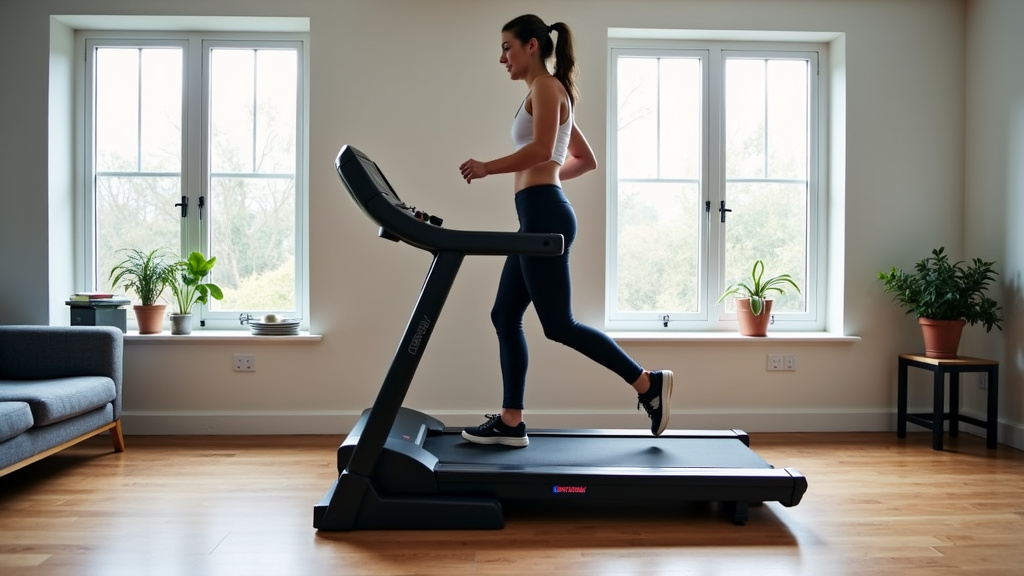
For a treadmill, you generally need a space that’s at least 6.5 feet long and 3 feet wide to accommodate the machine itself and provide safe operating clearance. This ensures you have enough room to exercise comfortably and avoid accidents while using your treadmill.
When planning for your home gym, remember to factor in extra room around the treadmill for getting on and off safely, and for any maintenance. Most treadmills are about 77 inches long and 35 inches wide, but these dimensions can vary quite a bit between models.
- Minimum 6.5 ft length, 3 ft width.
- Measure your specific treadmill model.
- Add extra space for safety around the machine.
- Consider ceiling height, especially for incline.
- Foldable models save space when not in use.
Ready to figure out exactly how much space your dream treadmill will need? Let’s walk through all the considerations to ensure a perfect fit for your home.
Estimating the Space Needed for Your Treadmill Setup
To figure out your ideal treadmill space, you need to think about more than just the machine itself. You’ll need room to move around it safely. This includes getting on and off without bumping into walls or furniture. We’ve broken down the key factors to consider for a smooth and safe workout area.
Understanding Treadmill Dimensions
First, let’s talk about the treadmill itself. These machines come in many sizes. A compact model might be smaller. A high-end, commercial-grade treadmill can be much larger. Always check the exact specifications of the model you plan to buy. Our guide to the best treadmill for home use can help you choose a model that fits your space and needs.
Typical Treadmill Footprints
Most home treadmills have a footprint between 65 and 80 inches long. They are usually 30 to 36 inches wide. The running deck length also varies. Shorter decks are fine for walking. Longer decks are better for running, especially if you have a longer stride. A good rule of thumb is to allow for the longest possible stride you might take, plus a bit extra for safety.
Foldable vs. Non-Foldable Treadmills
Many people consider foldable treadmills. These models can save space when not in use. But remember, even when folded, they still take up some floor space. They don’t disappear! Check the folded dimensions. Some foldable units stand upright. Others just shorten their length. Make sure you have a spot to store it where it won’t be in the way.
Safety Clearance: Your Personal Bubble
This is where many people underestimate their needs. You need space around the treadmill for safety. What if you stumble? What if you need to quickly step off? You don’t want to hit a wall or another piece of furniture. The general recommendation is generous for a reason.
Rear Clearance Requirements
Behind the treadmill, aim for at least 5 to 6 feet of clear space. This is for safety. If you fall or lose your balance, you need room to recover. The Centers for Disease Control and Prevention (CDC) often highlights the importance of clear pathways to prevent falls. This applies to exercise equipment too. This space also allows for easy access if you need to service the machine.
Side and Front Clearance
For the sides, give yourself at least 1 to 2 feet of space. This lets you get on and off comfortably. It also helps if you need to adjust anything on the side panels. In front, about 1 foot is usually enough. This provides clearance for your arms if you’re holding the handrails. It also helps with air circulation.
Considering Ceiling Height for Your Treadmill
This is often overlooked. But it’s very important. When you run, you naturally bounce a little. If your treadmill has an incline feature, your head will be even closer to the ceiling. You need to account for all of this. Low ceilings can be a real problem.
Most people add about 6 to 12 inches to their height. This accounts for the bounce and the treadmill’s deck height. Then, factor in any incline. If your treadmill can incline to 15%, you’ll be quite a bit taller. Measure your height plus a foot. Then, measure from the floor to your ceiling. Make sure there’s at least a few inches to spare. Don’t want to hit your head mid-run!
Power Source and Ventilation Needs
Where will you plug in your treadmill? You’ll need an outlet nearby. Running extension cords across a room can be a trip hazard. Also, consider ventilation. Exercise generates heat. A well-ventilated space prevents your workout area from becoming too stuffy or hot. Good airflow is key for comfort and safety (National Institutes of Health).
Flooring and Noise Considerations
Treadmills can be noisy. They also vibrate. A good quality mat can help with both. It protects your floor. It also dampens sound. If you live in an apartment, this is especially important. Your neighbors will thank you. Think about the type of flooring you have. Carpet, wood, or concrete all react differently to a heavy, vibrating machine. A mat helps stabilize the treadmill too.
Multi-Purpose Room Dilemmas
Is your treadmill going into a dedicated home gym? Or is it sharing space with your living room or office? If it’s a multi-purpose room, flexibility is key. This is where foldable treadmills shine. They allow you to reclaim your space when you’re not exercising. But remember, moving even a foldable treadmill can be a chore. They are heavy machines.
Pre-Purchase Checklist for Your Treadmill Space
Before you buy, grab a tape measure. It’s your best friend here. Don’t guess. Measure everything twice. We found that taking these steps before buying saves a lot of headaches later. You want your treadmill to be a joy, not a hassle.
- Measure your treadmill’s exact length and width.
- Add 6 feet to the rear for safety clearance.
- Add 2 feet to each side for comfortable access.
- Measure your ceiling height and compare it to your height plus 1 foot.
- Locate your nearest power outlet.
- Decide on flooring protection (a mat is highly recommended).
Planning for Future Upgrades or Additions
Are you planning to add more equipment later? Maybe some weights? A bike? If so, factor that into your initial space planning. Thinking ahead saves you from reorganizing everything later. It’s like planning for furniture in a new house. You want to make sure everything fits and flows well.
The Importance of a Test Fit
Once you have your measurements, you can do a “test fit.” Use painter’s tape on the floor. Outline where your treadmill will go. Include all the safety clearances. Walk around the taped area. Pretend to get on and off. Does it feel cramped? Is there enough room? This simple step can reveal hidden issues. It’s better to find out now than when the treadmill is delivered.
| Dimension Category | Minimum Recommended | Why It’s Important |
|---|---|---|
| Treadmill Length | 65-80 inches (based on model) | Machine footprint; running surface. |
| Treadmill Width | 30-36 inches (based on model) | Machine footprint; console width. |
| Rear Safety Clearance | 6 feet (72 inches) | Prevents falls, emergency dismount. |
| Side Safety Clearance | 1-2 feet (12-24 inches) per side | Easy access, prevents bumping. |
| Front Safety Clearance | 1 foot (12 inches) | Arm movement, air circulation. |
| Ceiling Height | Your height + 12 inches | Prevents head bumps, especially on incline. |
Conclusion
Finding the right space for your treadmill isn’t just about fitting the machine. It’s about creating a safe, comfortable, and sustainable workout area. You’ve learned about treadmill dimensions, crucial safety clearances, and often-forgotten details like ceiling height and power sources. Taking the time to plan now will prevent future headaches and ensure your treadmill becomes a well-used asset in your home.
So, grab your measuring tape. Use the checklist provided. Then, visualize your ideal setup. Your perfect workout space is just a few measurements away!
Frequently Asked Questions
Can I put a treadmill on carpet?
Yes, you can place a treadmill on carpet, but it’s highly recommended to use a treadmill mat underneath. A mat will help stabilize the machine, reduce vibrations, protect your carpet from damage and indentations, and can even dampen some of the noise.
How heavy are treadmills, and does that affect placement?
Home treadmills can vary widely in weight, from around 100 pounds for lighter, foldable models to over 300 pounds for commercial-grade units. Their weight definitely affects placement; ensure your floor can support it, especially if it’s on an upper level. Heavy treadmills are also harder to move, so plan your spot carefully.
Is it okay to put a treadmill in a garage?
Putting a treadmill in a garage is common, but consider temperature and humidity. Extreme heat, cold, or dampness can damage electronics and moving parts. Ensure good ventilation, and perhaps use a fan or dehumidifier to protect your investment. Also, factor in any dust or debris that might accumulate.
How close can my treadmill be to a wall?
While you might want to maximize space, avoid placing your treadmill directly against a wall. You need at least 1-2 feet of side clearance to safely get on and off the machine and perform any adjustments. For the rear, a full 5-6 feet of clearance is essential for safety, especially if you ever stumble.
What if I have limited space and can’t meet all the clearance recommendations?
If space is extremely tight, prioritize rear safety clearance (at least 5 feet is non-negotiable for safety). Consider a compact or foldable treadmill with a smaller footprint. You might have to compromise slightly on side or front clearance, but never on the rear, as that’s where most fall risks occur.
