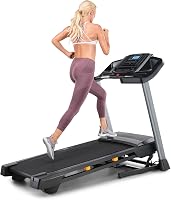
Treadmill Settings for 10,000 Steps
For most walkers, treadmill settings for 10,000 steps work best at 2.5 to 3.5 mph with 0 to 1% incline for a steady, comfortable pace. Start flat, add incline only when your gait stays easy, and split the total into two or three sessions if needed.
On this page (10 sections)
- What speed gives you 10,000 steps in a reasonable time?
- Which incline should you use for daily steps?
- How do you set speed and incline step by step?
- How do treadmill settings for 10,000 steps change for beginners?
- Can you split 10,000 steps into two or three walks?
- What posture and stride help you reach the total safely?
- Which treadmill features help with a daily 10,000-step routine?
- How do you maintain the belt and track so steps stay consistent?
- How do you choose between flat walking and incline walking?
- What is the best closing routine for treadmill settings for 10,000 steps?
For 10,000 steps, use 2.5 to 3.5 mph at 0% incline and hold that pace until the counter reaches your goal. That range suits most adults who want a brisk walk without turning it into a run.
What speed gives you 10,000 steps in a reasonable time?
Speed decides time more than anything else. A faster belt shortens the session, but only if your stride stays smooth and your shoulders stay relaxed.
Most people cover 10,000 steps in about 70 to 100 minutes. At 3 mph, expect roughly 85 to 95 minutes for many walkers.
At 3.5 mph, the same total may take closer to 75 to 85 minutes. Our guide on how long 10,000 steps take on a treadmill breaks down pace and stride length in more detail.
Use this simple test. You should be able to speak in full sentences without gasping.
Your shoulders should stay down, not creep toward your ears.
If you need to grab the rails to keep up, the speed is too high. Lower it by 0.2 to 0.3 mph and walk for two minutes.
Repeat until your hands rest lightly.
Which incline should you use for daily steps?
Start at 0% incline for a daily step target. Flat walking keeps calf and Achilles load lower and makes it easier to reach the full total without soreness.
Incline adds effort at the same speed. Even 1% can feel like a gentle grade when you walk for an hour.
That extra effort is welcome, but it is not required to count the steps.
Add incline in small steps. Try 1% for 10 minutes, then return to flat.
If your lower legs feel fine the next day, keep 1% for longer. If not, stay flat and build time first.
People who want a steeper challenge may look at a best treadmill for seniors with incline to compare ranges and controls. For a 10,000-step goal, flat remains the most repeatable choice.
How do you set speed and incline step by step?
Set the belt before you step on, start flat, then adjust one setting at a time. That order keeps the first minutes calm and lets you judge how your body responds.
First, place the safety key and stand on the side rails. Start the belt at a slow speed, step on near the back, and walk forward.
Our guide on how to turn on treadmill models covers the basic start steps in more detail.
Next, raise speed until your pace feels brisk but steady. Keep 0% incline for the first session or two.
After 10 minutes, ask three questions. Is breathing steady?
Are hips relaxed? Can you look up without holding on?
If the answer to any question is no, lower speed slightly. Do not add incline on the same day you raise speed, since you will not know which change caused the fatigue.
How do treadmill settings for 10,000 steps change for beginners?
Beginners should start slower and split the goal. A total of 10,000 steps is a target, not a test you must pass on day one.
Try 15 to 20 minutes at 2 to 2.5 mph. That may give you 2,000 to 2,500 steps.
Add 5 minutes every few days afterward. Progress matters more than hitting the full number right away.
Shorter strides mean more steps at the same speed. Taller walkers often take longer strides and may reach the total in less time.
Neither pattern is wrong. Comfort should guide your choice.
If you are choosing equipment for this routine, our best treadmill for beginners guide compares controls, size, and features that help new walkers start with confidence. For settings alone, keep the belt slow enough that you can step on and off with ease.
What should you do in the first week?
Walk flat, walk slow, and finish with time left in your legs. That approach builds trust in the routine and reduces the urge to sprint at the end.
Aim for three or four sessions in the first week. Each session can be 20 to 40 minutes.
Track how your feet, calves, and knees feel later that day and the next morning.
A calm 3 mph walk you repeat tomorrow beats a hard 4 mph walk you avoid for a week.
Can you split 10,000 steps into two or three walks?
Yes, splitting the total often makes the goal easier to keep. Your counter adds steps across sessions, and your body gets breaks between blocks.
Two walks of 5,000 steps each fit well into morning and evening routines. Three walks of about 3,300 steps can fit around work, meals, or television time.
Splitting also helps with heat, fatigue, and schedule changes. A short walk after lunch can keep the day on track if the evening gets busy.
Keep each session at a comfortable speed. Do not walk very slowly for the first block and then rush the last block to catch up.
Steady effort across blocks keeps form consistent.
What posture and stride help you reach the total safely?
Stand tall, look ahead, and let your arms swing naturally. Good posture reduces wasted effort and helps each step feel smoother over a long session.
Keep your head up and eyes forward. Relax your jaw and shoulders.
Let your elbows bend lightly and swing opposite your legs without forcing the motion.
Land with your foot under your hips. Reaching far forward can shorten your stride and add braking with each step.
A shorter, quicker cadence at a moderate speed often feels easier for long walks.
Use the handrails only when you need them. Light touch for balance is fine, especially when you first start.
If sharp pain or dizziness occurs, stop and seek medical advice.
Which treadmill features help with a daily 10,000-step routine?
A clear display, simple controls, and cushioning matter most. You will use those features every day, so they should be easy to reach and read.
The NordicTrack T Series Treadmills for Home include models from the T5 to the T16, with the T6.5S described with a 0 to 10 mph range and 0 to 10% incline. KeyFlex cushioning is described as reducing joint impact, and the frame folds for storage.
The T Series specs list a 55-inch deck length and 20-inch deck width. Its 5-inch LCD display shows live stats, and iFIT membership is required for trainer-led features and automatic adjustments.
The ApexNexus Treadmills for Home 3.0HP Foldable Treadmill has a speed range of 0.6 to 6.2 mph and a 12% manual incline. The running surface is 38 by 15 inches, with six-layer cushioning described for joint comfort.
Its LED display tracks speed, time, calories, and distance, and it auto-saves data when paused.
How do you maintain the belt and track so steps stay consistent?
Keep the belt clean, centered, and lubricated as directed. A smooth belt helps speed feel even and reduces slipping underfoot.
Walk on the center of the belt when possible. Check belt position from time to time and adjust it only as your manual directs.
Lubrication reduces friction between the belt and deck.
The SHEJIO Treadmill Walking Belt Compatible with Nordictrack is made for the Nordictrack T 6.5 S, model 250160 and part 263241. It uses PVC material and is described as pre-lubricated, with a recommendation to lubricate at least once a year.
That belt is a maintenance part, not a settings tool. Check model and part numbers before you buy, since belt fit is specific.
Vacuum around the belt and motor area regularly and follow the manual for lubrication timing.
How do you choose between flat walking and incline walking?
Choose flat walking for repeatability and incline for variety. Both count toward 10,000 steps, so the better choice is the one you will repeat without soreness.
Flat walking lets you focus on cadence, posture, and time. It is the best test of your treadmill settings for 10,000 steps because fewer variables affect the result.
Incline walking adds effort without adding speed. That can be useful when you want a shorter session or want to change the feel of the walk.
Keep the incline low and give your calves time to adapt.
A weekly mix can work well. Use flat on most days and a low incline on one or two days.
If your legs feel tired, return to flat until they recover.
If walking-focused equipment is your priority, our best treadmill for walking guide compares models built around stride, controls, and storage. A best treadmill roundup may also help if budget is your main limit.
What is the best closing routine for treadmill settings for 10,000 steps?
Finish each walk with a calm cool-down and a quick check of the total. That last minute helps you end at the right pace and notice how your body felt.
Slow the belt gradually for one to two minutes. Step off only when the belt stops.
Check the step total, time, and average speed before you leave the treadmill.
Note what worked. Was the speed steady?
Did incline feel easy or hard? Those notes make the next session easier to set.
If you fell short, add a short walk later rather than speeding up at the end. A gentle 10-minute top-up protects form and keeps the routine pleasant.
Pick flat walking at 2.5 to 3.5 mph for the simplest routine, and add low incline only after flat feels easy.
Frequently asked questions
What speed should I use for 10,000 steps on a treadmill?
Most walkers do best at 2.5 to 3.5 mph, which keeps breathing steady and form tall. Shorter walkers may feel faster at the same speed, so lower it until your stride feels natural and you can talk in full sentences.
Should I use incline for 10,000 steps?
Flat walking is the best starting point for a daily step goal. Add 1% incline only if your calves, knees, and Achilles feel fine after several flat sessions, and keep the speed the same when you add it.
Can I split 10,000 steps into shorter walks?
Yes, two sessions of 5,000 steps or three sessions near 3,300 steps each still reach the daily total. Splitting helps if you prefer morning and evening walks, work breaks, or shorter blocks of time.
How do I know my treadmill steps match my wearable?
Compare the treadmill display with your wearable after the same walk, then use the one you trust most for that day. Differences come from stride length, arm movement, belt calibration, and how each device counts a step.