Weighted Vest vs Plate Carrier: Which Is Better? (November 2026)
Choose a weighted vest for even front and back load during running and bodyweight work, and choose a plate carrier for a high, tight plate during rucking and tactical style training. In this weighted vest vs plate carrier comparison, the load split and fit decide which one feels better for your next workout.
On this page (14 sections)
- Weighted vest vs plate carrier: what changes first?
- How does load position affect your walk?
- Which option suits running and intervals?
- How does each system handle squats and lunges?
- Which fits pushups, burpees and floor work?
- How easy is it to change the load?
- Which fit system stays put during training?
- What does movement freedom feel like in each?
- How do pockets and gear carry compare?
- What are the trade offs between the 4 options here?
- How should you set it up and care for it?
- Who should buy a weighted vest?
- Who should buy a plate carrier?
- What is the final verdict on weighted vest vs plate carrier?
Choose a weighted vest for balanced load and a plate carrier for high back load during rucking. The weighted vest vs plate carrier choice is about where the weight sits, how it moves and how fast you can change it.
A vest spreads weight across your chest and back.
A carrier holds a plate high on your back and leaves your chest free.
Both add resistance, but they change movement in different ways.
We compared the specs, load options and fit systems of 4 options.
Our score weighs specs, features and buyer feedback against what you're shopping for.
 Best for adjustable progressive load
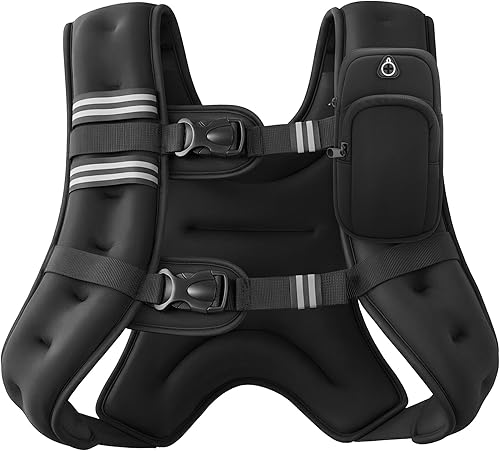
CAP Adjustable Weighted Vest 20–150 lbs
Weighted vest vs plate carrier: what changes first?
The load split changes first, and that changes every rep. A vest pulls you forward and back at once, while a carrier pulls mainly from behind.
With a vest, your chest and back share the load.
That can help you keep a steady trunk position during squats and lunges.
It can also make pushups feel heavier because the front load presses toward the floor.
With a carrier, the plate sits high between your shoulder blades.
That high position can feel stable for walking and rucking.
It can also pull your shoulders back and make you lean forward if the straps slip.
Our weighted vest vs backpack guide covers a third option when you want weight on your back without a plate pocket.
Read it if your training is mostly walking and hiking.
How does load position affect your walk?
A high back plate feels steady on a walk, while a split load feels balanced on varied ground. Your route and pace should guide this choice.
On a flat walk, a high plate can ride close to your spine.
The GORUCK carrier uses a high pocket to keep weight high and stable.
That helps the load move with your upper back instead of swinging low.
A vest spreads weight front and back, so it can feel less one sided on trails and stairs.
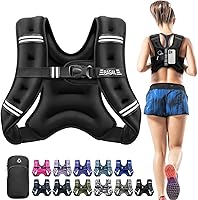
The CAP vest uses padded shoulders and an adjustable waist belt to reduce shifting.
The ZELUS vest uses iron sand fill for even distribution.
If you walk on roads, a carrier may suit your pace.
If you walk hills or uneven paths, a split load may feel easier to manage.
Which option suits running and intervals?
A close fitting vest suits running best, because front and back load reduces bounce. A loose carrier can bounce and chafe at speed.
During running, vertical bounce matters more than total weight.
A vest that sits snug on your chest and back can move as one unit.
The CAP vest targets a stable, bounce free feel with its adjustable belt and padded shoulders.
The ZELUS vest uses buckle straps for chest sizes from 31.5 to 45 in.
That fixed system can suit runners who want no loose weights to adjust before a session.
A plate carrier can work for short runs when the plate pocket is tight.
Test it at a walk first.
If you hear slapping or feel the plate lift off your back, slow down or tighten the straps.
How does each system handle squats and lunges?
A vest suits squats and lunges when you want load to stay centered over your feet. A carrier suits them when you want your chest free to brace.
In a squat, a split load keeps weight near your midline.
The CAP vest is built for pushups, squats, lunges and conditioning.
Its packets let you add load in 2.5 lb steps as your form holds up.
A carrier keeps weight behind the chest, so your torso can hinge more freely.
The GORUCK carrier keeps the chest open for a full range of motion.
That open design helps when you breathe hard and brace between reps.
If your squats turn into circuits with burpees, a vest may feel more even.
If they turn into loaded carries, a carrier may feel cleaner.
Which fits pushups, burpees and floor work?
A vest suits floor work because the load stays split, while a carrier suits floor work when you want no front pressure. Your press position decides it.
In a pushup, a front plate lies between your chest and the floor.
That pressure can feel bulky and can change how deep you go.
A vest spreads that front load, but it still adds mass to the press.
The Jueachy vest uses MOLLE webbing on the front and back, and its pockets sit on the surface.
That layout suits standing drills more than floor work.
Its magnetic release also matters if you need to remove it fast between sets.
The GORUCK carrier has no front plate, so pushups stay closer to bodyweight form.
Its back panel uses 210D High Tenacity CORDURA to reduce friction on skin and technical fabrics.
Pick a vest for weighted pushups and burpees.
Pick a carrier for rucking and carries with clean pushup form.
How easy is it to change the load?
A fixed vest needs no setup, an adjustable vest needs a few minutes, and a carrier needs a plate swap. Your training pace decides which trade off you like.
The ZELUS vest comes in fixed weights from 6 to 30 lb.
You choose one weight and put it on.
That choice saves time, but you cannot change load mid session or grow into a heavier load with the same vest.
The CAP vest adjusts from 2.5 to 40 lb.
Each packet holds 2.5 lb of iron ore fines, so you can add small steps over time.
That range suits beginners who want one vest for a long training block.
A carrier uses plates, so you change load by swapping plates.
The GORUCK carrier accepts 10 lb, 20 lb or 30 lb Standard Ruck Plates, sold separately.
Our best weighted vest plates guide helps you compare plate types before you buy.
Which fit system stays put during training?
A close vest with a waist belt stays put for running, while a high plate pocket stays put for rucking. Fit means more than size on a tag.
The CAP vest uses fully adjustable shoulder straps and a waist belt.
That two point system helps spread weight and reduce shifting.
Hook and loop closure needs a firm press to hold during high intensity work.
The ZELUS vest uses adjustable buckle straps and cushioned shoulder straps.
Buckles give a clear click, so you can check tightness fast.
Its fit range covers chest sizes from 31.5 to 45 in.
The Jueachy vest adjusts through shoulder straps and a back patch, with a waist range up to 43 to 49 in.
GORUCK says to wear its carrier high and tight against your back, with straps set so weight feels secure without restricting breathing.
What does movement freedom feel like in each?
A vest limits torso movement a little, while a carrier limits shoulder movement less but adds back bulk. Try each motion before you commit.
A vest wraps your ribs, so deep bends and twists can feel tighter.
That wrap also helps the load move with you.
The ZELUS vest uses cushioned straps and non chafing fabric to support mobility.
A carrier leaves your chest open, so you can breathe and twist with less front restriction.
The GORUCK design uses dual density shoulder straps with thick top padding.
That padding absorbs impact during burpees, bear crawls and Ruck PT, according to GORUCK.
The Jueachy vest uses a loose fit and MOLLE webbing.
That looseness can suit tactical style drills and gear carry.
It can also allow more bounce during fast runs.
If you train on a treadmill, a snug vest may suit hill walks.
Our Best Treadmill For Incline Training guide pairs well with steady weighted walks, while our Best Treadmill For Speed Training guide suits faster sessions where bounce matters more.
How do pockets and gear carry compare?
A vest suits small personal items, while a carrier suits minimal gear and a tactical vest suits MOLLE add ons. Extra gear changes how the load feels.
The ZELUS vest has detachable front zipper pockets for a phone and keys, plus a rear elastic mesh pocket.
Those pockets keep small items close without a separate bag.
The Jueachy vest has multiple pockets in various sizes, with MOLLE webbing and patch areas.
That system suits users who carry tools, radios or other gear in a planned layout.
Its 1200D nylon fabric resists abrasion, according to Jueachy.
The GORUCK carrier is stripped down for one job: carrying weight.
GORUCK calls it a minimalist ruck backpack built to carry weight.
That focus keeps the profile clean, but it offers less storage than a vest with pockets.
The CAP vest focuses on load and fit, with reflective stripes for low light use.
It does not add the pocket system of the ZELUS or Jueachy options.
What are the trade offs between the 4 options here?
The CAP leads for adjustable load, the ZELUS leads for fixed simplicity, the Jueachy leads for quick release gear, and the GORUCK leads for high back rucking. Each one gives up something to gain that strength.
The CAP vest suits lifters and runners who want one load system to grow with them.
Its polyester shell and reflective stripes suit indoor and low light training.
The trade off is setup time and a hook and loop closure that needs care.
The ZELUS vest suits users who want to train now and change nothing.
Its neoprene rubber fabric and double stitching aim for durability through hundreds of workouts, according to ZELUS.
The trade off is a fixed load.
The Jueachy vest suits tactical style training and gear carry.
Its magnetic buckles use strong hold ratings, according to Jueachy, and the nylon fabric resists wear.
The trade off is no included training load and a looser fit.
The GORUCK carrier suits ruckers who want a stable back plate and clean pushup form.
Its 1000D CORDURA exterior and reinforced bottom panel aim for long use, according to GORUCK.
The trade off is plates sold separately and back only load.
How should you set it up and care for it?
Set the load low at first, check bounce at a walk, then add weight only when movement stays clean. Care depends on material and closure type.
Start with bodyweight form for each move.
Add the lightest load, then walk for a few minutes.
Check for shoulder pressure, rib pain, chafing and plate movement.
If you feel sharp pain, stop and remove the load.
Our weighted vest exercises guide links load choice to specific moves.
Use it to plan squats, pushups and walks before you add weight.
For care, follow the care notes for your exact model.
The Jueachy vest calls for hand wash only.
The GORUCK carrier has no spacer mesh, so GORUCK says you can hose it down and hang it to dry.
Wipe sweat from straps and closures after use.
Let hook and loop, buckles and magnetic parts dry fully before storage.
Keep unused weights stored flat and dry.
If you build a home gym around your vest, resistance bands add low cost options for warm ups and accessory work.
They pair well with vest walks and bodyweight circuits.
Who should buy a weighted vest?
Buy a weighted vest if your training centers on running, squats, lunges and circuits. The split load suits varied movement.
Choose the CAP if you want adjustable load from 2.5 to 40 lb.
Choose the ZELUS if you want a fixed weight with buckles and pockets.
Both suit users who train for strength and conditioning at home.
A vest also suits walkers who want even load on hills and trails.
The CAP vest targets walking and running with reflective stripes for low light.
The ZELUS vest targets running and strength training with a reflective stripe.
Skip a vest if you mainly ruck for distance and want weight high on your back.
A carrier will feel more stable for long walks with a plate.
Who should buy a plate carrier?
Buy a plate carrier if your training centers on rucking, loaded carries and tactical style drills. The high plate suits steady forward movement.
Choose the GORUCK carrier if you want a high pocket, padded straps and an open chest.
Choose the Jueachy vest if you want MOLLE webbing, multiple pockets and magnetic quick release.
A carrier also suits users who want to keep pushups closer to bodyweight form.
The GORUCK design keeps chest pressure out of the press.
The Jueachy design adds gear options but keeps a loose tactical fit.
Skip a carrier if you want to train burpees, circuits and running with even load.
A vest will feel more balanced for that mix.
What is the final verdict on weighted vest vs plate carrier?
Pick a weighted vest for running and bodyweight training, and pick a plate carrier for rucking and loaded carries. The load split is the decision rule.
For adjustable training load, the CAP vest gives the widest range in this group.
For fixed simplicity, the ZELUS vest removes setup.
For quick release gear, the Jueachy vest adds MOLLE and pockets.
For high back load, the GORUCK carrier keeps weight stable and your chest open.
Check your fit at a walk before you run.
Add weight in small steps.
Stop if you feel sharp pain, and talk with a doctor if pain continues.
Next, compare plate choices in our best weighted vest plates guide, then plan your moves with weighted vest exercises.
Frequently asked questions
Is a weighted vest or a plate carrier better for training?
A weighted vest is better for even load during running and bodyweight moves, while a plate carrier is better for high back load during rucking. Choose by movement first, then by how much weight you plan to add and how fast you want to change it.
Can you use a plate carrier for running?
You can run in a plate carrier if the plate sits high and tight and does not bounce. Check the fit at a walking pace first, then add pace only when the load stays stable without chafing or lifting your shirt.
Do weights come with a plate carrier?
Not always, so check what is included before you order. The GORUCK Ruck Plate Carrier 3.0 uses 10 lb, 20 lb or 30 lb Standard Ruck Plates that are sold separately, while the Jueachy vest includes no training plates.
How heavy should you start with a weighted vest?
Start light enough to keep good form for squats, pushups and walking. Our guide on weighted vest how heavy helps you judge a first load, then add small steps only when each session still feels controlled and stable.
Which is better for pushups and burpees?
A weighted vest splits load front and back, so it can feel balanced in pushups and burpees. A plate carrier keeps your chest open, so it suits rucking and loaded carries more than floor work with a front plate.