Weighted Vest vs Wrist Weights: Which Should You Choose? (November 2026)
Choose a weighted vest for torso-loaded strength or cardio, and wrist weights for light resistance during controlled arm movements. Your exercise, comfort and the amount of added load matter more than choosing one style for every workout.
On this page (9 sections)
- Weighted Vest vs Wrist Weights: Which Should You Choose?
- Weighted vest vs wrist weights: what changes during exercise?
- Which option suits strength training and cardio?
- How should the fit feel?
- How much weight should you start with?
- How do you choose between the products here?
- How do you use and care for wearable weights?
- Which one should you choose?
- Sources
Weighted Vest vs Wrist Weights: Which Should You Choose?
Choose a weighted vest for torso-loaded strength or cardio, and wrist weights for light resistance during controlled arm movements. The right choice depends on your exercise, comfort and desired load.
A vest holds weight against your torso, while wrist weights sit at the ends of your arms. Some wrist and ankle sets also fit around the ankles, but they still load a limb rather than your trunk.
That placement changes effort from the first step or repetition. A vest makes your whole body carry the added mass, so pace, posture and leg work feel different.
Wrist weights make arm movement feel heavier, so lifting or swinging the arm takes more care.
A vest often suits people who walk, run or do bodyweight exercise and want gear that stays in place. Wrist weights often suit smaller, controlled sessions where you want to load just the arms without covering the torso.
Load matters as much as placement. A vest can carry a larger total load because it spreads weight across the shoulders and waist.
Wrist weights usually add a smaller load, which can be easier to manage but still changes arm movement.
Comfort follows the same split. A vest can feel secure if the shoulders and waist fit well, yet it may feel warm or bulky during upper body movement.
Wrist weights leave the torso free, yet a loose strap can shift during faster motion.
Try the movement with no added weight first, then add the lightest load and see whether your form stays familiar. If you shorten your stride, raise your shoulders or bend the wrist to cope, the load may not suit that exercise.
Neither style wins on every point. A vest gives stronger torso resistance and suits cardio, while wrist weights keep movement lighter and more focused.
The better choice matches the exercise you plan to do most often.

Weighted vest vs wrist weights: what changes during exercise?
A weighted vest adds resistance around your torso; wrist weights add resistance at your wrists. The load location changes how an exercise feels and which movements may suit it.
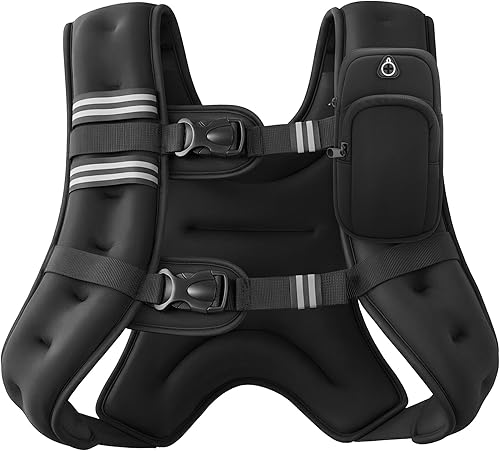
A vest can stay on during walking, running and many bodyweight exercises. The CAP adjustable vest is designed for resistance training, walking, running and workouts, with adjustable weights and a waist belt.
Wrist weights are more focused. A 1 lb weight on each wrist can add light resistance to controlled arm movements, while a heavier set adds more load at each wrist or ankle.
Neither design makes every exercise harder in the same way. The vest changes the load you carry through your trunk and legs, while wrist weights change the load on your arms during movement.
Does weight location matter?
Yes, because weight near your torso moves differently from weight at your wrists or ankles. Pick the location that suits the exercise you plan to do.
For walking, a vest keeps the added load near your body. Wrist weights move with your arms, so consider whether they change your natural arm swing before wearing them for a longer walk.
For arm-focused movements, wrist weights may feel more direct. A vest can add overall load, but it may be less comfortable if the exercise depends on a free range of upper-body movement.
Before adding weight, try the movement without it. If your form changes or you can't move smoothly, reduce the load or use no added weight.
Which option suits strength training and cardio?
A vest is the more direct choice for torso-loaded strength work and walking; wrist weights suit controlled movements that benefit from a light arm load. Match the tool to the exercise, rather than treating either as a universal upgrade.
The CAP vest supports push-ups, squats, lunges and conditioning workouts. Compare weighted vests for workouts to see other options for torso-loaded training.
Its adjustable resistance is useful if your training plan calls for gradual changes, though its title says 20–150 lb while the product details describe a 2.5–40 lb range.
Check that range before choosing.
The ZELUS vest comes in selected 6–30 lb options. Its buckle straps fit chest sizes from 31.5 to 45 inches, so measure your chest and choose a weight option before buying.
Wrist weights make more sense for light resistance during controlled arm movement. The nooncrazy pair weighs 2 lb total, with 1 lb per piece, and can be worn on wrists or ankles.
AceSpear also offers wrist and ankle use, with options from 1 to 5 lb per weight sold as a pair. A heavier option isn't automatically a better choice; begin with a load you can control.
For a broader look at equipment choices, see our resistance bands and home strength equipment guide. Bands add resistance through tension, while vests and wrist weights rely on wearable load.
How should the fit feel?
Choose gear that stays secure without limiting comfortable movement. A loose vest or shifting wrist weight can distract you and make it harder to keep a steady motion.
The CAP vest has padded shoulders and an adjustable waist belt. Those details can help you set its fit, but a vest may still feel bulky if you prefer an unobstructed torso.
The ZELUS vest uses adjustable buckle straps and is sized for chest measurements from 31.5 to 45 inches. Its cushioned shoulder straps are intended to add comfort, and its reflective stripe can help make the vest more visible in low light.
Wrist weights use straps to hold each piece in place. The nooncrazy design has adjustable straps and a stated circumference range of 7.87–11 inches; AceSpear uses adjustable hook-and-loop straps.
Check the fit while standing and moving gently. The weights should not pinch, slide or make you change your range of motion.
Weighted vest fit compared with wrist weight fit
A vest needs to sit securely around your torso, with shoulder and waist areas comfortable enough for the planned session. A wrist weight needs a close, secure wrap that doesn't restrict hand movement.
For vest sizing and load choices, read how heavy a weighted vest should be. If your torso fit is the main concern, our guide to a weighted vest in XXL covers that sizing question.
A backpack is another way to carry weight, but the load and fit differ from a vest. Compare the trade-offs in weighted vest vs backpack.
How much weight should you start with?
Start with the lightest load that lets you move smoothly, then increase gradually if your form stays steady. A comfortable first session is more useful than picking the heaviest option.
For the nooncrazy pair, each weight is 1 lb. AceSpear's options range from 1 to 5 lb per weight, so you can choose a pair that fits your planned movement and current comfort.
The CAP vest's adjustable weights are described as 2.5–40 lb in its product details. The title also names a 20–150 lb range, so confirm the exact model and available resistance before deciding.
The ZELUS vest comes in a range of selected weights from 6 to 30 lb. Choose based on the load you can carry without changing your normal walking or exercise form.
Don't add weight to every workout at once. First learn how the load affects the movement, then adjust one thing at a time, such as duration or resistance.
How do you choose between the products here?
Choose by load, placement and fit: CAP for adjustable vest resistance, ZELUS for a selected vest weight, nooncrazy for a light wrist-and-ankle pair, or AceSpear for heavier pair options. Each product suits a different kind of session.
The CAP title and its weight details do not match. The title says 20 to 150 lb, while the product details describe 2.5 to 40 lb.
Check the exact version and weight range before buying.
That mismatch matters because the range affects who the vest suits and how you plan progression. A vest that adjusts in small steps can support gradual changes, while a much higher range suggests a different use case.
Make sure the listing matches the resistance you actually want.
Read the details for the exact model, closure type and included weights before you order. A hook and loop closure, for example, needs the straps kept clean so they hold well.
Keep fasteners free of lint and dust, and check the waist belt and shoulder area before each use. If the fit feels uneven, adjust it while standing still before you start moving.
If you plan to wear a vest while running, first consider whether extra load suits your pace and route. Our weighted vests for running guide focuses on that choice.
Running adds impact, so start with a short and easy session if you try torso load on that movement. Pay attention to foot strike, breathing and posture, and stop if extra weight makes the run feel strained.
Fit during running needs extra care too. The vest should sit close without bouncing or shifting from side to side.
Padded shoulders and an adjustable waist belt can help, but they still need adjustment before you set off.
Reflective details can help visibility in low light on walking routes, yet they do not replace route planning or care around traffic. Choose a pace and surface you can manage comfortably with the added load.
Treat running as a separate test from strength training. A vest that feels fine for squats or push ups may feel different at a steady running pace.
Judge it by how your movement holds up over the full session, not only by the first minute.
Store the vest where straps will not twist or crush, and check straps and closures before each session. Clean surfaces according to the care directions to keep the fit reliable.
How do you use and care for wearable weights?
Put the weights on securely, start with a short session and check your skin and movement afterward. Basic setup helps you notice a poor fit before it distracts you during exercise.
Fasten straps so the weight stays put without cutting into your skin. With a vest, adjust the waist belt and shoulder fit before moving; with wrist weights, leave your hands free and check that each piece stays in place.
Clean and dry wearable weights according to their care instructions. The nooncrazy weights are described as waterproof and easy to clean, but use the product's own directions for cleaning and storage.
Store weights where straps won't get crushed or tangled. Check closures before each session, and stop if a seam, strap or fastening appears damaged.
For movement ideas that use a vest, see our guide to weighted vest exercises. It can help you choose movements that suit torso resistance.
Which one should you choose?
Pick a weighted vest for resistance around your torso during suitable strength or cardio work, and wrist weights for lighter resistance during controlled arm movements. Choose the load you can handle while keeping your movement comfortable.
If you need adjustable vest resistance, the CAP model offers adjustable weights, though its title and weight details differ. If you prefer a selected vest weight, the ZELUS options range from 6 to 30 lb.
The CAP vest suits people who want to change torso load across strength and cardio sessions. Its product details describe individual adjustable weights in 2.5 lb packets, with a 2.5 to 40 lb range, plus padded shoulders and an adjustable waist belt.
That setup can support gradual progression for walking, running, push ups, squats and lunges, as long as the exact model is confirmed.
Keep the hook and loop straps clean and fasten them evenly so the vest sits steady without pressing on one side. Check the fit before each session rather than assuming yesterday's setting still works.
The ZELUS vest suits a different preference. You select a fixed weight option from 6 to 30 lb, and the buckle straps fit chest sizes from 31.5 to 45 inches.
That can suit fitness sessions where you want the same torso load each time and do not need to adjust resistance between workouts.
Its neoprene construction and iron sand filling shape how it feels on the body. Cushioned shoulder straps aim to reduce chafing, while even weight distribution helps the load feel balanced.
Reflective stripes can help visibility in low light if you walk or run outdoors after dark.
For light wrist or ankle resistance, the nooncrazy pair weighs 1 lb per piece. AceSpear offers heavier options, from 1 to 5 lb per weight, in a pair.
The nooncrazy set suits controlled movement where light resistance is enough. Each piece uses alloy steel wrapped in silicone, with adjustable straps for a stated 7.87 to 11 inch circumference range.
That narrow load can be easier to learn, but it will not match the total resistance of a vest.
AceSpear suits people who want strap on resistance for arm or leg exercises at a selected weight. Its neoprene body and adjustable strap closure aim for a snug fit, and options go up to 5 lb per weight.
A heavier pair is not automatically better, since extra load at the wrist or ankle can change form quickly.
Decide what movement you want to load first, then check the fit, weight and range of motion that matter for that exercise. Start light and build slowly, keeping the load that lets you finish with steady form.
Sources
- Amazon product page for CAP adjustable weighted vest, including its adjustable weight details, waist belt and shoulder fit
- Amazon product page for ZELUS weighted vest, including its selected weight options, buckle straps and reflective stripe
- Amazon product page for nooncrazy wrist and ankle weights, including the 1 lb per piece load and adjustable strap fit
- Amazon product page for AceSpear ankle weights, including the pair format and selected weight options for wrist or ankle use
Frequently asked questions
Are weighted vests better than wrist weights?
Weighted vests are better when you want to add load around your torso for walking, running or bodyweight exercises. Wrist weights suit controlled arm movements where a light load is enough.
Neither is best for every workout, so choose the style that fits the movement and the load you can manage with good form.
Can you wear wrist weights while walking?
You can wear wrist weights during walking if their fit and load feel comfortable, but start with a short, easy session and pay attention to your arm swing. A pair of 1 lb weights adds light resistance; heavier options add more load at the end of your arms, so don't assume they suit every pace or person.
Can you use ankle weights instead of wrist weights?
Some sets can be worn on either wrists or ankles, while others are designed mainly for the ankles. Check the fit and instructions for the exact pair, then use ankle weights only for movements that stay controlled.
They aren't a direct substitute for a vest, which places resistance around the torso.
Which is easier to adjust, a weighted vest or wrist weights?
It depends on the model. The CAP vest has adjustable weights in a 2.5–40 lb range, while the nooncrazy pair has adjustable straps and weighs 1 lb per piece.
The ZELUS and AceSpear options are selected by weight, so choose the load before the workout.
Should beginners choose a weighted vest or wrist weights?
Beginners should start with a light, manageable load and a movement they can perform comfortably. The nooncrazy weights are 1 lb each, while vest weights vary by model and selected option.
Build gradually, stop if movement becomes awkward, and ask a qualified professional about exercise restrictions.