9 Best Weighted Vests with Adjustable Weights (November 2026)
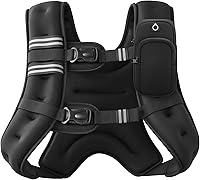
The best weighted vests with adjustable weights include the CAP Adjustable Weighted Vest 20–150 lbs for heavy progressive training, the ZELUS Weighted Vest for simple fixed weights, and the Poudee Weighted Vest for running and jogging.
On this page (8 sections)
- Our top weighted vests with adjustable weights
- How we compared these vests
- How heavy should a weighted vest be?
- Can you add weight to a weighted vest later?
- Which weighted vest is best for running and walking?
- How do you clean and care for a weighted vest?
- Why does an adjustable vest beat a fixed vest for most people?
- Our verdict on the best adjustable weighted vests
The best weighted vest with adjustable weights is the one you can start light, add weight in small steps and wear without bounce. That rule matters more than the top load, because most people train better at 10 to 20 lb than at a max they rarely use.
We compared 9 vests by adjustable range, step size, fit system, material, pockets and reflective coverage. Our score weighs specs, features and buyer feedback against what you're shopping for.
A vest you can add weight to saves money over time. You keep one vest and change the load as you get stronger, instead of buying a second fixed vest.
Step size deserves close attention when you compare these models. A 1 lb step lets you fine tune a walk, while a 2.5 lb step reaches heavy strength work faster with fewer packs to handle.
Fit system matters just as much as the number on the label. Zipper, buckle and hook and loop closures each change how quickly you can put the vest on and how firmly it holds during squats or hills.
Our picks at a glance
-
1
 Best for heavy progressive training
CAP Adjustable Weighted Vest 20–150 lbs
9.7/10 our score
See it on Amazon -
2
-
3

- 4
 Check it
Henkelion Weighted Vest Weight Vest for Men
Best for walkers who want neoprene comfort - 5
 Check it
Sportneer Adjustable Weighted Vest for Women Men
Best for washable adjustability - 6
 Check it
APEXUP Adjustable Weighted Vest
Best for a large front pocket - 7
 Check it
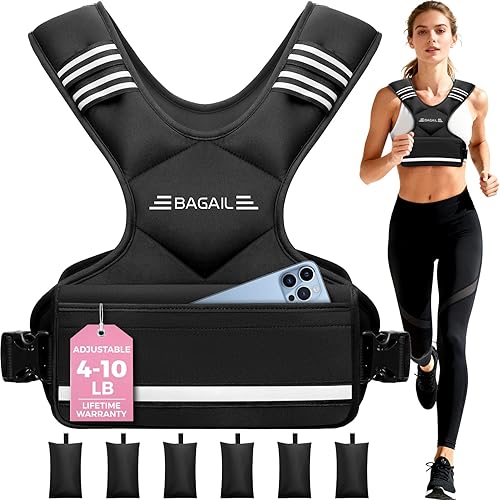
BAGAIL Adjustable Weighted Vest for Women 4-10lb/12-18lb/20-32lb
Best for women beginners - 8
 Check it
VBSD Adjustable Weighted Vest for Women Men
Best for mid-range adjustable loads - 9
 Check it
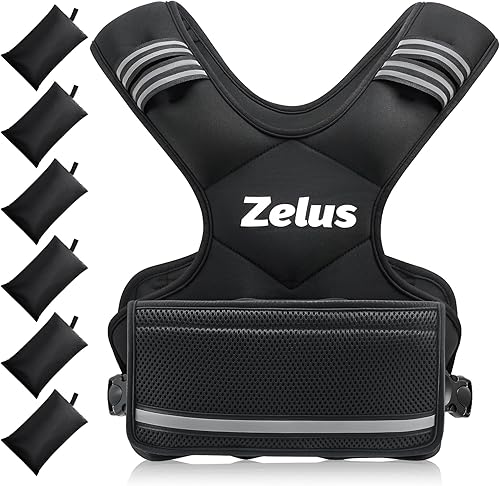
ZELUS Weighted Vest for Men Women
Best for teens and light starters
Our top weighted vests with adjustable weights
CAP leads for heavy progressive training, while Sportneer and BAGAIL lead for light starts. Fixed-weight models like ZELUS and Poudee still win if you already know your exact load.
The list below splits cleanly into two groups. Pack based models let you change load in one vest, and fixed models ask you to commit to one weight at purchase.
That split should drive your choice before you look at pockets or colours. If you are still finding your level, a pack system removes most of the guesswork.
How we compared these vests
We checked each model's weight range, pack size and fill material against the title and specs. We also compared closures, strap systems and pocket placement, because those decide bounce and comfort in daily use.
We did not test these vests. We looked at stated ranges, materials and buyer patterns, and we flag where a model is fixed weight rather than adjustable.
How step size, fill and closure were weighed
Step size sets how gradually you can progress, from 1 lb bags on BAGAIL to 2.5 lb packets on CAP. We also noted whether fill is iron sand, iron pellets or iron ore fines, since fill density affects packet size and placement.
Closures were compared for daily use, not just looks. A zipper speeds up entry, buckles hold a set position, and hook and loop needs periodic checks as the vest loads up.
Pockets and reflective coverage were scored as practical extras. Front pockets suit phone and keys, back mesh pockets suit small items, and reflective placement matters for dawn or dusk walks.
| Product | Best for | Adjustable range | Material | Fit | Our score |
|---|---|---|---|---|---|
| CAP Adjustable Weighted Vest 20–150 lbs | heavy progressive training | 2.5–40 lb | Reinforced nylon and polyester | Adjustable waist belt, padded shoulders | 9.7 |
| ZELUS Weighted Vest | simple fixed weights | Neoprene, iron sand | Adjustable buckle straps, 31.5–45 in chest | 9.6 | |
| Poudee Weighted Vest | running and jogging | Polyester, iron sand | Adjustable hook and loop straps | 9.4 | |
| Henkelion Weighted Vest Weight Vest for Men | walkers who want neoprene comfort | Neoprene | Adjustable strap, wear elastic at the waist | 9.3 | |
| Sportneer Adjustable Weighted Vest for Women Men | washable adjustability | 2–18 lb | Neoprene, iron sand, polyester | Zipper with shoulder and waist locks | 9.2 |
| APEXUP Adjustable Weighted Vest | a large front pocket | Neoprene, iron sand | One-piece construction, buckle closure | 8.9 | |
| BAGAIL Adjustable Weighted Vest for Women 4-10lb/12-18lb/20-32lb | women beginners | Neoprene, iron sand, Lycra fabric | Adjustable wide straps, U-neck | 8.7 | |
| VBSD Adjustable Weighted Vest for Women Men | mid-range adjustable loads | Neoprene, iron sand | Dual buckle and elastic webbing | 8.5 | |
| ZELUS Weighted Vest for Men Women | teens and light starters | Neoprene, iron sand | Hook and loop, one size fits most | 8.2 |
CAP Adjustable Weighted Vest 20–150 lbs: Best for heavy progressive training
- Adjustable from 2.5 to 40 lb
- Individual 2.5 lb weight packets
- Padded shoulders and adjustable waist belt
- Reflective stripes for outdoor use
The widest useful load range here, with small 2.5 lb steps so you can add weight without replacing the vest.
Pros
- True progressive loading to 40 lb
- Even weight distribution with padded shoulders
- Reflective stripes for outdoor use
Cons
- Heaviest top end may be too much for walking beginners
- Hook and loop closure needs checking as you add packets
CAP suits lifters who want one vest for years of progression. It adjusts from 2.5 to 40 lb with individual packets, each filled with 2.5 lb of iron ore fines.
That small step size is the key benefit. You can add 2.5 lb when squats, push-ups or hill walks start to feel easy, without buying a new vest.
Padded shoulders and a fully adjustable waist belt help spread the load and reduce shifting. CAP says weight distributes evenly, which matters more as you near 30 to 40 lb.
Reinforced nylon and polyester add durability, and reflective stripes help for low light walks or runs. The vest also suits running, walking and conditioning workouts.
The material choice helps explain the heavy top end. Reinforced nylon and polyester carry packets without the soft feel of neoprene, and the shell must hold shape at 40 lb.
The trade-off is the top end. A 40 lb vest is a serious load for beginners, and hook and loop closures need regular checks as packets go in.
Choose CAP if you want the widest progression range here. Skip it if you only walk occasionally and prefer a lighter, simpler vest.
ZELUS Weighted Vest: Best for simple fixed weights
- Fixed weights from 6 to 30 lb
- Iron sand fill with even distribution
- Detachable front zipper pockets
- Reflective stripe
A fixed-weight vest with broad size choices and storage pockets, best when you already know your training weight.
Pros
- Many fixed weight choices
- Front pockets for phone and keys
- Cushioned shoulders for comfort
Cons
- Weight is not adjustable inside one vest
- One size fits most range may need strap checks
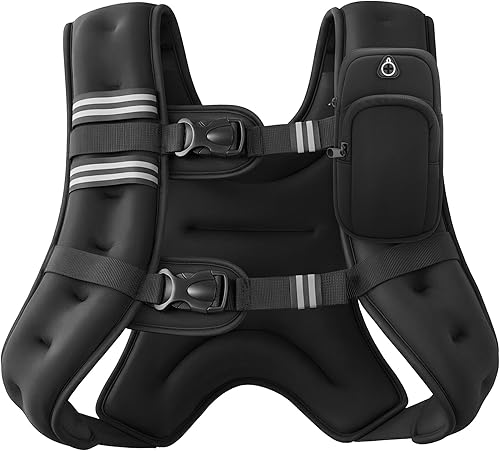
ZELUS suits people who already know their training weight. It comes in fixed weights from 6 to 30 lb, so you pick the exact load at purchase.
Iron sand fill and even distribution help reduce injury risk from a lopsided load. Neoprene construction with double-stitching gives durability through repeated workouts.
Detachable front zipper pockets hold a phone and keys, and a rear elastic mesh pocket adds space. That pocket layout is handy for outdoor walks where you do not want items bouncing against your legs.
Adjustable buckle straps fit chest sizes from 31.5 to 45 inches. For more sizing guidance, see how to choose an XXL weighted vest.
Cushioned shoulder straps and non-chafing fabric help with longer sessions.
The fixed choice is also a simplicity benefit. There are no packs to insert or remove, so you can put the vest on and start training without tuning a load each time.
The trade-off is clear: the weight is not adjustable. If you grow stronger, you will need a different vest or a different model.
Choose ZELUS for a known load, storage and a reflective stripe. Choose an adjustable model if you still need to find your weight.
Poudee Weighted Vest: Best for running and jogging
- Fixed weights from 6 to 30 lb
- Iron sand for even distribution
- Adjustable straps and breathable materials
- Reflective stripe
A running-focused fixed vest with gradual weight choices for people who want a snug, bounce-reduced fit.
Pros
- Eight weight choices for close sizing
- Breathable materials for cardio
- Even iron sand distribution
Cons
- Not adjustable after purchase
- Hook and loop may wear with heavy use
Poudee suits runners and joggers who want a close, stable fit. It offers fixed weights from 6 to 30 lb in eight choices, which makes it easier to land near your target load.
Iron sand fill gives even weight distribution, while adjustable straps and breathable materials support mobility during cardio. Poudee says the vest helps improve endurance and stamina over time.
The reflective stripe helps for early morning or evening training. High-quality construction holds shape through rigorous sessions, according to Poudee.
For daily use, the main question is fit. A snug vest that does not bounce matters more than a few extra pounds, especially when you run or jog.
Polyester construction suits sweaty cardio work in a different way from neoprene. It keeps the vest lighter in feel and pairs with breathable lining for longer runs.
The trade-off is the same as other fixed vests: you cannot add weight later. Pick your current load carefully and leave room for form.
Choose Poudee if running is your main activity and you want a precise fixed weight. Choose CAP or Sportneer if you want to progress in steps.
Henkelion Weighted Vest Weight Vest for Men: Best for walkers who want neoprene comfort
- Fixed weight options
- Iron pellets and metal rock fill
- Soft neoprene with mesh back pocket
- Front and back pockets for even distribution
A comfortable neoprene walking and running vest with front and back weight pockets for balanced load.
Pros
- Soft neoprene feel
- Front and back pockets balance the load
- Mesh back pocket for small items
Cons
- Weight is not adjustable
- Waist placement matters for stability
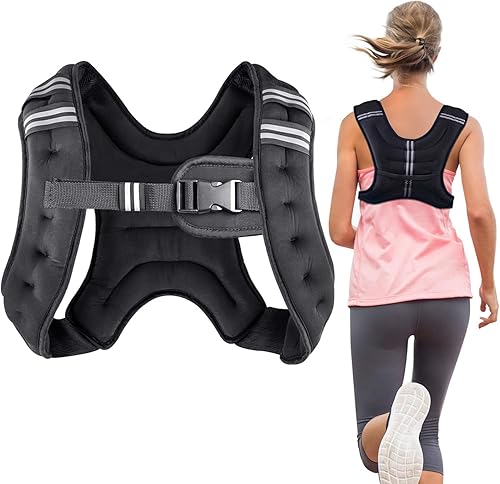
Henkelion suits walkers and runners who value soft comfort. Its neoprene body with front and back pockets spreads weight across your torso.
Fill uses iron pellets and metal rock rather than cheap river sand. That fill choice affects density and how the weight sits when you move.
A mesh pocket at the back gives room for small items. An adjustable strap helps prevent slipping and sliding during exercise.
Henkelion gives one important fit note: the elastic should sit at the waist. Wearing it in the right direction helps keep the load stable.
Front and back pocket placement is the main design idea here. Balanced placement keeps the load from pulling all on your chest or all on your back during a walk.
The trade-off is that weight is not adjustable, and extra weight goes in a back mesh pocket rather than a sealed pack system. That limits how far you can progress with one vest.
Choose Henkelion for comfort and balanced front and back pockets. Choose a pack-based vest if you want clear steps from light to heavy.
Sportneer Adjustable Weighted Vest for Women Men: Best for washable adjustability
- Adjustable from 2 to 18 lb
- 8 x 2 lb and 1 x 1 lb packs
- Removable weights for cleaning
- Reflective strips front and back
A light, removable-pack system you can empty for cleaning, ideal for beginners building up slowly.
Pros
- Starts as light as 2 lb
- Weights remove for washing
- Zipper makes wearing fast
Cons
- Top load is lower than heavy training vests
- You must tune shoulder and waist straps yourself
Sportneer suits beginners who want the lightest start here. It adjusts from 2 to 18 lb using 8 x 2 lb packs and 1 x 1 lb pack.
Four weights sit at the front and five at the back, so you can balance the load for your training. That front and back split helps with walking and strength work.
The zipper design makes the vest fast to wear and remove. Shoulder and waist double locks let you tune the fit before a session.
Weights remove for cleaning, which is a real advantage for a sweaty training tool. Neoprene fabric is skin-friendly and sweat-absorbent, and reflective strips help in the dark.
The pack layout also gives you a choice about balance. More weight at the front changes posture during squats, while a more even split suits walking and jogging.
The trade-off is the 18 lb ceiling. Stronger users will outgrow it, and you must adjust both strap zones yourself to avoid bounce.
Choose Sportneer for a washable, gradual start. Choose CAP if you expect to train well above 18 lb.
APEXUP Adjustable Weighted Vest: Best for a large front pocket
- Weight ranges 4–10, 12–18 and 20–32 lb
- 6 iron sand weights
- Large front mesh pocket
- Reflective straps
Three adjustable ranges cover beginners to stronger walkers, with a big pocket for phone, keys and wallet.
Pros
- Range choices for different stages
- Large front storage pocket
- Reinforced stitching for durability
Cons
- You choose one range model, not all three
- Front pocket load can shift if overfilled
APEXUP suits buyers who want a choice of three ranges. You can pick 4–10 lb, 12–18 lb or 20–32 lb, each with 6 iron sand weights.
That range system saves you from buying multiple vests as you progress within one band. It also means you should choose the band for your next 6 to 12 months, not just today.
Soft neoprene and iron sand fill help distribute weight evenly. Reinforced stitching and reflective straps support durability and outdoor visibility.
A large front mesh pocket holds a phone, keys and wallet. A detachable patch area adds a small personal touch for motivation.
The one-piece construction keeps the shell simple for yoga, walking, running and cycling. That simplicity helps at home or in the gym, where a bulky vest can get in the way.
The trade-off is that each purchase covers one range only. You cannot get all three ranges in one box, and an overfilled front pocket can pull the vest forward.
Choose APEXUP if you want a roomy pocket and a clear range choice. Choose BAGAIL or Sportneer for smaller 1 lb or 2 lb steps.
BAGAIL Adjustable Weighted Vest for Women 4-10lb/12-18lb/20-32lb: Best for women beginners
- Starts at 4 lb base
- 6 removable 1 lb iron sand bags
- U-neck and X-shape design
- 360 degree reflective coverage
A gentle 1 lb progression with a female-friendly U-neck, built for walking, jogging and light training.
Pros
- 1 lb steps for gradual progress
- Broad straps reduce pressure points
- Large front pocket fits big phones
Cons
- Wipe clean only, do not machine wash
- Two strap zones need careful adjustment
BAGAIL suits women and beginners who want a gentle start. It begins with a 4 lb base and adds six removable 1 lb iron sand bags.
One-pound steps make progress feel safe, especially for walking, jogging and light training. That pace helps you build strength and cardiovascular fitness without a sudden jump.
A U-neck and X-shape design help distribute weight across the torso and reduce pressure points. Adjustable wide straps create a snug, bounce-free fit.
The front pocket is wide enough for large phones, energy bars and a wallet. Full 360 degree reflective coverage helps for early morning or evening walks.
Wide straps are a practical detail for longer walks. They spread pressure across a larger area than narrow straps, which can help when you train for an hour or more.
Care is simple but limited: wipe clean with a damp cloth and do not machine wash. That matters if you sweat heavily or train daily.
Choose BAGAIL for a female-friendly fit and slow progression. Choose CAP if you want heavier loads and faster steps.
VBSD Adjustable Weighted Vest for Women Men: Best for mid-range adjustable loads
- Ranges 4–10, 11–20 and 20-32 lb
- 6 x 1.5 lb iron sand bags
- Back mesh pocket
- Reflective strips on shoulders and back
A mid-range adjustable vest with padded shoulders and a back pocket, suited to walking and strength work.
Pros
- 1.5 lb steps give fine control
- Padded wide shoulders
- Back pocket keeps items off your legs
Cons
- Base weight limits the lightest start
- Two versions may ship during updates
VBSD suits mid-range trainers who want fine control. It offers ranges of 4–10 lb, 11–20 lb and 20–32 lb with six 1.5 lb iron sand bags.
One-and-a-half-pound steps sit between BAGAIL's 1 lb steps and Sportneer's 2 lb packs. That makes it easier to tune load for walking, running and strength sessions.
Breathable neoprene and padded wide shoulder straps help reduce shoulder fatigue. Dual buckle and elastic webbing keep the fit snug during intense activity.
A back mesh pocket holds essentials like a phone, keys or headphones without bumping your legs. Reflective strips on the shoulders and back help for outdoor use.
The back pocket placement suits people who dislike front items pulling at the chest. It also keeps the front profile flatter for push-ups and other floor moves.
The trade-off is the starting base weight and a possible shipping variation during updates. VBSD says both versions meet the same quality standard.
Choose VBSD for balanced steps and shoulder comfort. Choose Sportneer if you want a washable 2 lb start.
ZELUS Weighted Vest for Men Women: Best for teens and light starters
- Adjustable ranges 4–32 lb by model
- 6 x 1.5 lb iron sand bags
- Hook and loop fasteners
- Reflective strips front, shoulders and back
A flexible light starter with removable bags and a wide pocket, good for yoga, walking and light jogging.
Pros
- Removable bags for low-impact progression
- Wide pocket for essentials
- Soft neoprene for comfort
Cons
- Lower top load than CAP
- Hook and loop fit can loosen with use
ZELUS suits teens and light starters who want removable bags. It offers ranges of 4–32 lb by model, with six 1.5 lb iron sand bags in the adjustable versions.
Removable bags let you start low and add load for yoga, walking, light jogging and cycling. That low-impact progression helps build core strength and endurance.
Soft neoprene gives lasting comfort, and hook and loop fasteners offer a snug fit for teens or adults. Even load distribution helps during intense workouts.
A wide pocket holds keys, a wallet or a smartphone without banging against your legs. Reflective strips on the front, shoulders and back help you stay visible.
The adjustable design differs from the fixed ZELUS model above. One vest can cover light training at home, walks outdoors and short jogs as you add bags.
The trade-off is a lower practical top load than CAP, plus hook and loop that can loosen with repeated use. Check the fit before each session.
Choose this ZELUS for light, flexible training at home or outdoors. Choose CAP for serious strength progression to 40 lb.
How heavy should a weighted vest be?
The right load depends on your goal, your joints and your current fitness. Our guide on weighted vest how heavy breaks down starting weights by activity.
For walking, start near 5% to 10% of your body weight. For strength moves like squats and push-ups, a lighter load with clean form often works better than a heavy load with poor form.
Add weight only when you can finish your normal session with good form and no joint pain. That rule protects your knees, shoulders and back.
Body weight is only one factor in that choice. Training age, joint history and session length also shape a safe start, so a shorter session can carry a lighter load than a long walk.
How to choose a starting weight
Pick a vest with small steps if you are unsure. Sportneer starts at 2 lb, BAGAIL at 4 lb, and CAP at 2.5 lb, so each lets you start low.
Fixed vests like ZELUS and Poudee need a better guess at purchase. If you guess too high, the vest may bounce and make walking harder.
When to add more weight
Add one pack or one bag at a time. Train for a few sessions at that load before you add again.
Stop adding if your form breaks down, your breathing changes a lot or you feel sharp pain. A doctor can advise you if pain or a health condition is ongoing.
Can you add weight to a weighted vest later?
Yes, with pack-based models you can add weight later without replacing the vest. CAP adds 2.5 lb packets, Sportneer adds 2 lb and 1 lb packs, and BAGAIL adds 1 lb bags.
Fixed-weight vests cannot grow with you. ZELUS, Poudee and Henkelion ask you to choose your load up front, and that choice limits future progression.
If you plan to train for a year or more, adjustability usually pays for itself. One adjustable vest can cover several fixed-weight stages.
Pack count also affects storage and care. More small bags mean more pieces to track, while fewer large packs are simpler but give coarser steps.
Pack systems compared
Pack systems differ in step size and balance. Smaller steps give finer control, while larger steps reach a heavy load with fewer packs.
Front and back pack placement matters too. Balanced placement reduces pulling at your shoulders and helps the vest stay stable.
What to check before you expand
Confirm that spare packs are available for your exact model. Also check that your straps and closures can hold the top load without slipping.
Store spare iron sand packs flat and dry. Keep them away from the vest's hook and loop areas so the closure stays strong.
Which weighted vest is best for running and walking?
Running and walking need a snug fit more than a heavy load. A vest that bounces will tire your shoulders and change your stride.
For walking, our weighted vest exercises guide shows how to build a safe routine. Start with short walks and a light load, then add time before you add weight.
Poudee and ZELUS suit runners who want a fixed load and a reflective stripe. BAGAIL and Sportneer suit walkers who want to start very light.
Running adds impact that walking does not. That is why a light load with a firm fit usually beats a heavy load that shifts with each stride.
Fit rules for cardio
Tighten the waist first, then the shoulders, and check for bounce with a few steps. The vest should move with your torso, not slide up and down.
Reflective coverage helps for dawn or dusk training. Pockets should hold items close so they do not swing.
When a backpack or wrist weights make more sense
A backpack spreads load differently and may suit rucking. Our weighted vest vs backpack comparison explains when each option fits better.
For arm-focused work, weighted vest vs wrist weights shows why a vest loads your core while wrist weights load your arms. Choose based on the muscles you want to train.
How do you clean and care for a weighted vest?
Remove the weights before you clean most vests. That step protects the fill, makes the vest lighter to handle and helps the fabric dry faster.
Sportneer lets you extract all weights for cleaning. BAGAIL asks for wipe cleaning only, with no machine washing.
For treadmill walkers, our Best Treadmill For Weight Loss guide pairs well with vest walks. If your belt slips, check How To Fix A Treadmill That Slips? before you add vest load.
Cleaning habits differ by material, so check the care note for your exact model first. Neoprene, polyester and nylon shells each respond differently to water and soap.
Daily care habits
Air dry the vest after sweaty sessions and keep iron sand packs dry. Wipe neoprene with a damp cloth and mild soap when needed.
Check straps, buckles and hook and loop weekly. Replace or tighten a closure that no longer holds a snug fit.
Storage tips
Store the vest flat or hanging so the weight pockets keep their shape. Keep spare packs in a dry place away from sharp objects.
Small bench or rack space works for most vests. Pair vest training with resistance bands for home sessions that need variety.
Why does an adjustable vest beat a fixed vest for most people?
Adjustability gives you a path, not just a weight. You can start light for walking, then add load for strength work as your fitness improves.
CAP reaches 40 lb for advanced training, while Sportneer and BAGAIL keep the early steps small and safe. That range covers more training stages than any fixed model here.
Fixed vests still have a place. If you know your load and want pockets or a simple design, ZELUS and Poudee are strong choices.
The path matters for motivation as well as muscle. Seeing a clear next step makes it easier to keep training when progress slows.
The money question
One adjustable vest replaces several fixed vests over time. That matters when you train for more than a season.
It also reduces waste, because you keep the same shell, straps and pockets. You only change the packs inside.
The safety question
Small steps protect form and joints. You can test a new load for a few sessions before you commit to more weight.
That is why we rank adjustability above top load alone in our scores.
Our verdict on the best adjustable weighted vests
Pick CAP if you want the best weighted vest with adjustable weights for serious progressive training to 40 lb. Its 2.5 lb packets make each step manageable.
Pick Sportneer if you want a washable vest that starts at 2 lb. Pick BAGAIL if you want 1 lb steps and a U-neck fit for walking and jogging.
Pick ZELUS or Poudee if you already know your fixed load and want pockets, reflective coverage and a simple setup. Pick APEXUP for a large front pocket and a clear range choice.
Our score weighs specs, features and buyer feedback against what you're shopping for. Start light, check fit and add weight in small steps, and your vest will grow with you.
Our top 3 picks at a glance
-
1
Best for heavy progressive training
CAP Adjustable Weighted Vest 20–150 lbs
9.7/10 our score
See it on Amazon -
2
-
3
Frequently asked questions
How heavy should a weighted vest be for beginners?
Start light enough to keep good form for the full session. Many guides suggest a load near 5% to 10% of body weight for walking at first.
Add weight only when the vest feels stable and your joints feel normal during and after.
Can you add weight to a weighted vest later?
Yes, if the vest uses removable weight packs or pockets. CAP uses 2.5 lb packets, Sportneer uses 2 lb and 1 lb packs, and BAGAIL uses 1 lb bags.
Check that your model takes spare packs before you plan to grow beyond its included range.
Is a weighted vest good for walking?
Walking is one of the best uses because the load stays close to your center and the pace is easy to control. Start with a light range and short sessions.
Stop and adjust if you notice joint pain, numbness or a vest that bounces with each step.