How to Calibrate a Garmin Forerunner 165 for Treadmill Runs
To calibrate a Garmin Forerunner 165 for a treadmill run, finish at least 1 mile, choose Save, then select Calibrate & Save and enter the treadmill distance. The watch uses that correction to adjust the recorded run.
On this page (9 sections)
- How do you calibrate a Garmin Forerunner 165 after a treadmill run?
- What should you do before the run?
- Why does the Forerunner 165 need treadmill calibration?
- How accurate is the treadmill distance after calibration?
- When should you recalibrate the Forerunner 165?
- Can a heart-rate accessory fix distance calibration?
- Which small health monitors relate to treadmill training?
- What if Calibrate & Save is missing or the distance stays wrong?
- What is the simplest way to get a better treadmill estimate?
To calibrate a Garmin Forerunner 165 for a treadmill run, finish at least 1 mile, choose Save, then select Calibrate & Save and enter the treadmill distance. Read the Forerunner 165 Music review for more about the watch.
The watch uses the correction to adjust the recorded activity.
For best results, use a steady pace, wear the watch snugly, and enter the treadmill's displayed distance before leaving the save screen. Calibration is most useful after a run long enough for the watch to estimate your stride consistently.
How do you calibrate a Garmin Forerunner 165 after a treadmill run?
Run at least 1 mile, stop the activity, and choose Calibrate & Save. Enter the distance shown on the treadmill, then confirm the correction.
- Start a treadmill run activity on the Forerunner 165.
- Run at least 1 mile at a natural, steady pace.
- Press the stop control when the run is complete.
- Select Save.
- Choose Calibrate & Save when the option appears.
- Enter the treadmill's distance and confirm.
The watch's distance may differ from the treadmill's because it estimates indoor movement from wrist motion. Use the treadmill console as the reference, and check that its units match the distance you enter.
A shorter run may not offer the calibration option. If the option does not appear, save the activity and try again after a run of at least 1 mile.
If it is still missing, see why the Garmin calibration option is missing.
What should you do before the run?
Wear the watch snugly and run with a natural arm swing. A stable fit and repeatable movement give the watch a more useful basis for estimating indoor distance.
Position the watch above the wrist bone, where it won't slide around during the run. A replacement band for Garmin 165 may help you find a comfortable fit.
Keep your arms moving as they normally would, especially if you tend to hold the treadmill rails.
Rail holding changes wrist motion and can make the estimate less representative of your running stride. If you need to hold the rails for balance, prioritize safety and expect the recorded distance to be less reliable.
Choose a familiar treadmill when possible. A consistent pace and machine make it easier to tell whether a later result reflects the watch calibration or a change in how you ran.
Why does the Forerunner 165 need treadmill calibration?
The watch estimates indoor distance from movement instead of GPS. Treadmill calibration lets you compare that estimate with a known distance and correct the activity.
GPS signals are not available in the usual way indoors. On a treadmill, the watch relies on motion patterns, including arm movement, to estimate steps and distance.
Stride length can change with speed, fatigue, incline, or how you hold your arms. See how to calibrate Garmin stride length for related guidance.
That means one calibration may not perfectly match every pace or running style.
If the result still looks far off, see why Garmin treadmill calibration may not be working. Check fit, run length, arm movement, and whether you entered the treadmill's distance correctly.
How accurate is the treadmill distance after calibration?
Calibration can improve the estimate, but it does not guarantee an exact match on every run. Your pace and movement can differ from the run used to calibrate the watch.
A steady run on a familiar treadmill gives you a clearer comparison. If you often vary speed or incline, your wrist motion may shift enough to affect the estimate.
Use the same distance units on both the treadmill and watch. If the console shows kilometers and the watch asks for miles, convert carefully before confirming.
Don't calibrate from a treadmill with an unknown or unreliable distance display. If you want to understand the machine's own measurement, read how to calibrate a treadmill.
When should you recalibrate the Forerunner 165?
Recalibrate after a noticeable change in the watch's treadmill estimates or your usual running pattern. For another model, see Garmin Enduro 3 recalibration steps.
A change in pace, rail use, or watch fit can make an old correction less useful.
Try the calibration process again after a steady run of at least 1 mile. Enter the machine's distance rather than the watch's estimate, or the correction will not address the mismatch.
If the save screen has no calibration option, first confirm that the run reached the minimum distance. For model-specific reset steps, see how to reset treadmill calibration on Garmin.
Garmin's process can vary by watch model. The Forerunner 235 treadmill recalibration guide, Fenix 8 calibration guide, and Forerunner 970 calibration guide cover their respective watches.
Can a heart-rate accessory fix distance calibration?
A heart-rate accessory can provide heart-rate data, but it does not calibrate treadmill distance. Keep those jobs separate when deciding whether an accessory will help.
The Polar Pro Chest Strap is a soft strap with adaptive electrodes and snap attachments for Polar heart-rate sensors. It suits readers who want a chest strap for heart-rate measurement, while distance calibration remains a watch setting.
For help choosing a heart-rate device, see our heart rate monitor buying guide. A chest strap is optional for the Forerunner 165 treadmill calibration steps above.
Which small health monitors relate to treadmill training?
A blood pressure monitor or pulse oximeter measures different information from treadmill distance. These devices do not connect the Forerunner 165's distance estimate to the treadmill console.
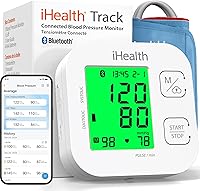
The iHealth Track Smart Upper Arm Blood Pressure monitor stores up to 99 readings on the device and can track readings in its iOS and Android apps. It is for readers who want to record blood pressure readings separately from workout distance.
The Zacurate Pro Series 500DL Fingertip Pulse Oximeter displays SpO2 and pulse rate, with a silicone cover, batteries, and lanyard included. It is for readers who want fingertip readings alongside their training routine, not a treadmill calibration tool.
Follow each device's instructions and keep its readings separate from the Forerunner's pace and distance records. Neither product changes the watch's treadmill calibration.
What if Calibrate & Save is missing or the distance stays wrong?
Check run length first, then repeat the process with a snug watch fit and an accurate treadmill distance. The calibration choice may not appear if the run was too short.
Make sure you select Save after stopping the activity. If the watch offers calibration, complete it during that save flow and confirm the entered distance.
A loose fit, rail holding, or a change in pace may affect the estimate. Try a steady run with normal arm movement, then compare the recorded distance with the treadmill display.
For another model, see Forerunner 570 calibration troubleshooting.
If the saved activity is already closed, changing its distance in an app may not update the watch's future estimate. Review Garmin's current Forerunner 165 instructions for options available to your software version.
What is the simplest way to get a better treadmill estimate?
Run at least 1 mile with a snug watch, then use Calibrate & Save and enter the treadmill's distance. Repeat after a clear change in running pattern or if later results remain noticeably off.
Use the treadmill console as your reference, and keep the same units when entering the correction. If the option is missing, try again after a longer run.
For a different Garmin watch, use its model-specific steps rather than assuming the Forerunner 165 menu is identical. For broader troubleshooting, start with the guide to Garmin treadmill calibration not working.
Frequently asked questions
How do I calibrate my Garmin Forerunner 165 on a treadmill?
Run at least 1 mile indoors, press Stop, choose Save, then select Calibrate & Save. Enter the distance shown by the treadmill and confirm.
Use the treadmill's distance as the reference, and keep the watch snug on your wrist while you run.
Can I calibrate a Garmin Forerunner 165 after saving a run?
The calibration prompt appears in the save flow after a qualifying indoor run. If you save without calibrating, the activity's distance may be editable in Garmin Connect, but that does not necessarily retrain the watch's treadmill estimate.
Check Garmin's current device guidance before changing a saved activity.
Why is my Garmin Forerunner 165 treadmill distance wrong?
Indoor distance comes from the watch's movement estimate, so stride changes, hand position, a loose fit, or a short run can affect it. Calibration uses a known treadmill distance to adjust the estimate.
Repeat the process on a familiar treadmill if later runs remain off.
Does the Forerunner 165 calibrate treadmill distance automatically?
The Forerunner 165 estimates indoor distance from wrist movement, then offers Calibrate & Save after an eligible run. You enter the distance displayed by the treadmill.
It does not rely on GPS for indoor distance, so the entered calibration can help refine future estimates.