How to Choose Between Treadmill Motor Types
For most home treadmills, a DC motor is the practical choice because it suits walking and running workouts in a home setting. Consider an AC motor for sustained, heavy use, and compare the full machine's noise, duty rating, service needs and electrical requirements before choosing.
On this page (6 sections)
For most home treadmills, a DC motor is the practical choice for walking and running workouts. An AC motor may suit sustained, heavy use, but your decision should also account for the machine's duty rating, noise, service needs and electrical requirements.
The letters alone won't tell you how well a treadmill fits your routine. Match the motor and the full machine to how fast, how often and how long you'll use it.
What are the main treadmill motor types?
DC motors are common in home treadmills, while AC motors are often used in commercial machines built for sustained workloads. Check the manual for the exact motor type, since features and ratings vary by model.
A DC motor runs on direct current. Many home treadmills use one because it can handle the start-and-stop pattern of personal workouts, where one person walks or runs for a set period.
An AC motor runs on alternating current and is often associated with commercial equipment designed to operate for longer periods. That does not make every AC machine a better choice for home use; its size, power needs, cost and service requirements must fit the space and routine.
Motor type is a starting point, not a complete performance rating. Compare the model's continuous-duty horsepower, user capacity, maximum speed and warranty or service information where available.
If noise is a major concern, compare the machine as a whole. Our guide to what makes a treadmill motor quiet covers the other parts that affect sound and vibration.
Which motor type fits your workout schedule?
Choose for the longest and most demanding workout you expect to do regularly. A home DC treadmill often makes sense for one person's walking or running sessions, while a commercial AC treadmill may fit a facility with extended daily use.
| Your use | What to consider |
|---|---|
| Occasional walking | A home treadmill with a motor and duty rating suited to shorter sessions |
| Daily walking or jogging | Continuous-duty horsepower, cooling, maintenance and the machine's user limit |
| Regular running | A suitable continuous-duty rating, stable frame and speed range |
| Multiple users or long operating hours | A machine designed for sustained use, with clear service support |
| Shared apartment space | Whole-machine noise, vibration, placement and floor protection |
These are general buying patterns, not guarantees. A well-matched home treadmill may suit frequent workouts, while an unsuitable machine can struggle even if its motor type sounds heavy duty.
Running puts a different demand on the treadmill than a short walk. Compare your pace and session length with our guide to treadmill motor horsepower for running.
How do treadmill motor types compare for home use?
A home DC treadmill usually offers the simpler fit for a personal workout space. Choose based on the model's published ratings and support, rather than assuming that AC always means more power or that DC always means quieter operation.
Consider where the treadmill will sit and how you'll use it. A compact folding frame can help in a small room, but it doesn't tell you whether the motor is designed for your planned workout volume.
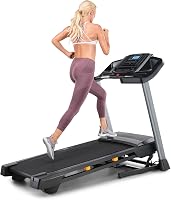
The NordicTrack T Series Treadmills for Home include a folding frame, speeds up to 10 MPH and a 0–10% incline on the described T6.5S model. These features can suit varied home workouts, but check the exact model's motor and duty information before deciding.
Its listed maximum horsepower is 2.8 hp. Maximum horsepower alone doesn't guarantee its continuous-duty rating, so use the model's manual or manufacturer information to confirm fit for long or frequent running sessions.
What does continuous-duty horsepower tell you?
Continuous-duty horsepower is more useful than peak horsepower for judging sustained work. It describes the power a motor is rated to maintain over time, while a peak figure refers to a brief maximum.
Manufacturers do not always publish ratings in the same way. If one model gives only maximum horsepower, don't assume that number is comparable to another treadmill's continuous-duty rating.
Consider your body weight, speed and session length together. A heavier runner or longer daily workout may need a higher continuous-duty rating than a lighter user taking occasional walks.
For a closer look at how to read that number, see what continuous-duty horsepower means on a treadmill.
How do noise and maintenance affect the choice?
A motor type by itself cannot predict how quiet or low-maintenance a treadmill will be. Belt and roller condition, frame vibration, floor surface and workout speed all affect what you hear.
Follow the care schedule in the treadmill manual. Keeping the belt and deck in the condition the manufacturer specifies can help the machine run as intended, while neglect can add noise or wear.
If the treadmill will sit above a room or near neighbors, think about the whole setup. A mat can protect the floor and help reduce noise and vibration; it won't make a loud machine silent.
Measure the available floor area and leave room around the treadmill as directed by its manual. If you share a small home, compare a full treadmill with a walking pad using our apartment treadmill or walking pad guide.
What else should you check before buying?
Verify the exact model's ratings, service requirements and setup needs before choosing its motor type. Use the manual or manufacturer support to confirm any detail that affects your routine or home electrical setup.
Check these points:
- Continuous-duty horsepower: Find a sustained rating that matches your weight, pace and session length.
- Speed and incline: Make sure the machine supports your planned workouts.
- Duty cycle: Check whether the manufacturer gives a recommended daily operating time.
- Maintenance: Review lubrication, belt adjustment and cleaning instructions.
- Service access: Confirm how to get repair help and replacement parts.
- Electrical needs: Follow the manual's outlet and circuit guidance.
- Space: Measure the footprint, clearance and folded dimensions if you need to store the treadmill.
A tablet holder can help keep a device in view during a workout. The SOURCE ONE holder is an acrylic treadmill mount sized at about 9 x 9 in and made for tablets and other listed devices.
Think about your other workout equipment, too. If you're deciding between cardio and strength options, our guide to treadmills and ellipticals and comparison of adjustable dumbbells or kettlebells can help you plan the space.
Which treadmill motor type should you choose?
Choose a home DC treadmill for personal walking and running when its continuous-duty rating fits your routine. Consider commercial equipment, often powered by AC motors, when the machine needs to handle sustained use across multiple users.
Don't choose by motor letters or a peak horsepower number alone. Match the published duty rating, machine features, service needs and room setup to the workouts you'll actually do, then confirm the exact model's specifications.
For another equipment comparison before you set up a home gym, read our guide to Niceday CT11 vs CT11S.
Frequently asked questions
What are the main treadmill motor types?
Home treadmills commonly use DC motors, while AC motors are more common in commercial equipment designed for sustained use. Check the specific machine's manual and motor rating because motor type alone doesn't tell you how well it fits your workouts.
Is a DC or AC treadmill motor quieter?
Neither motor type guarantees a quieter treadmill. Noise also comes from the belt, rollers, frame, floor and the way the machine is maintained, so compare measured noise information when available and consider where the treadmill will sit.
Is a treadmill motor's peak horsepower enough to compare models?
No. Peak horsepower describes a short-term maximum and may not reflect sustained performance.
Look for continuous-duty horsepower when the manufacturer provides it, then compare that rating with your weight, pace and planned workout length.
Can I use a treadmill at home every day?
Many home treadmills are made for regular workouts, but suitable daily use depends on the model's duty rating, user limits, ventilation and maintenance schedule. Follow the manual and choose a machine rated for your expected workout length and number of users.
Does motor type determine treadmill noise?
Motor type affects how a treadmill operates, but it does not determine total noise on its own. Belt condition, speed, floor surface and vibration also matter, so inspect the whole machine and use a suitable mat if floor protection or vibration reduction is a concern.