5 Best Stretching Straps with Loops (November 2026)
The best stretching straps with loops include the CTRL Sports Stretching Strap with Loops for guided daily stretching, the Acozycoo Stretching Strap with Loops for Physical for longer reach, and the KneeSled Ultra Stretch Strap with 10 Loops for knee rehab.
On this page (10 sections)
- How the best stretching strap with loops picks were compared
- The best stretching straps with loops for different routines
- How long should a stretching strap with loops be?
- Are numbered loops better than unnumbered loops?
- Should you pick nylon, elastic, or cotton?
- How do loop straps compare for physical therapy and rehab?
- How do these straps fit with other recovery tools?
- Is a loop strap better than an elastic strap for stretching?
- How should you set up and care for a stretching strap?
- Which stretching strap with loops should you buy?
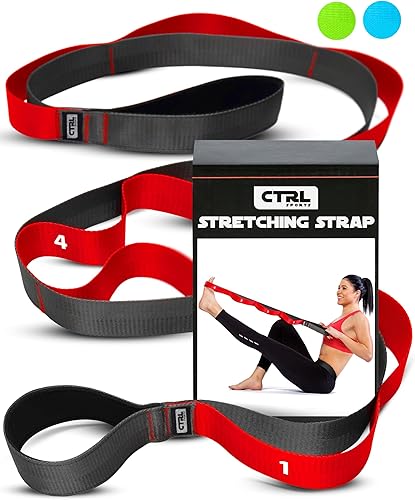
The best stretching strap with loops for most people is the CTRL Sports Stretching Strap with Loops, because it combines 10 numbered loops, a 78 in nylon build, and padded neoprene handles. Our score weighs specs, features and buyer feedback against what you're shopping for.
A loop stretching strap works differently from a plain yoga strap. The loops give your hands and feet fixed places to hold, so you can deepen a stretch without reaching your toes.
That design also helps you track progress, since you can note which loop you used last week.
Compare loop spacing, strap length, and grip options before you buy. Longer straps help tall users, wider straps feel easier to hold, and numbered loops suit people who like repeatable routines.
If you are new, start with our guide to stretching strap exercises so you set up each move safely.
Our picks at a glance
-
1
 Best for guided daily stretching
CTRL Sports Stretching Strap with Loops
9.7/10 our score
See it on Amazon -
2
 Best for longer reach
Acozycoo Stretching Strap with Loops for Physical
9.6/10 our score
See it on Amazon -
3

- 4
 Check it
THERABAND Stretch Strap with Loops to Increase
Best for elastic dynamic stretching - 5
 Best for simple cotton loopsCheck it
How the best stretching strap with loops picks were compared
We compared strap length, width, material, loop count, loop numbering, and what is included in the box. We also looked at how each strap fits common uses, such as hamstring stretching, shoulder opening, foot work, and post-surgery range-of-motion drills.
Length ranged from 58 in to 86 in in this group. Width ranged from 1 in to 1.5 in, with one cotton strap using loops on both ends instead of a row of numbered loops.
Materials split between non-elastic nylon, elastic, and cotton, and each choice changes how the strap feels during a hold.
We checked who each design suits. Rehab users often need numbered loops and clear positions.
Dancers and gymnasts may prefer elastic give for dynamic work. Travelers may prefer a shorter cotton strap that rolls up small.
These trade-offs shape the scores more than brand names do.
The best stretching straps with loops for different routines
The CTRL Sports pick leads for guided daily stretching because it balances length, grip width, and tracking. The Acozycoo Pro version wins on reach.
The KneeSled suits knee rehab. The THERABAND and Tune Up Fitness cover elastic and cotton options.
CTRL Sports Stretching Strap with Loops: Best for guided daily stretching
- 10 numbered loops
- 78 in x 1.5 in nylon
- Neoprene padded handles
- Carry bag and stretching guide
A mid-length, wide nylon strap with numbered loops, padded handles, a carry bag, and a guide for home stretching.
Pros
- Numbered loops for tracking progress
- Wide 1.5 in grip
- Carry bag included
Cons
- Non-elastic, so no added give
- Longer options suit taller users better
The CTRL Sports Stretching Strap with Loops suits people who want a repeatable home routine. Its 10 numbered loops let you mark progress as flexibility improves, and the 78 in length helps most adults reach their feet without forcing the move.
The 1.5 in nylon width spreads pressure across your hands during long hamstring or calf holds.
Padded neoprene handles make the grip easier to hold than a bare nylon edge. A carry bag and a stretching guide make storage and first use simpler.
The non-elastic build gives stable resistance, so the strap holds its length when you lean into a stretch.
Trade-off: it is not the longest strap here, so very tall users may want the 86 in Acozycoo option. It also lacks elastic give, which some dancers prefer for dynamic work.
For general assisted stretching, that firm feel is often a benefit rather than a drawback.
Acozycoo Stretching Strap with Loops for Physical: Best for longer reach
- 86 in x 1.5 in Pro version
- 10 numbered loops
- Carry pouch and exercise guide
- 75 in x 1 in minimalist version
The longest strap here, with numbered loops, a pouch, and a guide, plus a shorter minimalist version.
Pros
- 86 in length for long stretches
- Numbered loops on Pro version
- Two size options
Cons
- Minimalist version has no numbers
- Longer strap needs more folding to store
The Acozycoo Stretching Strap with Loops for Physical suits taller users and longer stretches. The Pro version measures 86 in x 1.5 in with 10 numbered loops, a carry pouch, and an exercise guide.
That extra length helps with hamstring stretches, leg lifts, and shoulder work where shorter straps force awkward hand placement. For more leg-focused options, see stretching straps for legs.
Both versions use non-elastic premium nylon, so the strap stays stable under pressure. The numbered sections on the Pro version help you track flexibility gains in a way a plain strap cannot.
Acozycoo also offers a 75 in x 1 in minimalist version for travelers who want a lighter grip.
Trade-off: the minimalist version has no printed numbers, so it suits feel-based stretching more than tracked rehab. The 86 in strap also folds to a larger bundle than the 75 in version.
Choose the Pro version for reach and tracking, and the compact version for travel.
KneeSled Ultra Stretch Strap with 10 Loops: Best for knee rehab
- 10 numbered loops
- 80 in x 1 in nylon
- Illustrated stretch chart
- Non-slip build
An 80 in strap aimed at hamstring, leg, and foot stretching, with numbered loops and an illustrated chart.
Pros
- Numbered loops for rehab tracking
- Illustrated stretch chart
- Narrow 1 in width packs flat
Cons
- Narrower grip than 1.5 in picks
- No carry pouch stated
The KneeSled Ultra Stretch Strap with 10 Loops suits people focused on knee, hamstring, leg, and foot recovery. Its 10 numbered loops help you control stretch depth and repeat the same position during rehab drills.
At 80 in x 1 in, it reaches long enough for leg work while packing flatter than a 1.5 in strap.
The strap is non-elastic and made from nylon, with a non-slip build for steady holds. An illustrated stretch chart helps you start with heel slides, leg raises, and hamstring work without guessing at form.
KneeSled positions it for range-of-motion work after knee or hip surgery, and also lists yoga and Pilates use.
Trade-off: the 1 in width is narrower than the CTRL Sports and Acozycoo grips, so some users may notice more pressure in the hands. It also has no stated carry pouch.
For rehab tracking, the numbered loops and chart still make it a strong pick.
THERABAND Stretch Strap with Loops to Increase: Best for elastic dynamic stretching
- 58 in x 1 in elastic band
- Small and large loops
- Toe loops
- Included exercise book
A shorter elastic strap with small and large loops and toe loops, built for dynamic stretching without a partner.
Pros
- Elastic give for dynamic work
- Toe loops for foot stretches
- Exercise book included
Cons
- 58 in length limits long-lever stretches
- Elastic feel differs from nylon straps
The THERABAND Stretch Strap with Loops to Increase suits athletes who want elastic dynamic stretching. It measures 58 in x 1 in and uses small and large loops, plus toe loops for foot and heel work.
The elastic build stretches a set amount, then resists further stretching, which changes how you load each movement.
That give makes it different from the nylon straps above. Dancers, gymnasts, runners, and Pilates users may prefer this feel for active loosening before training.
An included exercise book helps you target hamstrings, quadriceps, and lower back areas without a partner.
Trade-off: 58 in is short for tall users doing long-lever hamstring stretches. Elastic also means less fixed positioning than numbered loops.
If you want stable, repeatable stretch depth, choose a nylon loop strap. If you want dynamic give, this is the clear choice here.
Tune Up Fitness: Best for simple cotton loops
- 5 ft cotton strap
- Loops on both ends
- Rolls up for travel
- Thick woven build
A 5 ft cotton strap with loops on both ends, made for yoga, shoulder, leg, and hamstring stretching.
Pros
- Cotton feel for hands and feet
- Loops on both ends
- Travel-friendly roll-up size
Cons
- No numbered loops
- Shorter than the nylon loop straps
The Tune Up Fitness strap suits people who prefer a simple cotton design. It is 5 ft long, made from 100% cotton, and includes loops on both ends rather than a row of numbered loops.
That layout works well for shoulder, chest, leg, and hamstring stretching where you loop each end and pull gently.
Cotton often feels softer against the hands and feet than nylon. The strap rolls up small, so it fits a gym bag or suitcase without much bulk.
Tune Up Fitness lists it for yoga, physical therapy, and general mobility work, and notes use by teachers in yoga and wellness settings.
Trade-off: without numbered loops, tracking progress takes more care. At 5 ft, it is shorter than the 78 in to 86 in nylon picks, so tall users may want more length.
Choose it for soft grip and travel, and choose a numbered nylon strap for structured progress tracking.
How long should a stretching strap with loops be?
Most adults do well with a strap between 72 in and 86 in for leg and hamstring work. Shorter straps can work for shoulder and chest stretching.
Longer straps help when you need to hold a foot farther from your body.
Height matters more than flexibility level. Taller people often need the extra reach of an 80 in or 86 in strap.
Shorter people may find a 75 in or 78 in strap easier to control. A strap that is too long can sag or twist, while a strap that is too short can pull your shoulders forward.
Think about your main stretch first. Hamstring and calf stretches need the most length.
Shoulder stretches need less. Foot stretches sit in the middle.
If you plan to use one strap for all three, a mid-length option near 78 in to 80 in is a safe starting point.
Are numbered loops better than unnumbered loops?
Numbered loops are better if you want repeatable progress. You can record that you held loop 6 this week and loop 7 next week.
That small detail helps with hamstring, calf, and rehab work where gains come slowly.
Unnumbered loops suit more casual use. You hold where the position feels right and adjust by feel.
A cotton strap with loops on both ends works this way, and many yoga users prefer that simple setup.
Loop spacing also matters. Evenly spaced loops make it easier to find the same position each time.
Large loops can fit a foot or hand more easily. Small loops can feel more secure for smaller hands.
Check the loop size against your main use before you choose.
Should you pick nylon, elastic, or cotton?
Non-elastic nylon gives firm, stable resistance. That firmness helps you hold deep stretches and keep consistent positions.
It suits physical therapy, hamstring stretching, and assisted leg work. The CTRL Sports, Acozycoo, and KneeSled straps all use this approach.
Elastic straps give a controlled amount of stretch. That give suits dynamic stretching, where you move through a range rather than holding one fixed position.
Dancers and gymnasts often prefer elastic for that reason. The THERABAND pick is the elastic option in this group.
Cotton gives a softer feel and a simple two-loop design. It can be easier on the hands during long holds and packs well for travel.
If you want a broader view of material choices, our guide to the best yoga straps for stretching covers cotton, nylon, and elastic in more detail.
What width feels best in your hands?
A 1.5 in width spreads pressure and often feels steadier during long holds. A 1 in width packs flatter and feels lighter.
Neither is right for everyone, so think about how tight you tend to grip.
If you hold with a strong grip, a wider strap can reduce hand fatigue. If you prefer a lighter strap, a 1 in width may feel more nimble.
Padded handles, like those on the CTRL Sports strap, add another layer of comfort for hands and feet.
How do loop straps compare for physical therapy and rehab?
Numbered nylon straps fit rehab routines best because you can repeat exact positions. That matters for heel slides, leg raises, hamstring work, and range-of-motion drills after surgery or injury.
An illustrated chart or guide also helps you start with correct form.
The KneeSled strap targets knee recovery directly, with numbered loops and a stretch chart. The CTRL Sports strap also suits therapy use, with numbered loops and a guide.
The Acozycoo Pro version adds length for leg positioning on a bed or wheelchair, which can help people with weak or injured legs.
If calf stiffness is your main issue, a dedicated calf stretcher tool may target that area more directly. A loop strap still helps with calf stretches, but it also covers hamstrings, shoulders, and feet in one tool.
For ongoing pain or injury, ask a clinician before starting a new routine.
How do these straps fit with other recovery tools?
A stretching strap with loops handles assisted stretching and mobility work. It does not replace tools that target tight muscles or sore areas in other ways.
Many people pair a strap with other recovery tools as part of a broader routine.
For example, a massage gun targets muscle soreness with percussive action, while a loop strap improves reach and position control. If you already use a gun, our guide to best massage gun attachments explains how different heads change the feel.
For back soreness, a foam roller for back pain may suit rolling work better than a strap.
Stretching first, then other recovery work, is a common order. Warm muscles often respond better to stretching, and a loop strap helps you reach areas you cannot reach alone.
Keep each tool for the job it does best, and avoid forcing a strap into a role it does not fit.
Is a loop strap better than an elastic strap for stretching?
A loop strap with numbered loops is better for fixed-position stretching. You set the loop, hold the position, and repeat it later.
That control suits hamstring, calf, and rehab work where consistency matters.
An elastic strap is better for dynamic stretching. You move through a range and feel resistance build as the band stretches.
That feel suits warm-ups and active mobility work for dancers, gymnasts, and runners.
Many people own both types at different times. If you want one strap for tracked stretching, choose nylon with numbered loops.
If you want one strap for dynamic give, choose elastic. Our separate guide to the best elastic strap for stretching covers elastic options in more depth, and our best exercise stretching strap guide covers broader strap types.
How should you set up and care for a stretching strap?
Set up each stretch with the strap flat and untwisted before you add tension. Thread a foot or hand through the loop you plan to use, then settle into the position slowly.
Keep the rest of the strap clear of the floor so it does not drag or twist.
Breathe steadily and avoid bouncing at the end of a stretch. Move to the next loop only when the current position feels steady.
If you feel sharp pain, stop and reduce the stretch. A strap should help you reach a position, not force you into it.
For care, check loops and stitching before each use. Store the strap flat or loosely folded, and keep it away from heat and sharp edges.
Cotton straps may need more frequent washing than nylon. Follow the care guidance for the material you choose, and replace the strap if loops fray or the webbing weakens.
Which stretching strap with loops should you buy?
Pick the CTRL Sports strap if you want numbered loops, a 1.5 in grip, and a balanced 78 in length for daily stretching. Pick the Acozycoo Pro version if you are tall or need extra reach for leg and hamstring work.
Pick the KneeSled if knee rehab and tracked range-of-motion work are your main goals.
Pick the THERABAND if you prefer elastic give for dynamic stretching. Pick the Tune Up Fitness strap if you want cotton, loops on both ends, and a travel-friendly build.
The best stretching strap with loops is the one whose length, width, and loop style match your main stretch.
Start with the CTRL Sports Stretching Strap with Loops if you want one strap for general use. Then use our stretching strap exercises guide to learn safe setups for hamstring, calf, shoulder, and foot stretches.
Move to the next loop only when your current position feels steady and comfortable.
Our top 3 picks at a glance
-
1
Best for guided daily stretching
CTRL Sports Stretching Strap with Loops
9.7/10 our score
See it on Amazon -
2
Best for longer reach
Acozycoo Stretching Strap with Loops for Physical
9.6/10 our score
See it on Amazon -
3
Frequently asked questions
How long should a stretching strap with loops be?
Most buyers do well with 72 to 86 inches for hamstring, leg, and shoulder work. Longer straps suit taller people and deep leg stretches, while shorter straps pack faster for travel.
Are numbered loops worth it?
Numbered loops help you return to the same stretch position week after week. That makes progress easier to track, especially for hamstring and calf work where small changes matter.
Should I choose nylon or cotton?
Nylon straps tend to feel firm and stable for assisted stretching, while cotton straps often feel softer in the hands. Choose by grip comfort and how you plan to use the strap at home, in class, or in therapy.
Can a loop strap replace a partner for stretching?
A loop strap gives you leverage to hold positions you cannot reach alone. It helps with hamstring, calf, shoulder, and foot stretches, but it does not replace professional guidance for injuries.
What width is easiest to grip?
A 1.5 inch width spreads pressure across your hands for long holds. A 1 inch width feels lighter and packs flatter, but can feel narrower during deep stretches.